Gameschooling: How to Make Learning Fun Through Play
*This post may contain affiliate links. As an Amazon Associate I earn from qualifying purchases.*
Education doesn’t have to mean dry textbooks and repetitive drills. The beauty of homeschooling is that you get to decide what your days look like. You get to add as much fun to it as you would like.
Gameschooling is a method that uses games to teach essential skills and concepts in a fun, engaging way. Whether it’s board games, card games, or active group play, this approach brings learning to life and fosters a love for education.
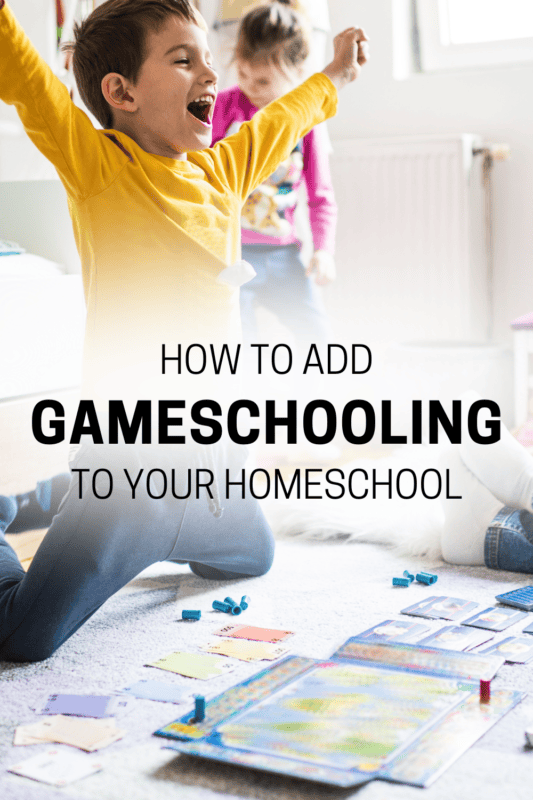
How to Use Gameschooling to Liven Up Your Homeschool
Here’s everything you need to know about gameschooling and how to incorporate it into your homeschool routine.
What Is Gameschooling?
Gameschooling is an educational approach that uses games—both structured and open-ended—as a primary or supplementary teaching tool.
Games can reinforce traditional subjects like math, history, and language arts, but they also build critical life skills such as problem-solving, teamwork, and decision-making.
The key to successful gameschooling is choosing games that align with your learning goals while ensuring they’re enjoyable for your children.
Why Gameschooling Works
- Engagement: Kids are naturally drawn to play, and games make learning feel less like work and more like fun.
- Retention: Concepts learned through games often stick because they’re experienced in context rather than abstractly.
- Adaptability: Games can be tailored to suit different ages, learning styles, and subjects.
- Family Bonding: Playing together strengthens relationships and creates joyful learning moments.
- Flexibility: Gameschooling means that you can be learning together as a family, cutting down on time spent teaching individually. It’s also something that can be taken with you on the road.
How to Get Started with Gameschooling
#1 Choose Educational Games
Select games that match your educational goals. For example:
- Math: Try games like “Sum Swamp” for younger kids or “Math Dice” for older ones.
- Language Arts: Play “Boggle,” “Bananagrams,” or create your own word challenges.
- History: Explore “Timeline” or “Trekking Through History” to make learning historical facts exciting.
- Geography: Use games like “Ticket to Ride” or “Where in the World?” to teach map skills and world knowledge.
#2 Incorporate Games Into Lessons
Turn traditional lessons into game time. For instance:
- Use “math bingo” to practice addition and subtraction.
- Create a trivia game to review history or science facts.
- Design a scavenger hunt around your home or yard to teach problem-solving and observation skills.
#3 Let Kids Lead

Allow your children to choose the games they’re excited about. When kids feel ownership over their learning, they’re more likely to stay engaged.
#4 Play Games Together
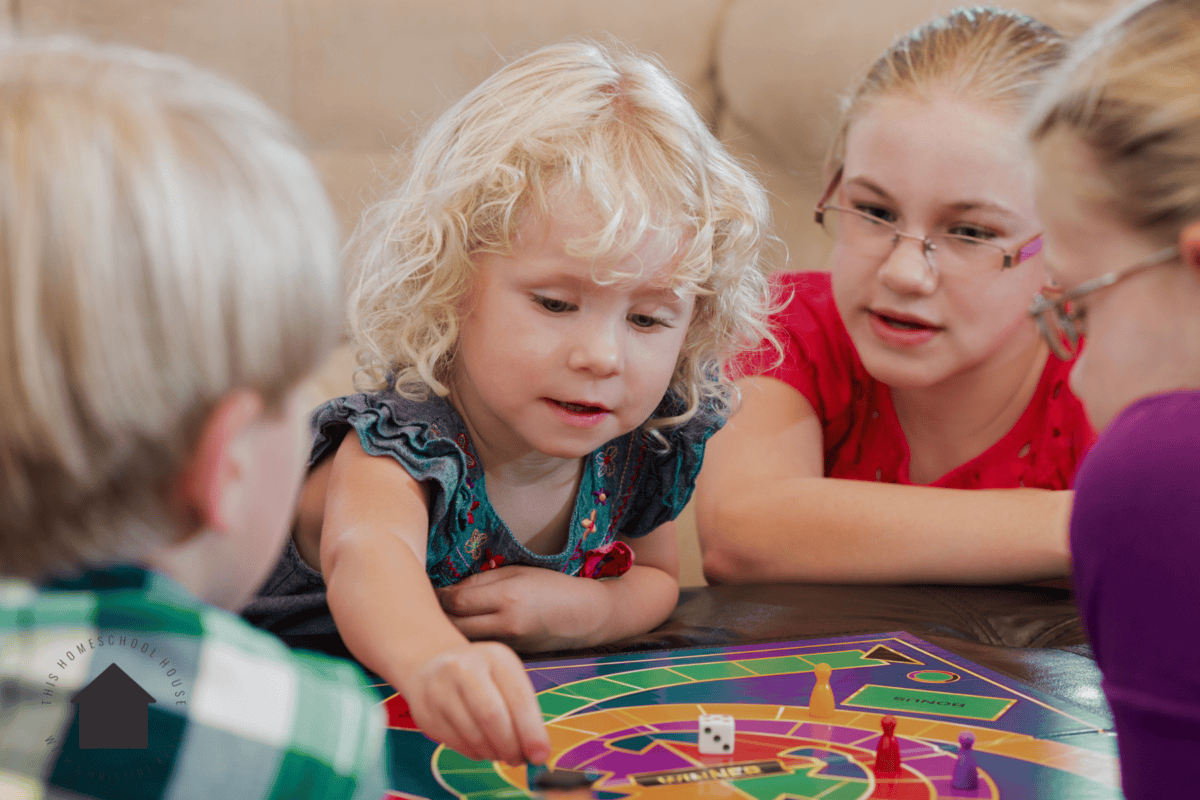
Many gameschooling benefits come from the interactions during gameplay. Family discussions, teamwork, and problem-solving make the learning experience richer.
It’s also a really simple way of teaching many students at the same time, thus cutting down teaching time.
#5 Don’t Forget Open-Ended Play
In addition to structured board or card games, include open-ended activities like building blocks, puzzles, or role-playing games. These encourage creativity and critical thinking.
Balancing Gameschooling With Traditional Learning
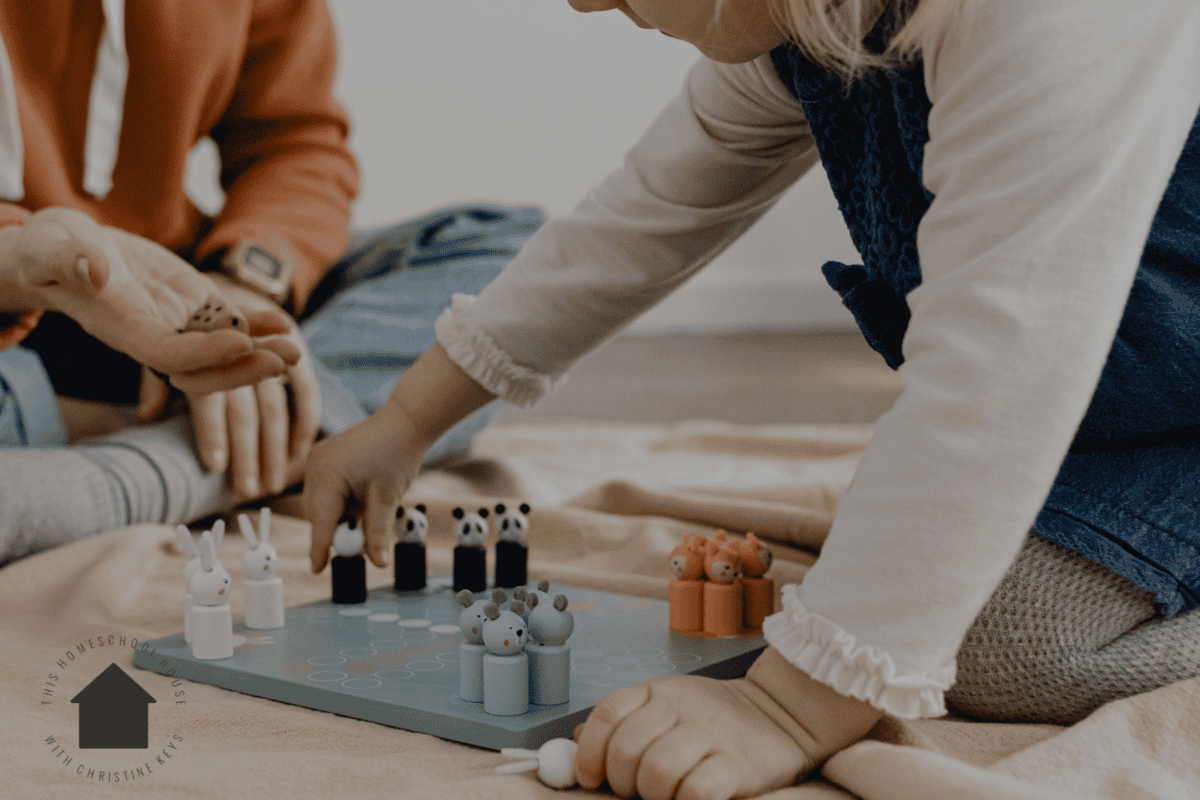
While gameschooling is fantastic, it works best when balanced with other teaching methods.
Use games to supplement core lessons or as a reward for completing traditional assignments. Remember, the goal is to keep learning enjoyable and effective.
A fun idea is to have a gameschooling day once a week. Perhaps on a Friday when everyone is feeling a little tired.
It’s also great for those days when there’s sickness in the house but not enough that everyone is totally out of action. You can still get some school work done without any pressure.
Top Picks for Gameschooling
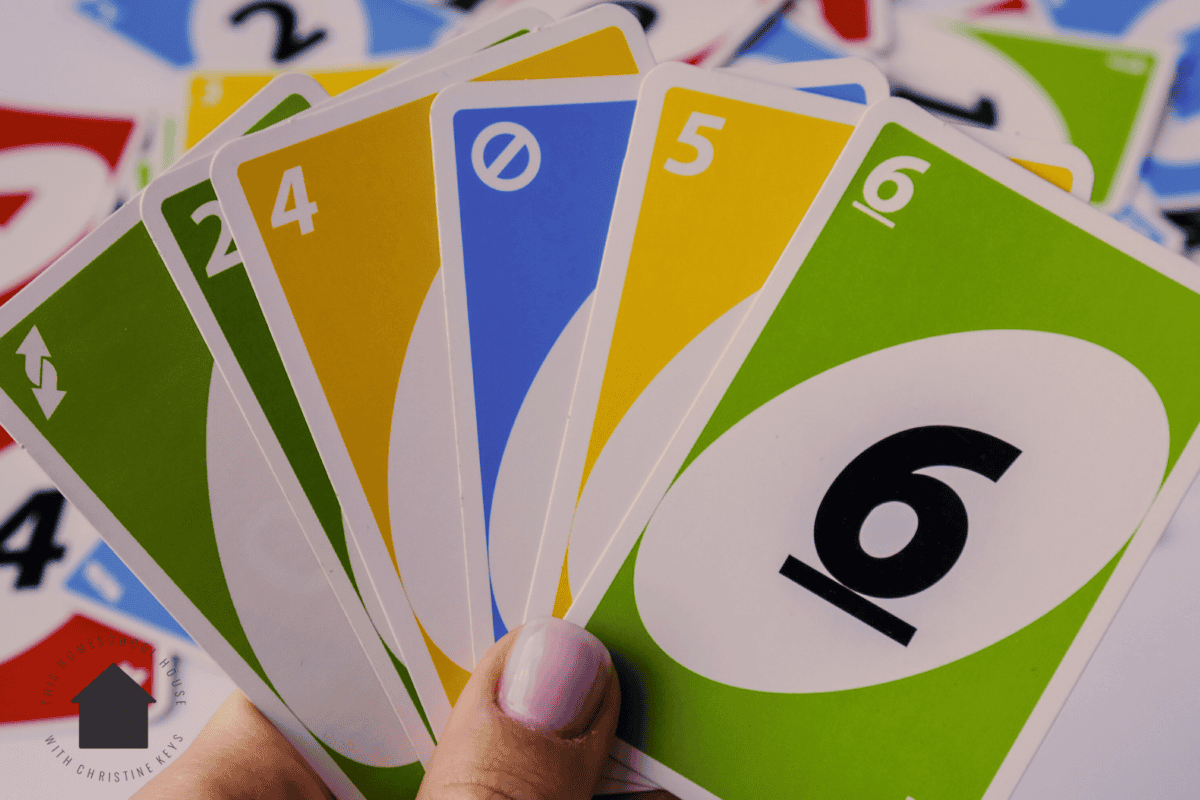
Younger Kids:
Older Kids:
Family Fun:
Final Thoughts
Gameschooling makes learning so much fun.
By incorporating games into your homeschool routine, you’re not only teaching essential skills but also fostering a lifelong love of learning.
Start small by introducing one game to your week and watch as your kids’ enthusiasm for education grows.