K-8 Education at Home: How to Tailor Learning for Each Child Easily
*This post may contain affiliate links. As an Amazon Associate I earn from qualifying purchases.*
When I started homeschooling, I genuinely thought I’d just run my kids through the same curriculum, one after the other. My oldest would go first, and then his sisters would follow the same path. Simple. Efficient. One plan for everyone.
That is not what happened.
I have a 6th grade son, a 4th grade daughter who is working hard on her reading, and a youngest in 2nd grade who is working at a 1st grade level. Same home, same mom, and three kids who need completely different things from their school day.
The curriculum I use for my son doesn’t work for my youngest. The pace that suits one doesn’t suit the others. And the support each one needs from me looks nothing alike.
The idea of one curriculum for all three went out the window pretty fast.
This post is sponsored by Education.com. All opinions are my own.
How to Curate a K-8 Education for Multiple Kids (the simple way!)
What I’ve had to figure out instead is how to curate our homeschool for each child without losing my mind in the process. And one of the tools that’s genuinely helped me do that is Education.com. I’ll get into exactly how I use it, but first let me walk you through how I work through this.
Start With What Each Child Truly Needs

Before you can curate anything, you have to get honest about where each of your kids is right now. Not where you hoped they’d be. Not where the curriculum says they should be. Where they actually are.
For us, that looks like this:
My son is in 6th grade and he needs challenge and independence. He gets frustrated when things are too easy, and he does better when he has ownership over his work. So I give him more autonomy, harder material, and less hand-holding.
My 4th grade daughter is working hard on reading, and that shapes everything else in her day. We slow down. We read aloud more. I choose resources that encourage her to read instructions and work independently (without frustrating her).
My youngest is still solidly in the early years. She needs short lessons, lots of hands-on work, and plenty of movement breaks. What works for her siblings does not work for her.
When you start there, with the real picture, it becomes a lot easier to figure out what each child needs from you and from their materials.
You don’t need a different everything for every child.
Here’s where a lot of homeschool moms get stuck. They think curating for each child means three completely different homeschools happening at the same time. Three curricula. Three separate lesson plans. Three of everything.
It doesn’t have to be that way.
Simplify
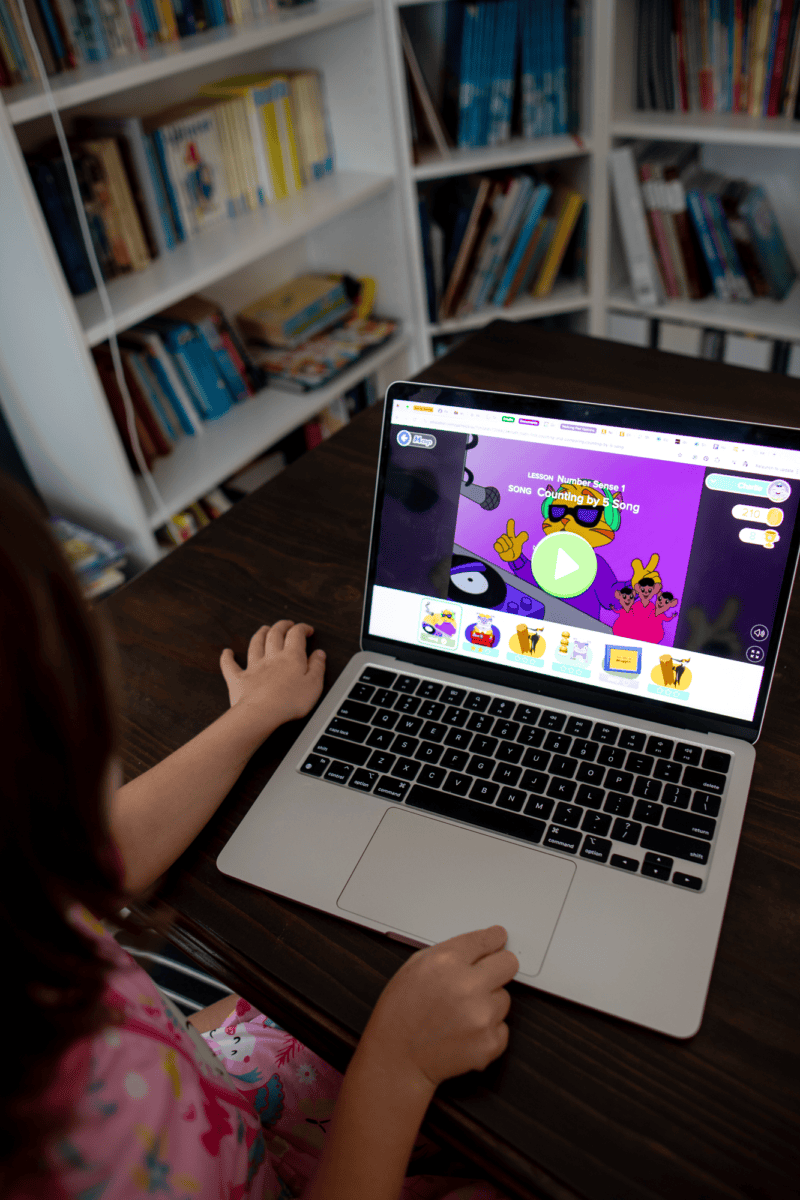
There’s a lot you can share across kids. Read-alouds, history, science, enrichment activities. I group subjects wherever I can. But where I do differentiate is in the independent work, the skill-building, and the practice materials each child is using on their own.
That’s where a resource library becomes genuinely useful. Because instead of buying three separate workbooks or hunting down printables every time I need something at a specific level, I want one place I can go that has what I need for a 2nd grader, a 4th grader, and a 6th grader. Or, whatever level my child is working on.
How Education.com Fits
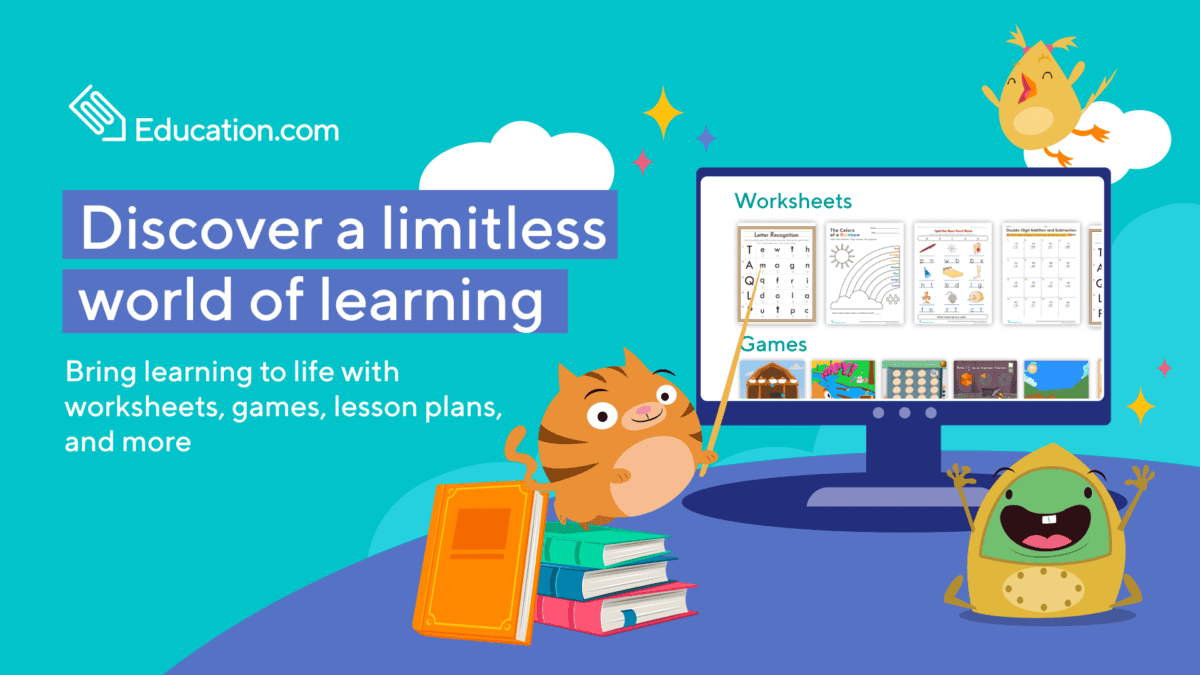
Education.com has over 39,000 learning resources covering PreK through 8th grade. Worksheets, lesson plans, learning games, hands-on activities. And because it spans that whole K-8 range, I can pull something for all three of my kids from the same place.
It’s a one-stop-shop for all my worksheet needs. Check it out here –> Education.com.
What I use it for most is filling the gaps. When my youngest needs extra practice with letter sounds, I grab those worksheets. When my 4th grader needs reading comprehension work at a slightly lower level than her grade, I can find that without it being obvious that it’s “below grade level.” When my son needs something that stretches him, it’s there too.
The worksheets for 2nd graders, 4th graders, and 6th graders are all there, organized, searchable, and ready to print or use. That sounds simple, but when you’re planning for multiple kids, simple matters a lot.
They also often have seasonally-themed packets available, which is an easy way to add some fun and whimsy into your homeschool.
Education.com does this kind of thing regularly, releasing seasonal resources throughout the year, and it’s something many homeschool families truly enjoy. There’s usually something useful whenever I go looking.
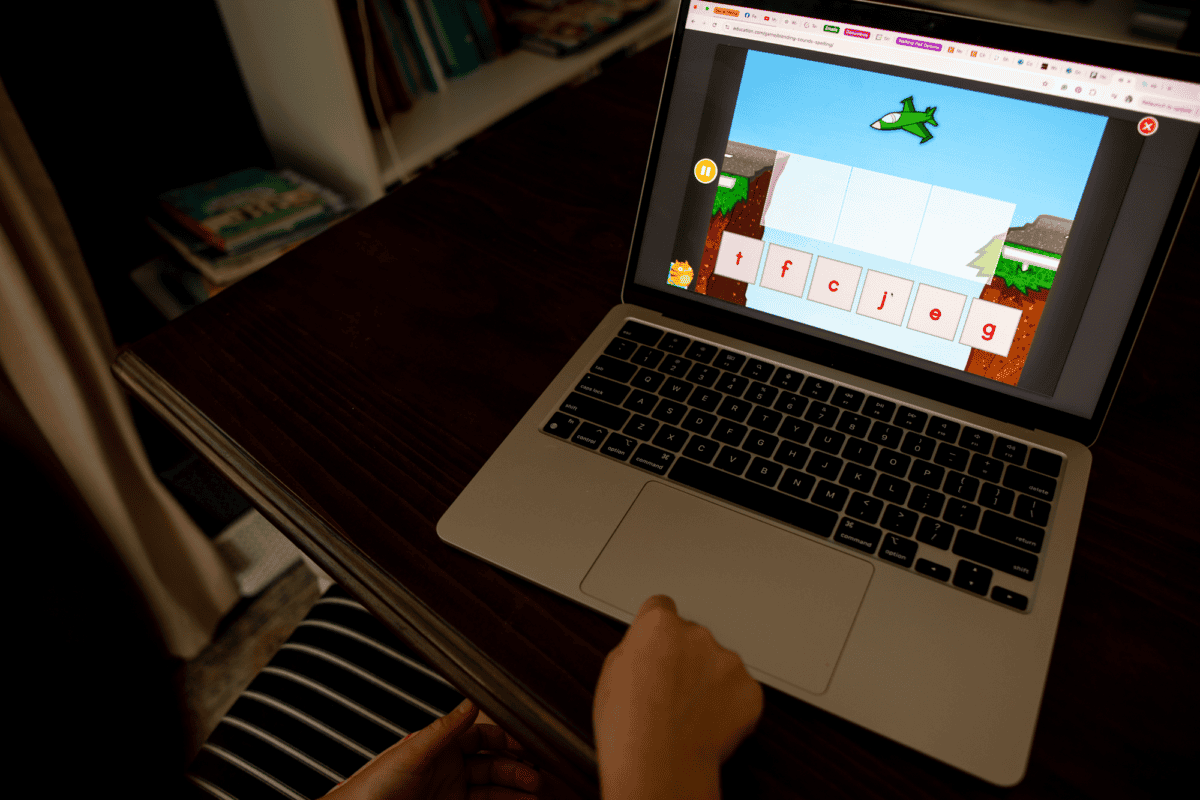
I also like it for finding practice for my kids in a format that they don’t usually use. For instance, they may typically be using worksheets, but I can use Education.com to find learning games to practice the same concept.
It’s a simple and easy way to change things up with very little effort.
A Simple Framework for Curating Each Child’s Day
If you’re feeling overwhelmed by the idea of personalizing for multiple kids, here’s how I think about it practically.
Anchor your day in what you can share. Read-alouds, group discussions, hands-on projects. These are low-effort ways to learn together and they reduce the number of things you need to manage separately.
Identify the one or two things each child needs individual support in. For one of my kids it’s reading. For another it’s math fluency. Focus your differentiation there, not everywhere.
Build a simple go-to resource list for each child. Know where you’re going to pull their independent work from so you’re not starting from scratch every week. Education.com is one of mine for printable practice work and skill reinforcement across all three grade levels.
Let good enough be good enough. You do not need a custom-built curriculum for each child. You need materials that work at their level, a realistic plan, and the consistency to show up for it.
If You Want to Try Education.com

If you’ve been looking for a solid resource library that covers multiple grade levels, it’s worth checking out. You can get 55% off a Premium Membership with the code EDCOM55.
With a Premium Membership you get unlimited access to all 39,000+ resources, which makes the cost very reasonable if you’re using it regularly across multiple kids.
It’s not going to plan your homeschool for you. But when you need kindergarten worksheets for your youngest, some learning games to keep your middle kid engaged, or a planning book to round out a unit study, it’s there. And sometimes that’s exactly what you need.
Take a look at what Education.com has to offer.
Final Thoughts
I’ve been homeschooling for six years now, and the truth is that managing the educational needs of multiple kids doesn’t really get easier. However, with intentional effort, you absolutely can get better at keeping things organized and simple. There’s no reason to make the job harder on yourself than it already is.
Check out Education.com and see if it’s one of those tools that will help make your homeschool days run just that little bit more smoothly.