
The Easiest Way to Cover Enrichment Subjects
*This post may contain affiliate links. As an Amazon Associate I earn from qualifying purchases.*
If enrichment subjects are the first thing to fall off your homeschool plans… you’re not lazy or doing it wrong. They’re just the easiest to overthink.
Art, music, nature study, poetry, handicrafts… they all sound lovely in theory. But when the day actually starts, they’re the subjects that get pushed to “we’ll do it later.” And later never comes.
The good news is that enrichment doesn’t need a complicated system or a colour-coded schedule to count. In fact, the easiest way to cover enrichment subjects is to make them lighter, simpler, and honestly… more enjoyable for you too.
Here’s what that looks like in real life.
(Pssst…scroll for my free 1-year enrichment guide.)

Practical Ways to Cover Enrichment Subjects in Your Homeschool
I enjoy enrichment subjects, but I am absolutely not a crafty homeschool mom. You know…the type that usually is great at throwing together enrichment lessons.
I used to really struggle with guilt over that, but now I’ve found a way to make it work in our home.
Take a Charlotte Mason Approach
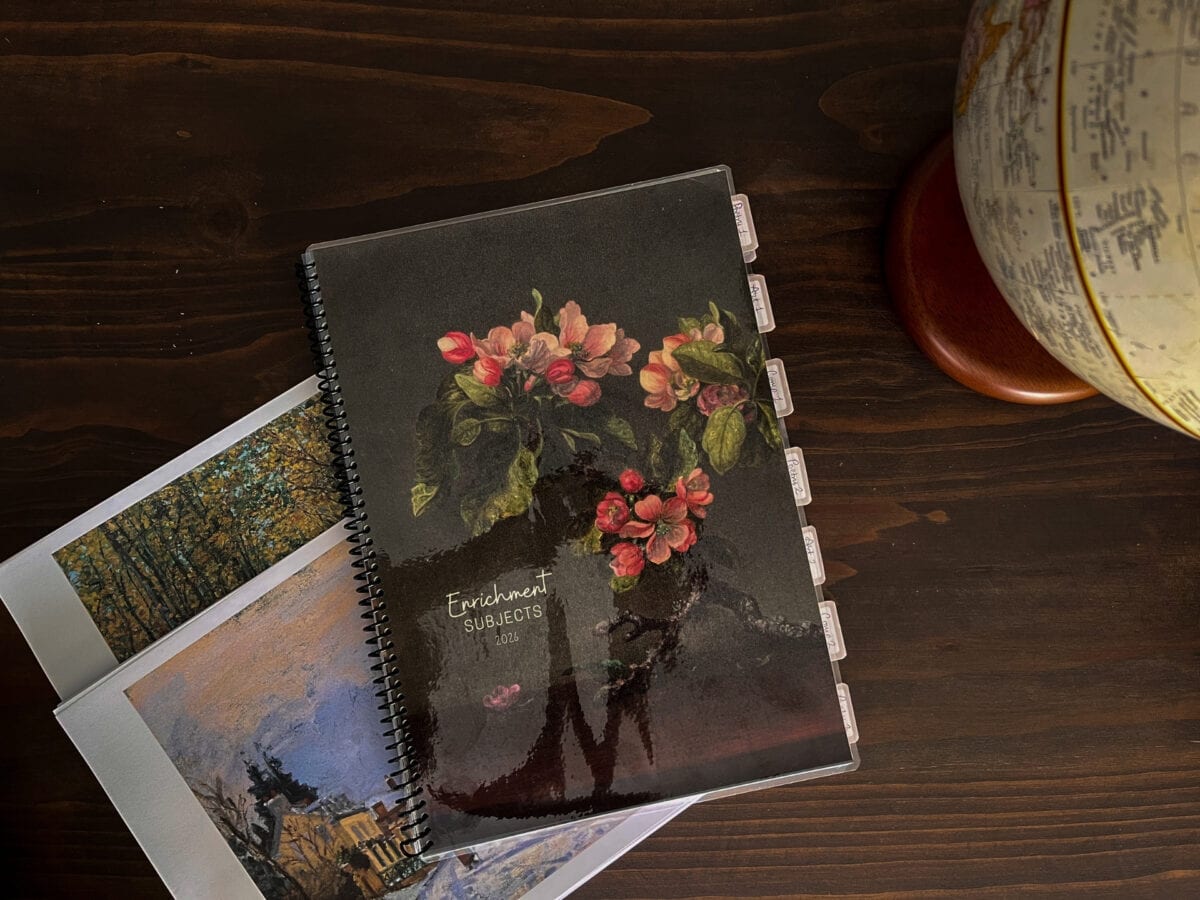
Charlotte Mason-style enrichment works so well because it was never meant to feel heavy. Short lessons, beautiful materials, and a steady rhythm instead of cramming everything into one week.
This means you don’t need a full unit study for every enrichment subject. You can rotate them gently. Maybe you focus on art and music this term, then poetry and nature study the next. Or you do one enrichment subject per day on a loose loop.
The goal isn’t to “cover” everything perfectly. It’s exposure. A slow drip of beauty over time. Read a poem. Listen to a composer. Look at one painting. Then move on with your day.
That’s enough.
You also don’t need to be a Charlotte Mason-purist to make this happen. I’m an eclectic homeschooler. I take what works and discard the rest. My free Enrichment Guide pulls from Charlotte Mason principles, but it’s also tailored to work how I like things to work.
Get your free guide by signing up below.
Focus On Your Favourite Subjects

This one matters more than people like to admit.
If you hate music study, it will never happen. If you secretly love art or nature walks or poetry, those are the ones that will stick. So start there.
You do not need to be equally passionate about every enrichment subject. Your kids don’t benefit from you forcing yourself through something you dread. They benefit from consistency, and consistency comes from enjoyment.
Pick one or two enrichment areas you genuinely like. Lean into those. Let them anchor your week. Everything else can be optional, seasonal, or rotated in slowly.
Homeschooling doesn’t require you to be a well-rounded human in every category at all times. It requires you to show up and keep going.
The truth about homeschool balance is that you’re not doing all the things all at the same time.
Use Open-and-Go Curriculum
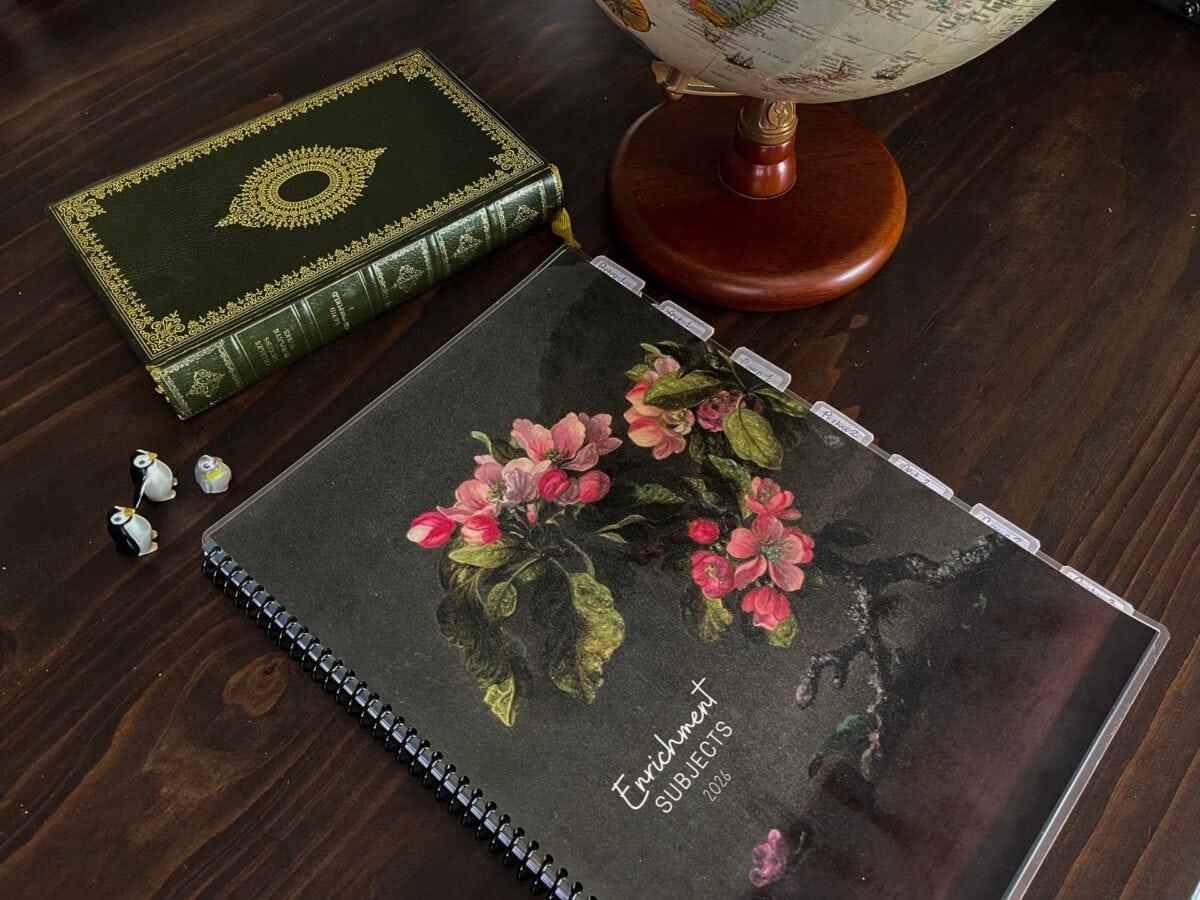
If enrichment requires planning, excessive printing, researching, or prep… it probably won’t happen long-term.
Open-and-go is your friend here.
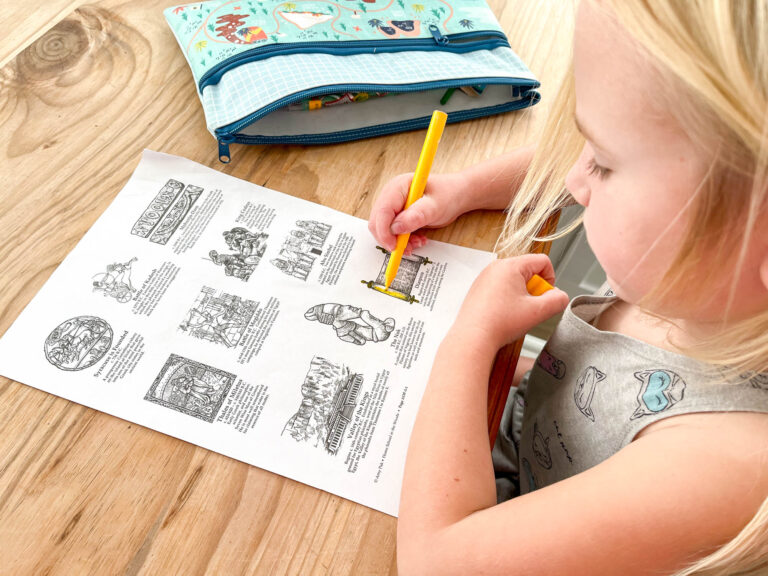
That might look like a simple art study book, a music appreciation guide you can press play on, a poetry anthology you read from at morning time, or a nature study resource that tells you exactly what to do this week.
This is where having a simple framework helps. When you already know what enrichment subjects you want to include and how often, choosing resources becomes much easier and far less overwhelming.
And that’s exactly why I created my free enrichment subject guide.
It’s a full year’s worth of enrichment study, covering poets, artists, and composers. I made it for my family, with ease-of-use in mind.
If enrichment has felt fuzzy or guilt-inducing, this will help you simplify it and make it doable.
Final Thoughts
Enrichment isn’t meant to be the hardest part of your homeschool. It’s meant to be the part that brings a little breathing room back into your days. Keep it simple, keep it light, and let it serve your homeschool instead of weighing it down.




Hallo Christine.
I have been following your channel for a while. It is interesting and I vallue your opinion. PS. My first language is Afrikaans (we are living in the Free state in South Africa). I would like to access your resources for the enrichment studies. We have also been homeschooling our 2 sons from the beginning and the eldest are in grade4 now. Ialso like theCharlottemaison approach, but are very ecclectic in my approach. I want to ask your advice. We did Afrikaans for 3 years homelanguage and only started learning phonics in English middle last year…. (The kids can already understand and speak English) We are using Treasure hunt reading andsometimes reading generstions God’s big story and mix in Alpha phonics, sometimes… What are your opinion about Easy Peasy….? I like the offline books. So I thought about buying the grade 1 language arts and reading books when we finish Treasure hunt reading. Hope to hear back from you.
Hi! I haven’t used Easy Peasy in a very long time, but I have friends who use it and love it. It’s a great curriculum.
Hi Christine! Thank you for sharing all your videos and blog posts, I always find them helpful and inspiring. I have an off topic question, would you mind sharing the width of your office desk? I love that it’s big enough for sewing and could also fit a laptop. Thank you! ☺️
I believe it’s 1600mm by 60mm. Hope that helps!