The Best 18-Month Age Gap Tips for Moms
*This post may contain affiliate links. As an Amazon Associate I earn from qualifying purchases.*
What’s better than having one sweet little one to love and snuggle with? Having two, of course! When your children are close in age—say 18 months or so—you get double the joy and snuggles for sure. But you also might want some 18-month age gap tips…cause let’s face it…
You also get double the diapers, double the feedings, and, not surprisingly, double the tiredness.
As time passes and the kids become more self-sufficient, life gets easier, and there are lots of benefits to having kids close in age.
But when you’re in those early years, you need all the help you can get. Read on for some tips on navigating life with littles 18 months apart.
18-Month Age Gap Tips That Are Truly Helpful

It’s no secret that being a parent is a full-time job with on-the-job training as you go along. But fortunately, it’s safe to say that plenty of others have done it before you and learned a few things along the way. There’s no shame in borrowing some of their life hacks when you’ve got kids less than two years apart!
Adding a younger sibling tends to rock the boat no matter what the age, but I think that many moms struggle with the idea of having children so close in age. While every stage and situation comes with its own set of challenges, there are many joys to find along the way.
Adjust Your Expectations

We know, we know—everyone says it, but trust me on this. No matter how organized, focused, or patient you are, living life with young children 18 months apart will not be the same as it was with just one child.
Understand and accept that you really have two babies, not just one. Your toddler still needs assistance with tasks like eating, dressing, bathing, and diaper changes.
Older siblings are really wonderful and helpful but they don’t just magically grow up overnight (although sometimes it can feel that way).
Reducing your expectations of the older child and also what you expect of yourself will greatly relieve you of stress and guilt when your Superwoman act falls through.
- Allow more time for everything: going somewhere, baths and bedtime, meals—it’s all going to take longer to accomplish. Adjusting to a new baby takes time.
- Offer yourself grace when you aren’t on time for an appointment or when your toddler pitches a fit in the grocery store. It’s okay…it happens to all of us.
- Be realistic. Your 18-24-month-old will seem much older than the newborn, but she’s not. Don’t expect her to behave older than she is because she can’t, and she won’t.
- Accept the mess. You don’t live in a museum and, with two young children, your house won’t look like one. There’s plenty of time later in life to have a spotless home.
Establish a Routine

One kid and no routine might not be the end of the world. Two kids and no routine? We beg you not to do that to yourself! Get organized and get on a schedule, preferably before Baby #2 arrives (but after is still okay if that’s where you are).
I love all the helpful resources from this store for assisting with establishing healthy (and realistic) schedules.
- Home during the day? Sync your children’s naps, so you’ve got at least some time each day to be alone, take a shower, or get chores done.
- Choose a bedtime and stick to it. Sure, there will be times where bedtime shifts a little, but make those few and far between. If both kids can go down around the same time, you’ll have a more restful evening.
- Speaking of bedtime, create a routine. A sample evening might look something like this: supper, bath, brush teeth, read a couple of books, sing two songs, and then lights out. Children of any age are comforted knowing what’s coming each night.
A consistent routine can reduce the amount of pushback or tantrums you get from your toddler. It may take some time, but calmly falling back on the routine (“I know you don’t want to, but this is what we always do”) teaches your toddler that they’re not in charge.
Encourage Independence for Your Toddler
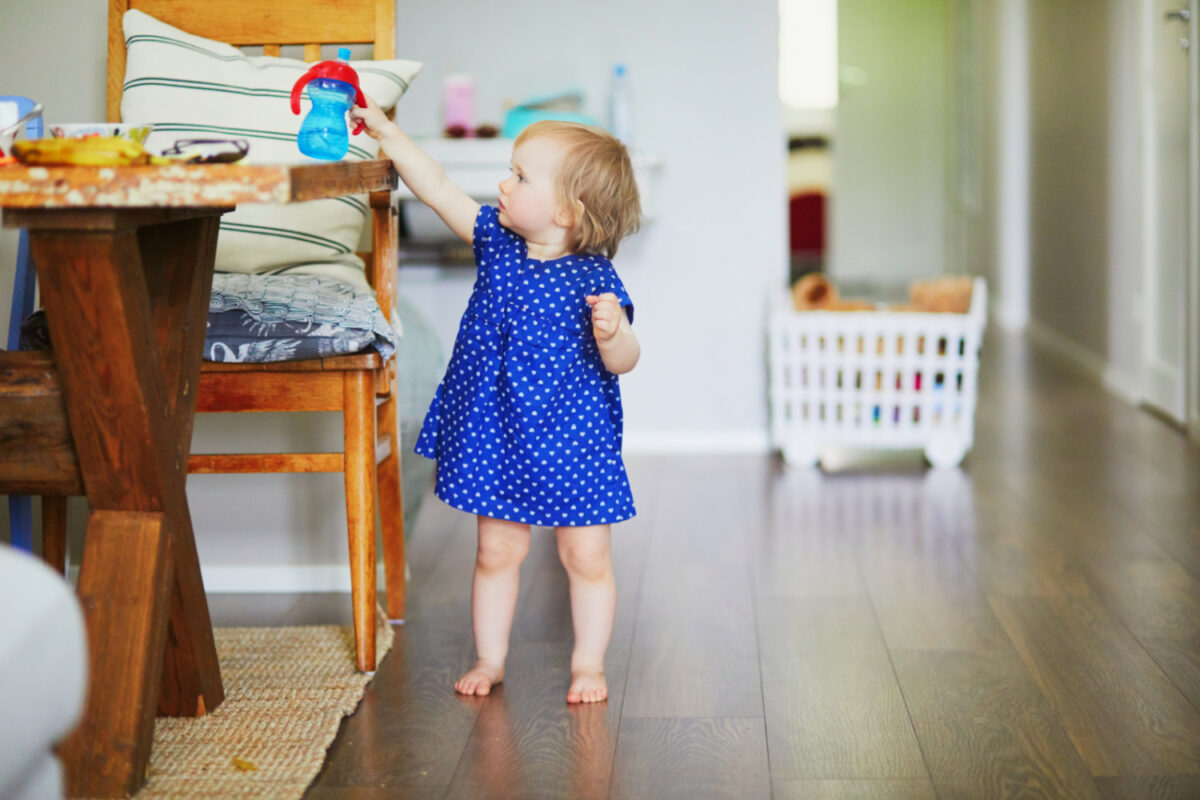
We’ve already said that your 18-month-old is still a baby in a lot of ways. That doesn’t mean, however, that he isn’t capable of learning some independence. It’s the right age to start anyway, and the arrival of a newborn is a good time to get the ball rolling.
- Waiting is a great life skill. Teach your toddler to wait by not rushing in each morning or after nap to get her as soon she wakes up. Give her some time to play or read in bed. This prepares your toddler for when she really has to wait because you’re feeding or changing the littlest one.
- Give your toddler opportunities to be independent. Try finger foods and a cup. Let them walk more instead of always carrying them. (This saves your back too!)
- Refer to our first tip and keep your expectations reasonable for your child’s ability and age.
Encouraging independence in your toddler calls for patience and finesse. You don’t want your older child to blame the baby when he has to start doing more for himself.
Implementing consistent independent play is also a massive help. It gives your child the opportunity to develop so many skills while giving you a break and a minute to breathe.
Final Tips to Survive the Day-to-Day
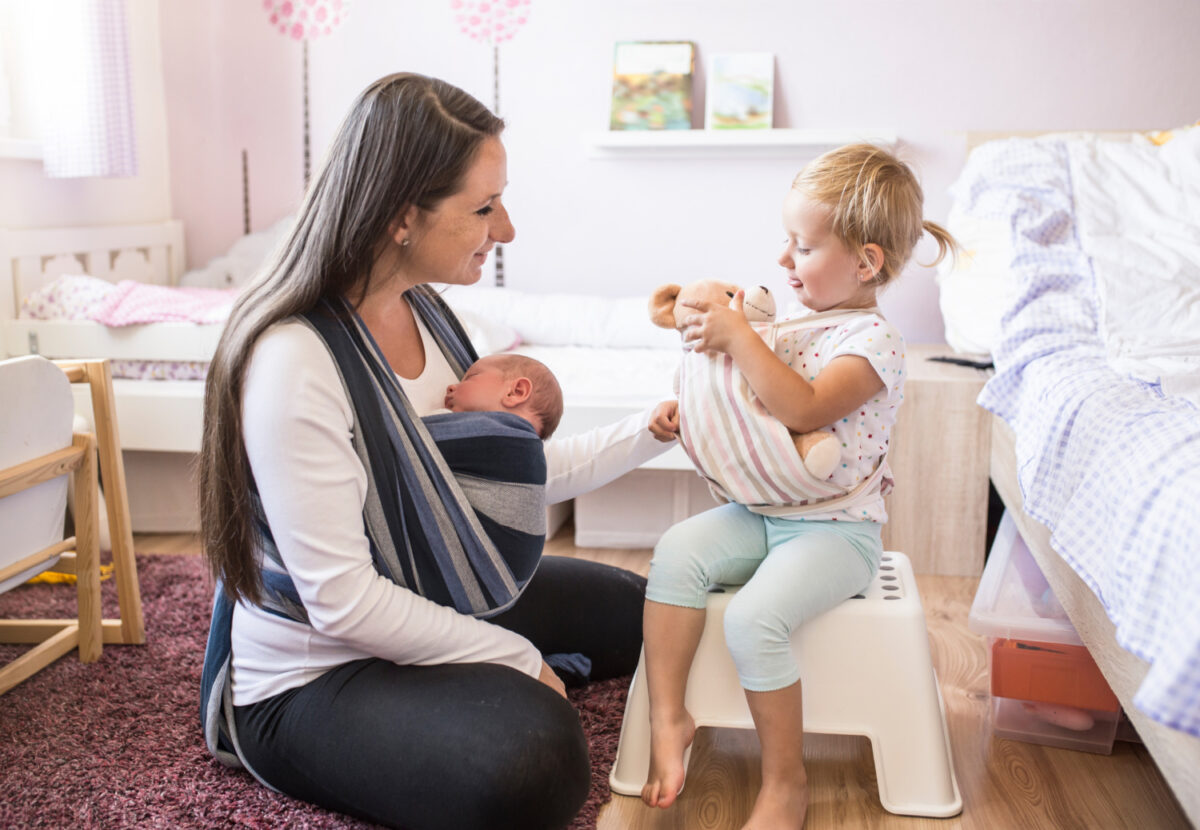
Ever heard the adage, “the days are long, but the years are short.” Wise words, but when you’re in the middle of the long days, you just need some practical survival tips for getting through each day as it comes with the two little ones in your life:
- Nap when the kids nap. Yes, there’s lots to do—always. But you won’t be good for anybody or anything if you’re short on sleep. Take time for self-care, at least a couple of hours each week.
- Shower regularly. You’ll feel human, and you won’t smell like baby poop and spit-up. That’s a good thing.
- Use technology to your advantage. Use a baby app to track feedings and diaper changes. TV can be used as a babysitter sparingly but without guilt.
- Get outside, weather permitting. Fresh air and a change of scenery does wonders for everybody. Plus, your toddler may tire herself out and nap longer—a win-win.
- Make your toddler’s lunch the night before or in the morning. This will save you time at lunchtime when you might be carrying a screaming newborn on your hip.
- Keep a special activity box that your toddler only plays with during the baby’s feeding times. It will be something for him to look forward to and keep him busy while the youngest is eating.
- Streamline the daily dressing process. Lay out clothes the night before. It’s best to limit your toddler to a choice between two outfits to get it done quicker.
- Embrace hand-me-downs. It’s okay if your baby girl occasionally wears a blue dinosaur onesie that big brother outgrew. Organize and store clothes by size and season so you can grab them easily.
- Make it a point to spend one-on-one time with each child as often as you can. Chores can wait. When the baby sleeps, sit down on the floor and play with your 18-month-old. When the toddler naps, snuggle with the baby and soak up sweet baby smiles. This really helps combat toddler jealousy.
- Accept help. You don’t have to do it alone: Swap babysitting with a friend, hire a babysitter, or enroll in a Mom’s Morning Out program. Welcome your children’s grandparents anytime; their wisdom, patience, and experience can benefit everyone.
- Choose your battles. When you and your toddler (or any child at any age) butt heads, make sure you’re fighting for something important. If you can let it slide without major repercussions, do it. But when you dig in on a conflict, win it. Winning the small battle now will make winning the bigger battles later much easier.
My Personal Experience

I’m sure that some people thought I wasn’t entirely sane when I had all my babies in quick succession. I was just 10-months postpartum when I began my second pregnancy.
In fact, my third child is just 2 years younger than my second. There’s a total of 3.5 years from eldest to youngest in our home.
We’re out of the baby phase and after years of being in it, I can say that it is full of so much joy. The days are long but the years truly are short.
I think there are times when having a larger age gap makes sense, especially when it comes to giving the mother’s body a break.
However, things like sleep deprivation don’t go away. Those kinds of things are still going to be challenging. Sleepless night are hard no matter how close in age your kids are.
The right age gap or the best age gap doesn’t exist. You just make the most of whatever you’re dealt.
Personally, I’m really glad that we had all of our babies close together. They are playmates, best friends, and accomplices in mischief. Life will certainly be easier in many ways as they grow up (especially if they have similar interests).
The early days are tough but all the effort pays off in abundance.
Sure, it’s hard work, but the best things in life usually are.
Choosing how close you’d like to have your children is such a personal decision and there’s really no right or wrong answer.
Final Thoughts
Having kids 18 months apart will keep you busy 24/7, at least for the first year or so after bringing the newborn home.
It may feel like the “adult you” has been swallowed up by the “mommy you” forever during that time. But take heart. This tiring season of life will go by smoothly and in a blink!