Kindergarten Math With Confidence: A Flip Through
*This post may contain affiliate links. As an Amazon Associate I earn from qualifying purchases.*
We have been using the Math With Confidence homeschool curriculum for the past year and will begin Kindergarten Math With Confidence with my youngest child next year.
So far, we’ve used grades 1-3 and have found them to be of excellent quality. My children’s math skills have advanced really well during the time that we’ve been using this curriculum.
However, this post isn’t a review of their kindergarten level. It is simply an overview of the course itself and what you should expect from it.
As a homeschooling mom, I know just how helpful it is to get a good flip through of a curriculum before I actually take the plunge and decide to purchase it.
So, keep reading if you’d like a thorough overview of what to expect from Kindergarten Math With Confidence.
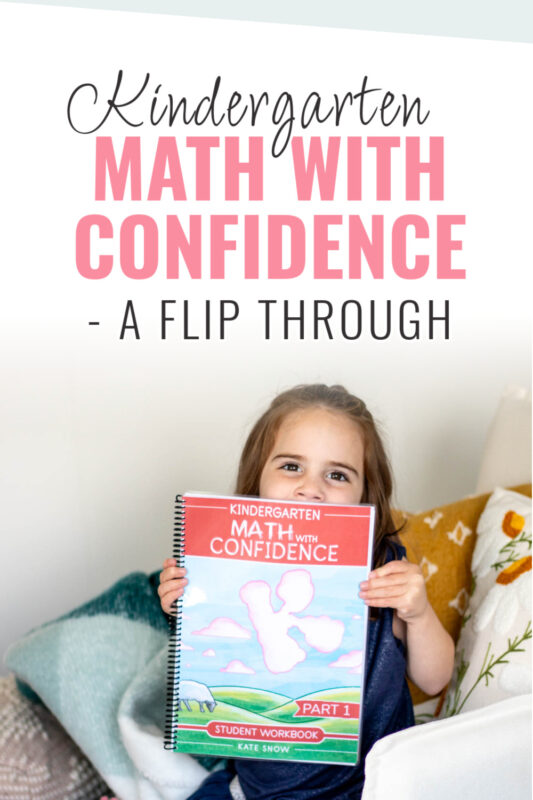
Kindergarten Math With Confidence
Math With Confidence is a fairly new homeschool math program, but that doesn’t mean it isn’t of high quality. The creator, Kate Snow, has the qualifications to back the curriculum she has produced.
I just wanted to include that before we carry on discussing what the curriculum entails. You can be assured that it is a very well-thought-out curriculum that includes all of the “whys” behind each math concept taught.
Before we jump ahead into what is contained within this homeschool math curriculum, you should know the different formats it is available to be purchased in.
First of all, it is available in print. I’ve most commonly seen it available from Well Trained Mind, Rainbow Resource, and Amazon.
Rainbow Resource also offers the math kits if you’d prefer to have it done for you.
The other format available is PDF and you can get that from Well Trained Mind.
This makes it really affordable, especially if you’re based outside of the USA.
What Teaching Style Is Used?

So, how does this homeschool math curriculum teach math? If you’ve been looking around then you’re likely familiar with the terms of spiral and mastery.
If not, here’s a very quick breakdown.
Spiral teaching means that concepts are taught in little snippets that are then constantly spiraled back to.
Mastery is the teaching style of focusing on one single topic until it is mastered and then moving on to the next topic.
Math With Confidence uses both in a very healthy balance.
There are units within the course that are then broken down into lessons. Each unit focuses on a specific topic such as addition facts, for instance.
However, it is not solely mastery-based because there is also an element of review in every lesson that spirals back to previously taught concepts.
Related: Kindergarten Homeschool Curriculum Choices
What Components Are Included?
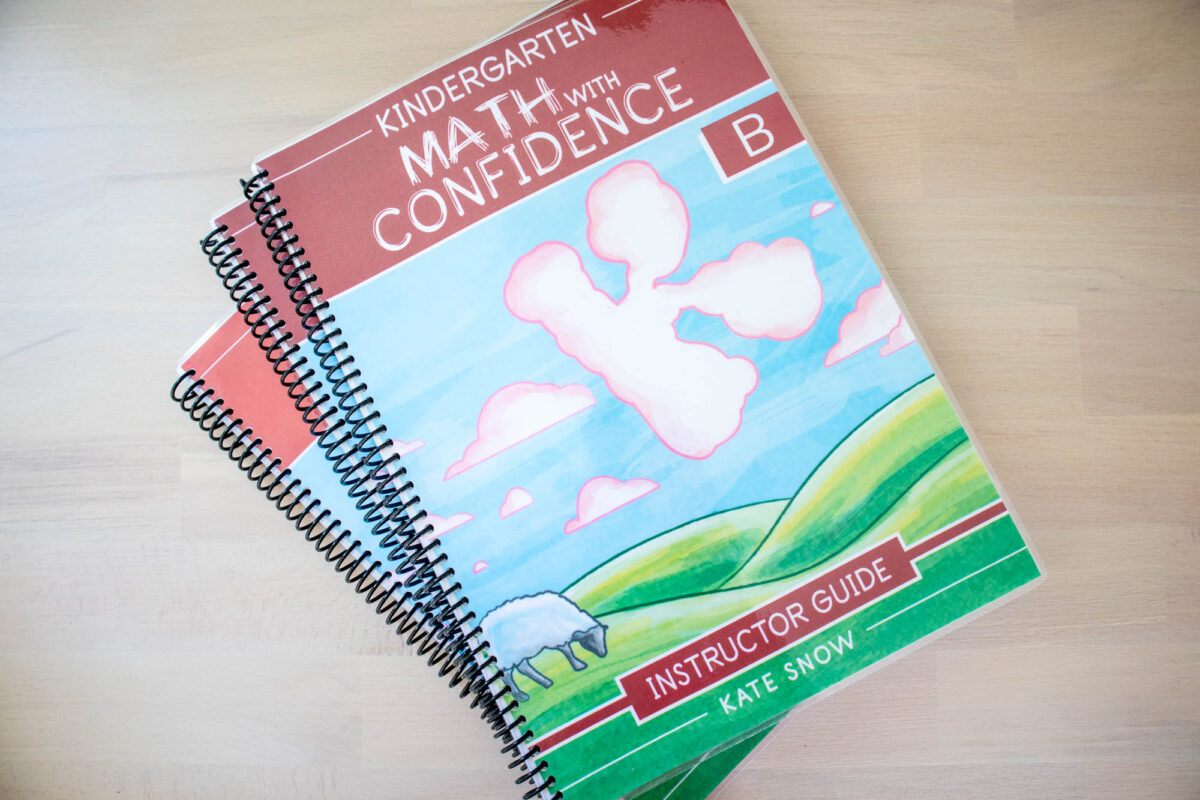
When you purchase this curriculum you will get two things. Firstly, you get the instructor’s guide. This is big and full of everything you’ll need to teach the math lessons.
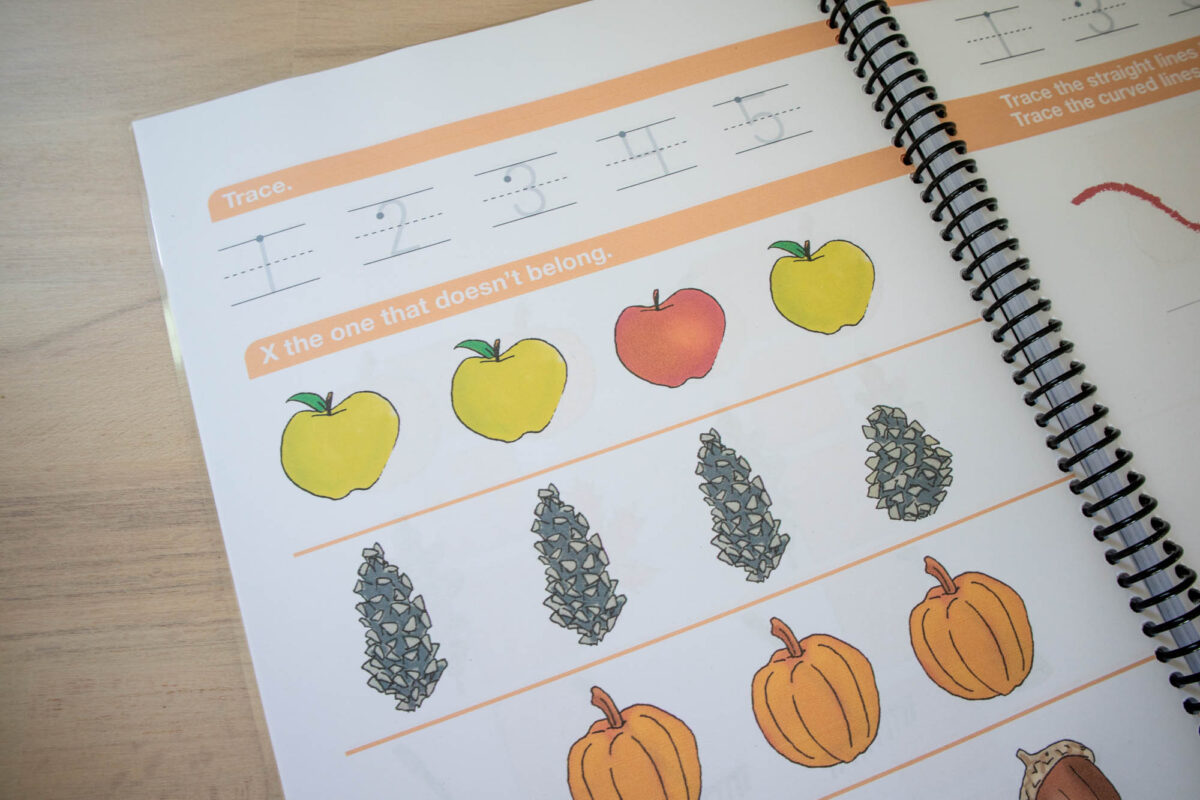
Then there’s the workbook. For Kindergarten Math With Confidence, this is very simple and light.
Many homeschooling parents look at the workbook on its own and walk away thinking the curriculum is far too gentle.
However, the meat of the curriculum is in the instructor’s guide. Without that, the workbook is indeed very light.
It’s important to think about the workbook as a simple reinforcement of the lesson taught and not as a teaching tool in and of itself.
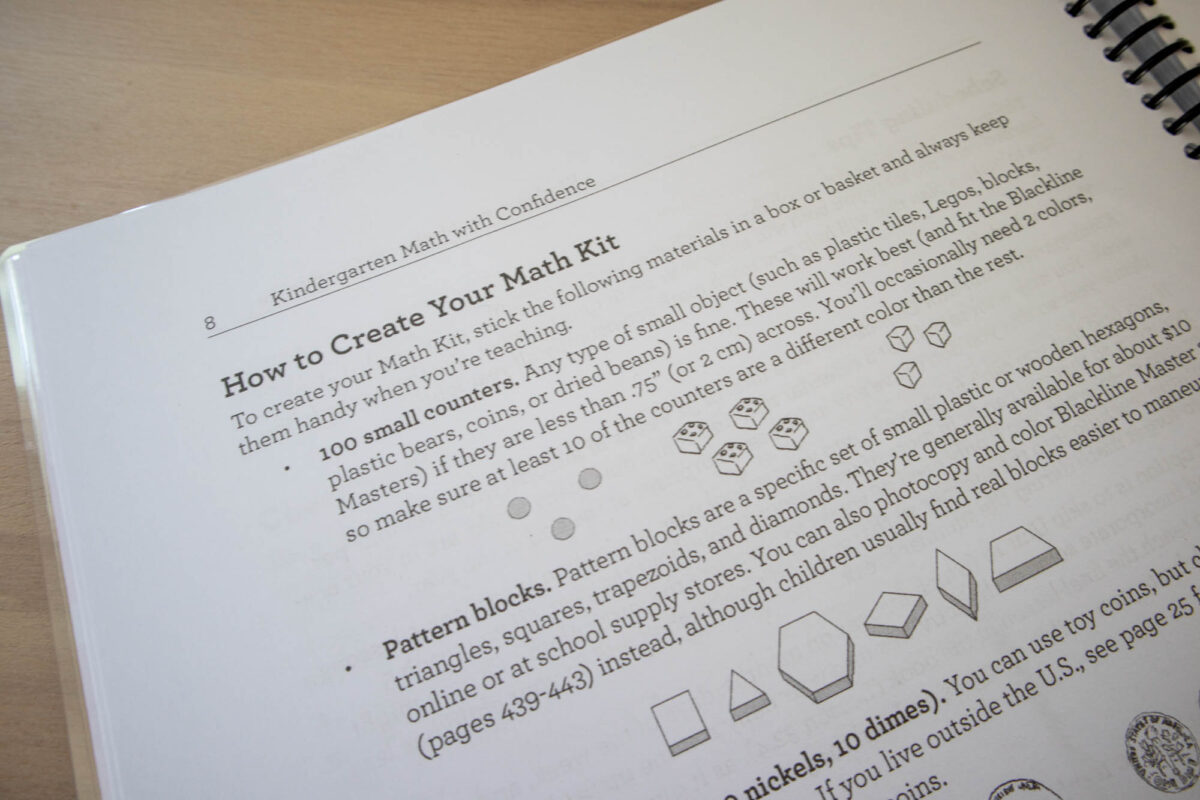
The math kit of manipulatives is a really important aspect that you’ll either have to put together yourself or purchase through Rainbow Resources.
If you’ve been teaching homeschool math for any length of time you may find you have most of what you need at home already.
However, there’s a list of items needed within the book. Many manipulatives are used throughout the grade levels.
It’s a very easy and affordable math kit to put together and there are no expensive manipulatives.
There are also what are referred to as blackline masters in the appendix. These include all the manipulatives you’ll need which can simply be printed out.
Aside from that, many household items can be used as manipulatives. You just have to use a little imagination.
If you are planning to use the curriculum for more than one child then the PDF option is really great. However, it’s important to note that the instructor’s guide is non-consumable while there are consumable student workbooks. Therefore, you’ll only ever need to repurchase workbooks if you choose the physical copies over the digital copies.
How the Lessons Work
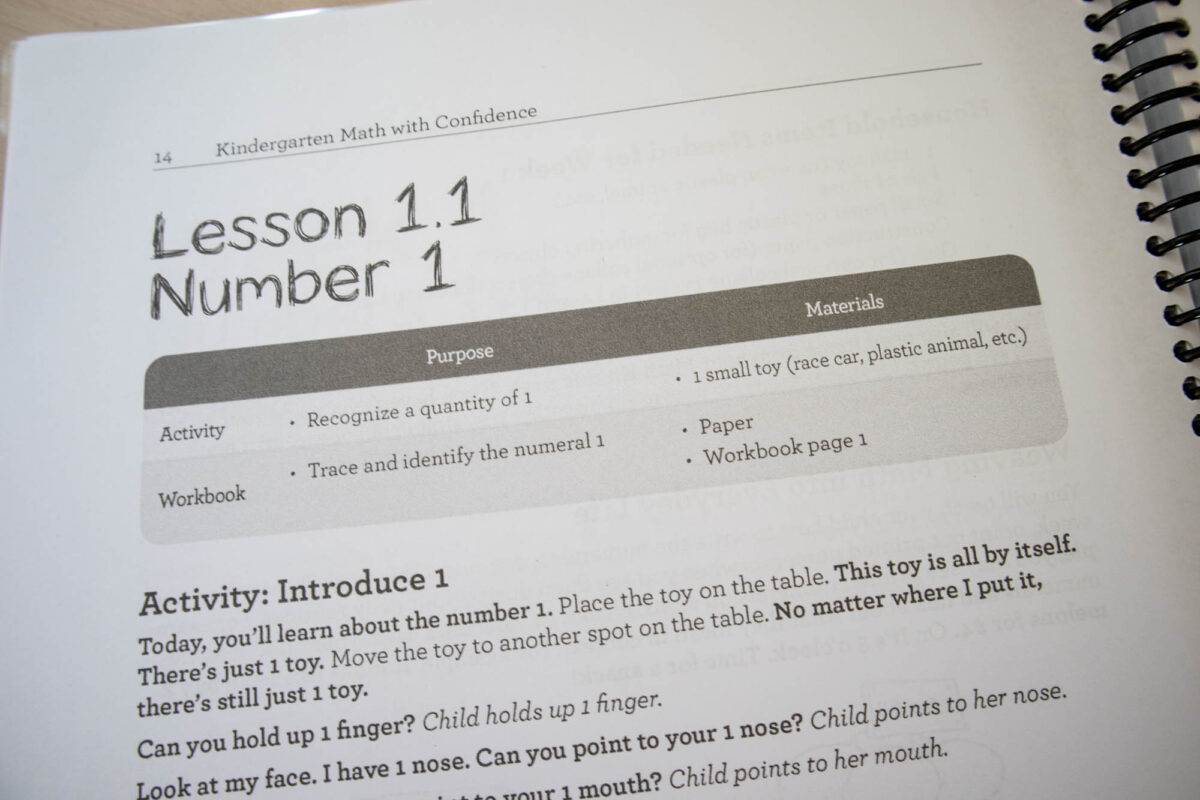
As mentioned above, the course is broken down into topical units and then further broken down into lessons.
Each week has four lessons leaving lots of time for review or just life circumstances. This is a curriculum that can easily be completed in a year.
The instructor guide is where you’ll find the lessons. Each lesson starts with review. You can skip this part if your child is already very proficient.
Next, you’ll teach the lesson for the day.
Finally, your child will work in their workbook. The workbook is just one page per lesson and is very gentle. Writing numbers is a part of each lesson, however, if you have a child who is not developmentally ready to do much writing, you can easily skip that part or just have them use their finger to trace the numbers instead.
At the kindergarten stage independent workbook time may not happen. You will likely need to be there to at least overview the workbook time. However, some kids will be capable of doing it on their own after having finished their interactive teaching time with you. By the time you get to first grade, it is more likely that they’ll be able to do some independent daily work, but this will still be a curriculum that is taught by the parent.
Easy to Teach From
All of the lessons are scripted so you don’t have to be guessing what to say. There’s also a box at the top of the lesson which lists the materials needed for the lessons so you can be prepared ahead of time. The materials list is very thorough and easy to glance over.
However, this is a very open-and-go curriculum once you have your math kit put together.
I’m currently teaching two children math who are using grades 1 and 3 and I never prep anything ahead of time.
At the end of each unit, there is a check point which is meant for you as the parent to assess where your child is with the information they’ve been taught.
It gives you points from which to conclude if they’ve mastered the information or need some more review. There are then ideas for how to review concepts until they are mastered.
Answer keys are included at the end of each week.
The Fun Aspect
Finally, there is a book list that suggests some really wonderful picture books to go along with the lessons.
These are completely optional but also a great way of bringing some enrichment and literature into your math curriculum. Buying the suggested read aloud math book of the week will definitely increase the cost of the curriculum, so I suggest looking for them at your local library should you choose to incorporate them.
There are also pretend activities in the lessons that really play into a child’s imagination. Games are included that allow for lots of practice without children feeling bogged down.
Is Math With Confidence a Full Curriculum?
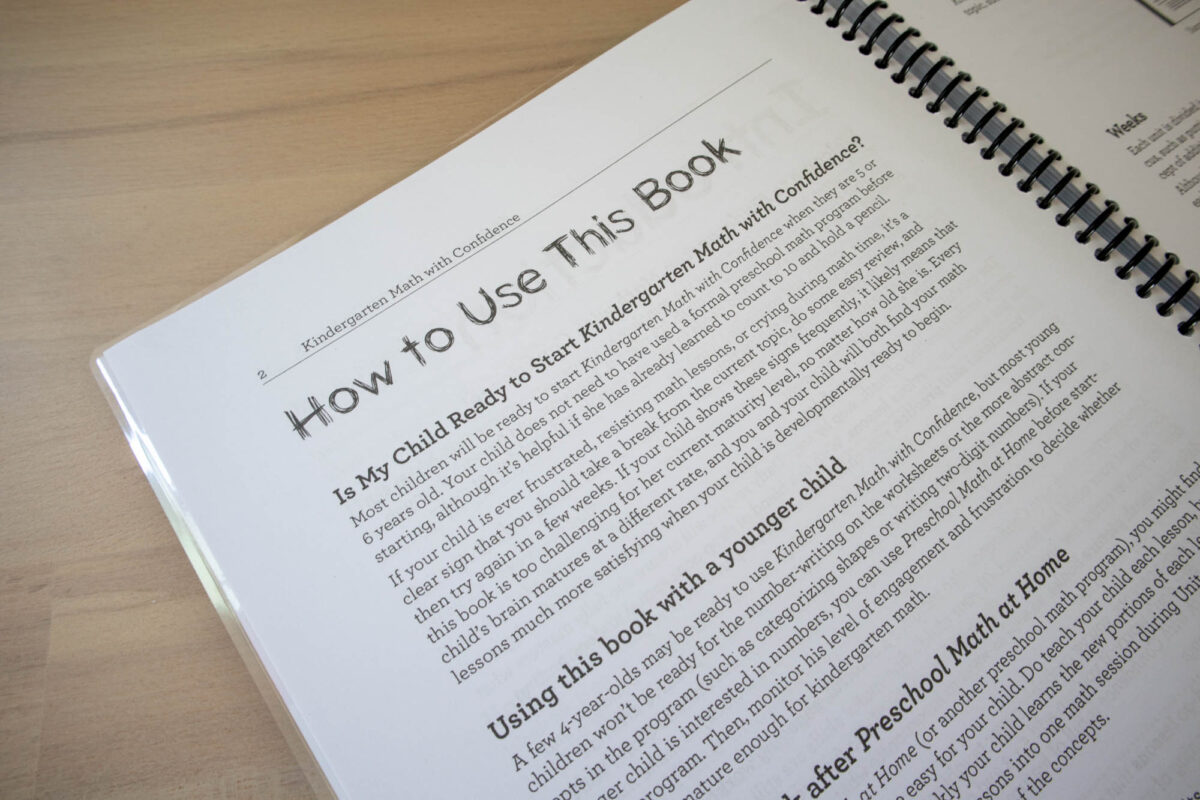
Math With Confidence is indeed a full curriculum. There’s no need to go out and buy anything more than the curriculum itself.
With that said, there’s always going to be a caveat. That is to say, if you have a child who is begging to do more then you should meet that need.
I cannot give a general statement about how much or how little your child should be doing at each age because children all have a unique set of skills and abilities.
Even among my own children, I’ve seen very different skills at different ages.
My advice is simply to start with something and then go at your child’s pace. You want to know that you’re giving your child the right level of challenge and that sometimes means ignoring grade level and just focusing on what skills they know and still need to learn.
This curriculum is designed to give children a thorough understanding of each concept by focusing on it until it is mastered. However, there’s enough spiral review to also make sure that concepts aren’t being forgotten.
Kindergarten lessons are short, so if you have a child who is grasping concepts very quickly then it would be very easy to double up on lessons and move through the curriculum more quickly. That’s why schedule flexibility is so important.
Is This Curriculum Printer Friendly?
Yes, it absolutely is. In fact, something I really appreciate about this curriculum is that they even provide a printer-friendly version of the PDF so that it’s as easy to print as possible. While there is a full-color student workbook, it’s not so heavy in color that it’s going to zap all your ink.
Many curriculums are offered as PDFs but are extremely heavy in images and color, making them basically unaffordable to print unless you have a very economical printer such as the Epson Ecotank or the Canon Magatank.
It’s not the case when it comes to printing Math With Confidence.
In fact, the entire instructor’s guide can be printed in black and white and this is the bulk of the printing.
Final Thoughts
Obviously, I believe this is a great homeschool math curriculum as we’re happily using it in our home.
We zoomed through 2nd grade filling in some gaps that my child had after switching over from another curriculum. Now, we’re using third grade. The way the concepts are built upon works really well. The short, regular lessons keep concepts fresh and help to build fundamental skills.
If you’re looking for something affordable while resting in the knowledge that your child will get a really solid foundation in math, then this is worth looking into.
I’ve seen my children really solidify their math facts while using this curriculum. It’s fun, engaging, full of games, and lessons are short and to the point.
It’s absolutely a valid contender among the many homeschool math curriculums available.