How to Teach Home School Spanish: The Best Tips!
*This post may contain affiliate links. As an Amazon Associate I earn from qualifying purchases.*
This is a sponsored post. All opinions are my own.
Teaching home school Spanish can seem really daunting, especially if you’ve never learned a foreign language yourself. However, there are so many great options and resources available to homeschoolers now.
In fact, you can know absolutely nothing about the language your child wants to learn and still provide them with great opportunities and resources that will do all the teaching for you.
Keep reading to get some great tips for introducing the Spanish language into your homeschool.
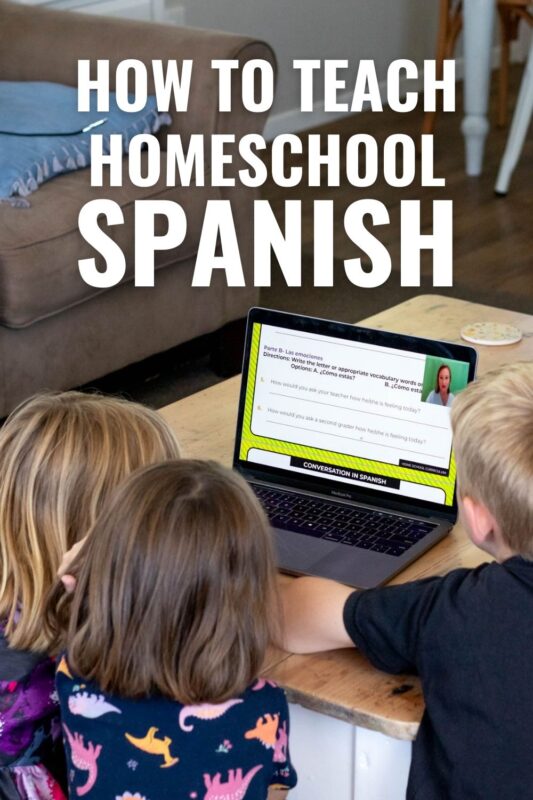
The Best Tips for How to Teach Home School Spanish
How each homeschool family chooses to teach foreign languages is going to look different. The key is to take the resources and ideas that work for you and not worry about the rest.
Choosing the Right Spanish Curriculum
The ideal Spanish program isn’t a one-size-fits-all. Rather, one that resonates with the unique learning style and age group of your young learners.
Whether they are elementary students eager to dive into fun activities or high school students ready for more structured lesson plans, aligning the coursework with their interests is key.
As a homeschool parent, I’ve found that incorporating materials such as flash cards, video lessons, and engaging stories can transform learning from a task to an adventure or game.
Moreover, considering programs that offer interactions with native Spanish speakers can provide an authentic feel to the language acquisition process.
In essence, our quest for the perfect Spanish homeschool curriculum is guided by understanding our children’s interests and how they learn best.
Incorporating Real-Life Language Use
When it comes to mastering homeschool Spanish from basics to fluency, the key lies not just in the structured lesson plans or the meticulously chosen Spanish homeschool curriculum but in the seemingly small moments of everyday life.
Imagine, for a moment, turning a simple meal preparation into a delightful lesson in Spanish vocabulary, where vocabulary words like manzana (apple) and leche (milk) become part of the dialogue between you and your young children or older children alike.
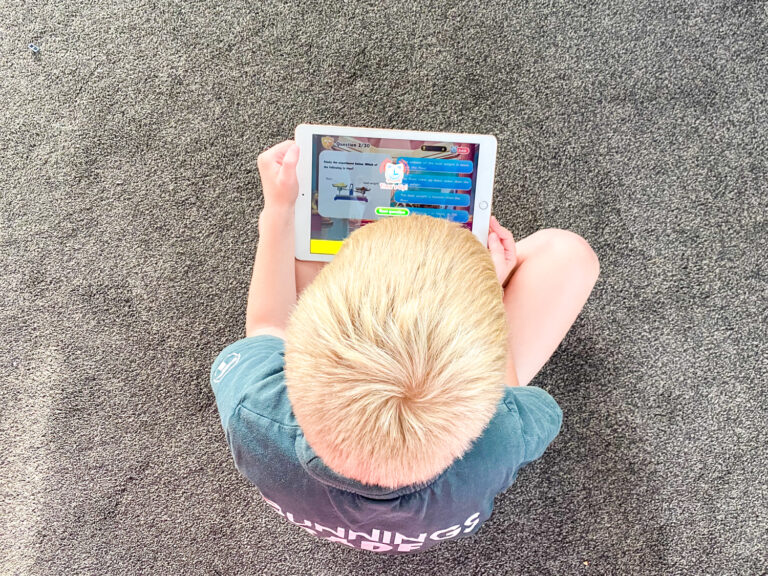
Moreover, supplementing technology in learning, such as interactive stories or video lessons, can offer a fun way to reinforce new Spanish words. This makes the process engaging for students of all age groups.
By intentionally weaving Spanish into your family’s daily routine, you create a vibrant learning environment. It encourages not just the acquisition of a second language but an appreciation for Hispanic culture.
Engaging with Native Speakers
When you start teaching Spanish at home, one of the most important experiences you can offer your young learners is the opportunity to engage with native speakers.
It’s a doorway to not just mastering a new language, but also embracing a vibrant culture firsthand. To find these invaluable interactions, consider leveraging online platforms that connect students with native Spanish speakers for online classes.
Alternatively, local community events and cultural festivals are great ways to immerse your whole family in the Hispanic culture. Thus, allowing you to practice the Spanish vocabulary in fun, real-world settings.
Remember, each conversation with a native speaker enriches your child’s language skills remarkably, making it a crucial step towards fluency.
Supplementing Technology in Learning
In our journey of mastering homeschool Spanish, from the basics to fluency, the helpfulness of digital materials cannot be overlooked. While screentime certainly has its disadvantages, that doesn’t mean it is without merit entirely.
I’ve personally marveled at how online tutor sessions can bridge continents, bringing native Spanish speaker wisdom directly into your home. It’s like holding a key to vast resources – from Rosetta Stone’s structured lessons to the playful interactivity of Mango Languages.
The best part? These tools offer unmatched accessibility, allowing us to weave Spanish learning into our day, no matter where we are. Such technology doesn’t just supplement our homeschool Spanish curriculum. It breathes life into it, making every lesson an adventure waiting to unravel.
When I was a homeschool student I had to rely on CDs that were shipped overseas to me. There was no online interaction or feedback. Nowadays, we’re able to not just learn Spanish, but learn it with an online community and get direct feedback.
Related: How to Use Screentime In Your Homeschool
Using Mas Spanish
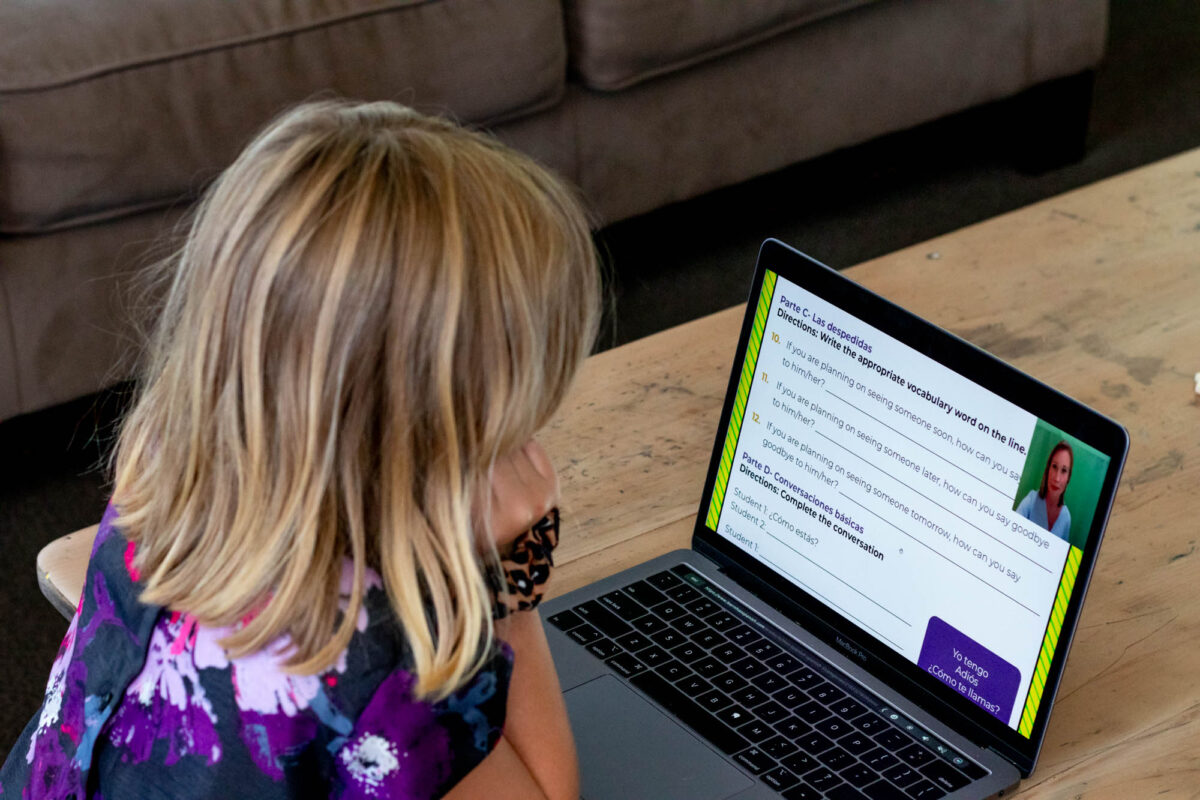
Mas Spanish is a complete Spanish curriculum that can be accessed online and is perfect for homeschool educators.
When it comes to teaching subjects that I’m not educated or confident in, I want all the hand-holding. Mas Spanish provides just that.
With this online course you’ll get video lessons, printable worksheets, links to games, an experienced instructor, and an easy-to-follow format.
It is very simple to navigate and use.
Spanish 1 can be done as a full-year (9 month) program or in a single semester.
It is made for middle to high-school aged children and is designed to require very little parental involvement.
Pricing
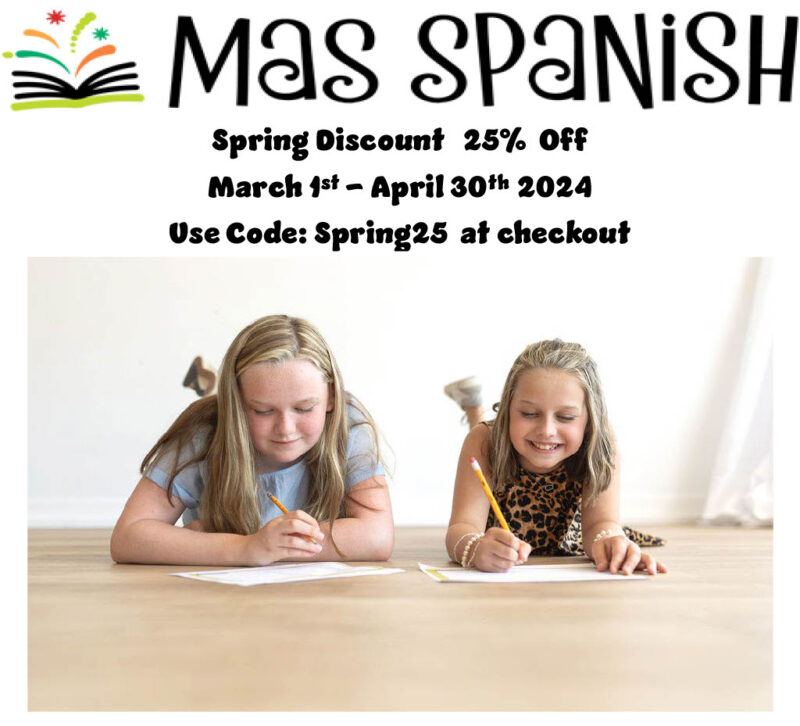
For a limited time you can get Spanish 1 for 25% off by using the code Spring25. Code is valid from March 1 – April 30, 2024.
They also have free lesson samples that you can take a look at before committing to a purchase.
I believe the pricing is very reasonable and with the discount, it’s a really affordable option for homeschool families.
What We Liked About It
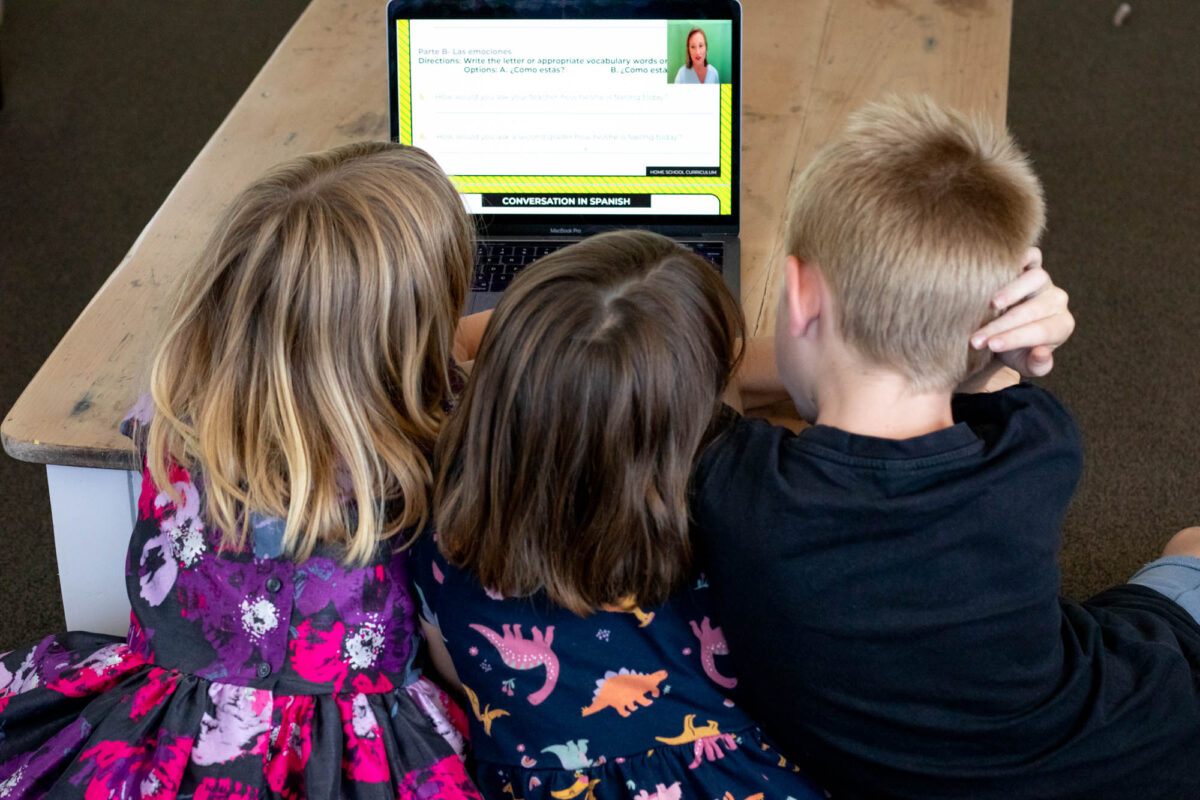
It’s so simple to follow. I’ve used online programs before that require a lot of teaching just to use the platform. Mas Spanish is set up to be very simple to use.
I also like that there is flexibility with the lessons so that you can tailor it to your family’s schedule.
The fact that it is an online program makes it easily accessible, not just for if you’re traveling, but also for those who live internationally. This makes it much more affordable than many other options available.
I appreciate that the lessons are clear, easy to follow, and not too long. Keeping children engaged in the lessons is key and Mas Spanish does a good job of it.
It starts with the very basics but doesn’t feel too juvenile in approach, which is fantastic.
Who Is This For
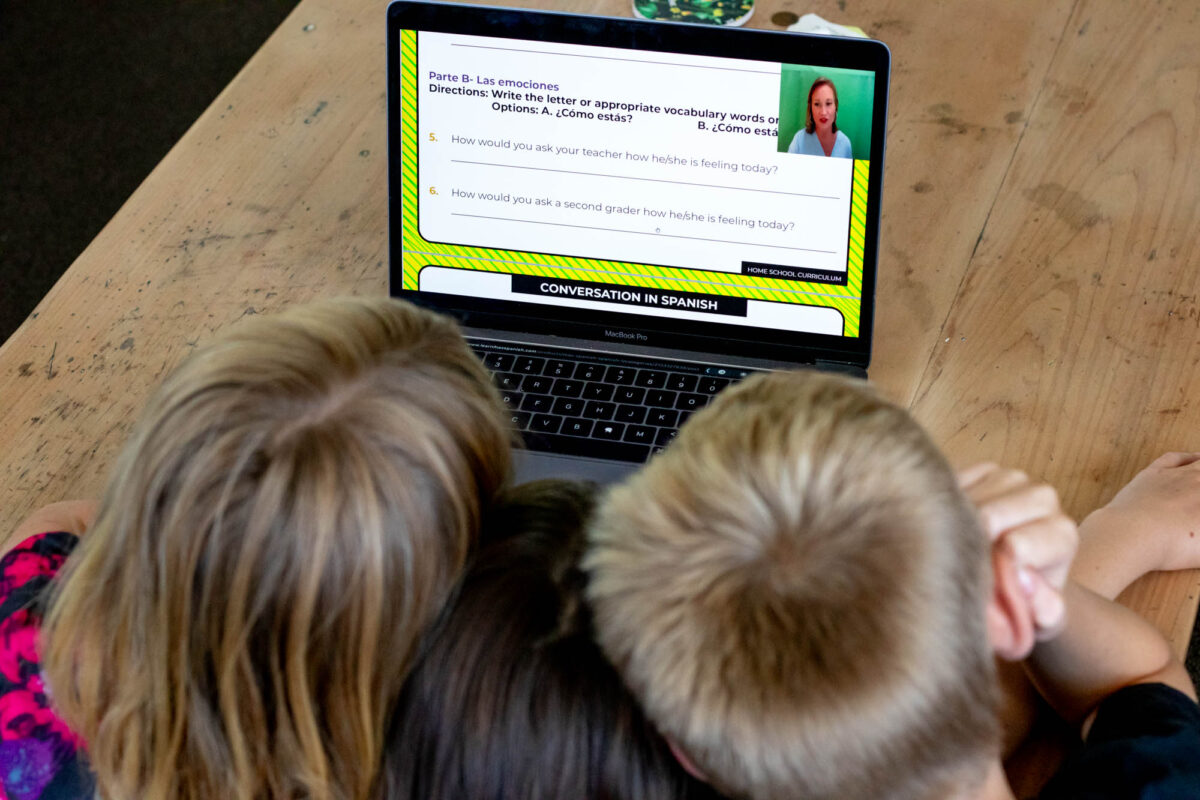
If you want to start some homeschool language learning and you’re specifically interested in Spanish then I would consider Mas Spanish if:
If any of these reasons speak to you then I encourage you to head on over to the Mas Spanish website and check out their free lessons. That way you can get a feel for the curriculum before committing to purchasing anything.
It would also be a wonderful resource to use in combination with other curriculums. You can then create a beautiful comprehensive learning experience of Hispanic culture and history.
Cultural Immersion from Home
When teaching homeschool Spanish, we’re not just memorizing vocabularies or mastering grammar. We’re opening a doorway to the vast and vibrant Hispanic culture.
It’s like inviting the world into our living room, from the lively streets of South America to the rich history of Spain.
For us, homeschooling parents, the challenge and beauty lie in how we can weave these cultural threads into our daily lessons, making the language come alive for our children.
Integrating elements of Hispanic culture isn’t just an educational task. It’s a way to fill our home with the colors, sounds, and tastes of Spanish-speaking countries. We don’t have to compartmentalize each school subject that we’re teaching.
Whether through cooking traditional recipes together or celebrating Hispanic holidays, we have the unique opportunity to enrich our children’s language acquisition with authentic experiences.
This approach does more than teach a second language; it fosters a deep respect and appreciation for diverse ways of life, preparing our children to be global citizens.
So, not only are you teaching a foreign language, but you’re also taking on social studies, history, and geography lessons at the same time.
Final Thoughts
As you consider beginning to teach homeschool Spanish, it’s essential to jot down all of the perks the hard work of learning a second language can bring to your family.
The path to mastering a new language—from the basic vocabulary words to the fluency that allows for impassioned conversations—is one paved with hard work, dedication, and an insatiable curiosity about the world.
Through Spanish homeschool curricula, online videos, and direct instruction, we not only learn to conjugate verbs or memorize flash cards; we are opening doors to new worlds, new cultures, and new perspectives.
Yet, what makes this journey truly remarkable isn’t just the linguistic skills we gain; it’s the deeper understanding and appreciation of the Hispanic culture, the connections made with native speakers, and the joy found in sharing this process with our family.
As you move forward, try to approach your homeschool Spanish lessons with creativity, openness, and the determination to make the experience not just educational, but transformative—for your entire family.
Remember that Mas Spanish has free lessons to sample. They also have a 25% discount on their Spanish course for a limited time. Go ahead and check the Mas Spanish website to see what they have on offer.