Beginner’s Guide To Homeschooling: 6 Tips to Get You Started
*This post may contain affiliate links. As an Amazon Associate I earn from qualifying purchases.*
I was raised in the world of homeschooling, and yet, when it came to starting to homeschool my own kids I still found myself overwhelmed.
If you’re frozen and stuck wondering how to start homeschooling then here’s the short of it: you need to check the laws where you live, know why it is you want to homeschool, do some research, get your supplies, and just start.
Simple, right?…or maybe not.
At least, it doesn’t seem simple when homeschooling is a completely new concept to you.
Hey! I was homeschooled myself for a good chunk of my education and yet the homeschool landscape had changed considerably since that time. You’re not alone in feeling overwhelmed.
Don’t worry mama, I’ve got your back.
I love it when people decide to homeschool their kids and I want to be able to help out however I can. There are so many benefits to homeschooling and I’m always eager to help anyone who is interested.
If you’re struggling and need a step-by step guide for homeschooling for beginners then this is right where you need to be.
(Pssssst – You can grab a free copy of my Curriculum Compass (a jumping-off point to choosing curriculum) by scrolling further down the post).
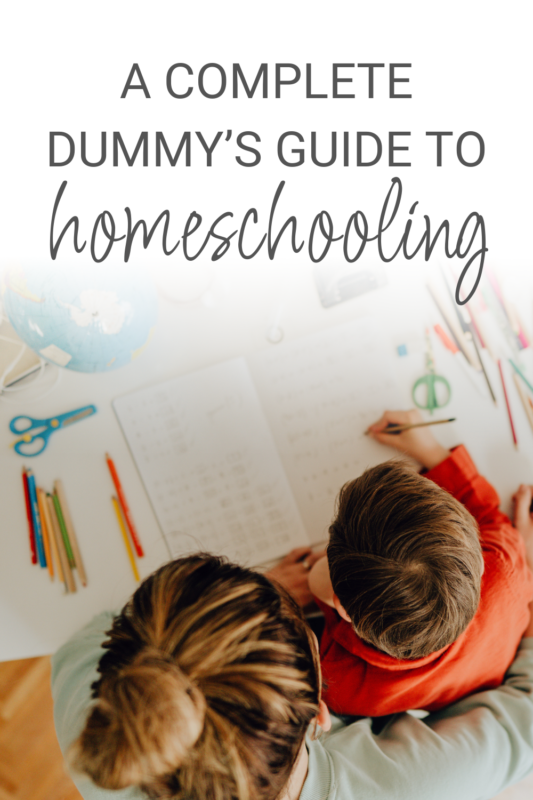
How to Start Homeschooling: Homeschooling for Beginners
I don’t care how much you know or don’t know about homeschooling, every parent needs to go through these steps when they’re beginning to homeschool.
You may think you know how to start homeschooling but there may be some things that you’ve overlooked or just haven’t even begun to think of.
#1 Check Your State (or Country’s) Laws
This right here is where you need to start.
Before you begin researching curriculum, school supplies, or anything else, you need to know the homeschool laws where you live.
Every country is different. In fact, in some countries it is sadly illegal to homeschool at all.
In America there are States with basically zero requirements and others that are a lot more strict with what you have to do in order to homeschool.
I live in New Zealand and here we have to submit an exemption to homeschool before your child’s 6th birthday that details how they will be educated as well as and as frequently as if they were to attend regular school.
Once that has been approved there are no tests or check ins unless someone raises concerns about your child.
If you’re from New Zealand, you can find out more information about homeschooling here.
If you’re from the United States, you need to check out the HSDL website. It has a plethora of helpful information and I highly suggest it for anyone wanting to begin homeschooling.
#2 Write Down Your “Why”

It is so important to really know why you’re homeschooling and what your end goal is as it will affect everything going forward.
Have you been forced into homeschooling due to unforeseen circumstances?
Do you want to homeschool right through to graduation or do you intend to just homeschool until highschool?
Perhaps you want to just take it year by year?
There’s no right or wrong answer here, but knowing your reasons to homeschool will impact everything from your mindset to the curriculum you choose to use.
#3 Start Researching

So much of homeschooling your children is about research. If you think homeschooling is just about your children learning then you’d be wrong.
As a homeschool mom, I can say for sure that I’m learning just as much, if not more, than my children.
You’re going to have to get used to researching and doing a lot of it, especially in the beginning stages.
Of course, there are the usual avenues of Google and Youtube (I have a Youtube channel PACKED full of helpful tips if you’d like to start there), but I also want to encourage you to reach out to your own community.
Homeschooling is increasingly growing in popularity and there are often very valuable homeschool groups that are more than willing to help out a fledgling homeschool mom.
I love to be able to help beginner homeschoolers get started, which is why I created this Curriculum Compass. Think of it as a super simple guide to get you started with choosing homeschool curriculum. Grab your copy by signing up below.
Whatever way you choose to go about your research, here are some areas you’ll want to focus on:
Define Homeschool
When beginners come to homeschooling they often have different views of exactly what homeschool is.
The truth is, it is different for everyone but it is important that you define it for yourself.
How you homeschool your children is entirely up to you but you need to define what that is.
Do you want to replicate school at home or do you want to do something completely different (neither one is more right than the other)?
It’s okay if you don’t know yet but just be aware that how you start may not (in fact almost certainly won’t) be how you end up.
Understand the Methods of Homeschooling
As I briefly mentioned, there are different methods of homeschooling your children.
There are five main methods that are commonly referred to:
- Traditional
- Charlotte Mason
- Classical
- Unschooling
- Eclectic
You can read a lot more about the different methods of homeschooling here in this post but there’s something that I really need you to know…
You do not need to put yourself into any one of those categories.
There are quizzes out there that can help determine your strongest homeschool style but there is absolutely no reason that you need to put a title on it or feel tied to it in any way.
The whole purpose of homeschooling is to make it work for your child and your family. Never feel pressured to homeschool a certain way if it doesn’t make sense for you.
In saying all that, it can be helpful to understand the different methods of homeschooling if for no other reason than to see that there’s more than one way to do it.
You can find ideas and tips that you might not otherwise have considered.
#4 Examine How Your Child Learns Best

There is so much beauty and empowerment in knowing how your child’s mind likes to learn.
It is a wonderful thing to be able to see that and tailor their education around it.
If you’re totally new to this then it may seem like a daunting job trying to figure it out. Don’t feel inadequate or dumb if you feel overwhelmed by this.
Trust me, you know your child better than you might think and this is something you’ll learn more over time.
For now, you should know that most of us humans can be put into these categories when it comes down to how we learn best:
- Visual
- Auditory
- Kinaesthetic
- Reading/Writing
These learning styles can be further expanded on to 7 styles in total, but you really just need to understand these four.
If your child is a visual learner then they learn best by seeing things taught through video or by seeing it explained.
If your child is an auditory learner then they learn best by hearing things taught.
If your child is a kinaesthetic learner then they learn best by doing – using their hands.
And if your child is a reading/writing learner then it goes without saying that they learn best by doing those activities.
Step back and think for a moment about when you’ve seen your child light up about a subject and really take a keen interest in it.
Many younger children learn best by doing. They want to help you bake, to clean, and to put a craft together.
Older children may be more visually or auditory inclined.
Once you understand how your child learns best it will be a lot more of a simple process when it comes to choosing homeschool curriculum and learning resources for them.
#5 Buy Your Supplies

Homeschooling on a budget can be done, but you will need some supplies to begin.
Honestly, if you just have a pencil, some paper, and access to a library you can make it work, but most homeschooling families tend to use more than that.
You’ll need to go ahead and purchase any homeschool curriculum that you’re wanting to use and then some basic school supplies to go along with those.
You can see a list of some of the most helpful homeschool supplies in this post.
If you’re on a tight budget then a good way to buy books is to look at second-hand stores, Facebook Marketplace, or thriftbooks.com.
I’ve also found it wise to just buy for a term at a time. It is nice to be prepped for the entire year, but budgets don’t always allow for that.
Also, try not to get caught up in the Instagram trends if your budget just won’t stretch to that.
Your kids aren’t going to miss out.
I think we often see other homeschool mom’s collections of resources and feel as though we need to go out and buy all the things.
In that case, there are two things to you need be mindful of:
#1 She’s likely built that collection up over YEARS.
#2 What works for her family won’t necessarily work for yours.
You are much better off sticking to your own lane and finding out what works best for your family.
Take note of resources you may want to purchase in the future, but never feel as though you need all the things in order to homeschool well.
#6 Just Start

When you first decide to homeschool it can feel almost paralyzing.
All there is to learn and then implement can seem very overwhelming indeed.
You will likely never really feel totally ready to begin so here’s some friendly advice…just start.
Start with just one subject if you’d like to and add to that as you feel more comfortable with homeschooling.
The reality is that homeschooling is a lot of trial and error, especially in the first 1-2 years.
The only way to get comfortable with homeschooling and learn what works (and what doesn’t) is by actually doing it.
Set a date and start.
The more you do it the better you’ll get and the more you’ll relax into the process.
And while you may get more comfortable with it all, you should know that there will still be hard days.
After all, we’re talking about imperfect human beings here. Both you and your children will have off days, and that’s okay.
That doesn’t mean that you’re doing anything wrong or that you’re failing in any way.
Final Thoughts
How do you eat an elephant? One bite at a time.
It’s a metaphor that can be applied to so many scenarios in life, but it is particularly apt when it comes to homeschooling.
Homeschooling your child is a dynamic experience. How it looks will shift and change over time. Personally, I think there’s a lot of beauty and fun in that.
The very best tip I can give you is to simply start. Make a decision and then make another one. Before you know it, you’ll be an old hat at homeschooling and passing on tips to the next round of homeschool parents coming along.