
Homeschool Schedule for 3 Kids That Doesn’t Take All Day!
*This post may contain affiliate links. As an Amazon Associate I earn from qualifying purchases.*
Starting the homeschool year and looking for inspiration for a homeschool schedule for 3 kids?
I’m here to help!
As a second-generation homeschooler now homeschooling my own three kids, I’ve got some tips that I think will help.
We’ll talk about what to consider when setting up your homeschool routine, then I’ll share what we do on a daily basis.

Some Things To Consider For Your Homeschool Schedule For 3 Kids
Identifying core responsibilities and absolute must-dos is the foundation of a daily homeschool routine. With three kids at different stages, pinpointing these essentials is like mapping out a strategy for a winning game—it keeps everyone on track.
For example, last year’s homeschooling taught me the significance of this approach. It became clear that establishing priorities isn’t just about ticking boxes; it’s about creating a rhythm that all three kids and I can work with, smoothly transitioning through subjects and activities, with no one missing anything.
Each family differs, and so do their needs. So when I set the day’s core tasks, I consider our unique family dynamics—the grade levels, the subjects where each child excels or needs more attention, and even their personalities and learning styles.
Maybe for one child, quiet time with a language arts workbook is non-negotiable, while for another, it’s hands-on science experiments before lunch. This understanding greatly amplifies our homeschool schedule’s efficiency—there’s less friction and more flow.
The impact of these well-defined priorities cannot be overstated. Last year, embracing this method of scheduling transformed our days from chaotic to well…less chaotic (we’re keeping it real here).
When we start with clear targets in sight, the children dive into their homeschool day with a stronger sense of purpose, and I can juggle their needs without dropping the ball.
Plus, there’s an added bonus—setting these priorities gives me peace of mind that the really important stuff always gets done.
Creating a Homeschool Schedule for 3 Kids
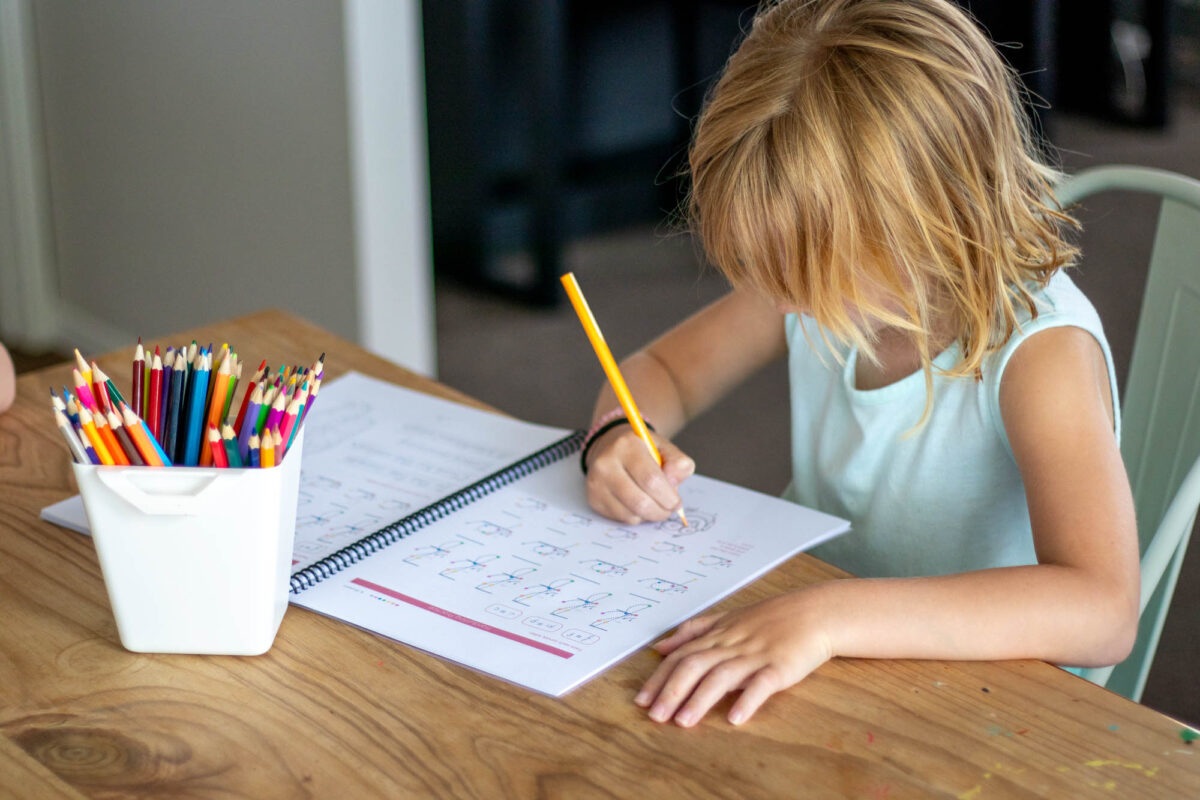
As I said before, I’m going to set up a little context for creating your daily schedule before I jump into what we do.
If you’re not interested in that, then scroll down near the end.
Prioritize & Plan
Here are some quick bullet points to give you a road map of sorts:
- Identify Core Subjects: Start by listing out the core subjects for each grade level of your kids. If Language arts for your middle schooler, math for your 5th grader, and foundational alphabet games for your preschooler are all pivotal, make sure these are scheduled in every daily homeschool plan.
- Consider Learning Peaks: Observe when your children work best. Is it right after their morning energy burst or perhaps following a bit of physical activity? Slot the hardest subjects into these peak times for efficiency.
- Integrate Siblings’ Schedules: With kids in different grades, ensure each child has a balance of independent work and one-on-one time with you. When the older children are engaged in independent work, turn your focus to the younger one, and vice versa.
- Establish Routine Checkpoints: Set specific times for breaks, lunch, and quiet time. This helps break down the day and gives everyone, including you, a homeschool mom, a chance to recharge.
- Allocate Time for Special Interests: Fit in time for subjects like foreign language or extracurricular activities that may not be daily essentials but are important for your family’s homeschooling goals.
- Balance Flexibility and Consistency: Your daily schedule should include a mix of strict schedule items and flexible time slots. Keeping free time at the end of the day can be motivating for kids to move through their tougher assignments.
- Incorporate Practical Life Skills: Set aside time for chore time or life skills that are suitable for each grade level, whether that be helping around the house or managing their own projects.
- Plan for the Unplanned: Always leave a little time for the unexpected, whether it’s surprise field trips, spontaneous learning opportunities, or when someone just needs a little bit more help than usual.
Fostering Creativity in Scheduling
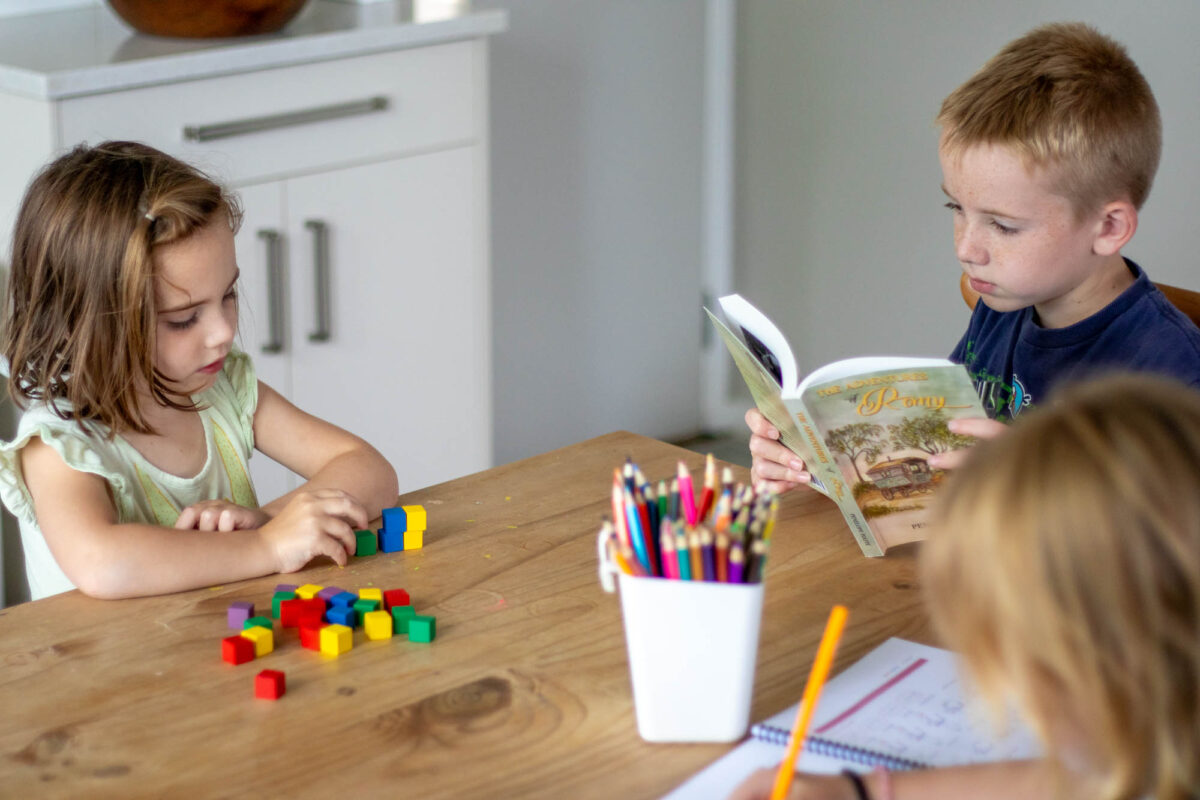
Who says a schedule has to be a cookie-cutter? I sure don’t. Toss out that traditional nine-to-five mindset and embrace what works for your family.
Maybe your little ones are chirpiest with the birds, making dawn the best time for tackling language arts. Or perhaps, after an energizing afternoon walk in the park, your middle schooler’s focus sharpens—prime time to dive into foreign language drills. It’s all about syncing with their natural ebb and flow.
Now, I get it. The mere thought of shaking up what’s “normal” can feel kind of scary. But, brace yourselves, fellow homeschool parents. It’s experiment time!
Think of it as a homeschool journey into the unknown, where each day of the week could be a whole new adventure. Your oldest daughter thrives on a fixed routine? Perfect, keep that in the mix. Your 5th grader can’t sit still? Carve out hefty slices of chore time for that bustling energy.
Remember, the only rule is—there are no rules. A loop schedule here, a block schedule there.
Juggling homeschool with younger siblings’ nap times? Why not slot in a quiet ‘big kids’ study hour then? I’ve walked this path and let me tell you, with a little time and a dash of imagination, you’ll soon be orchestrating the best homeschool schedule that hits the right note for everyone.
Adaptability in Homeschooling
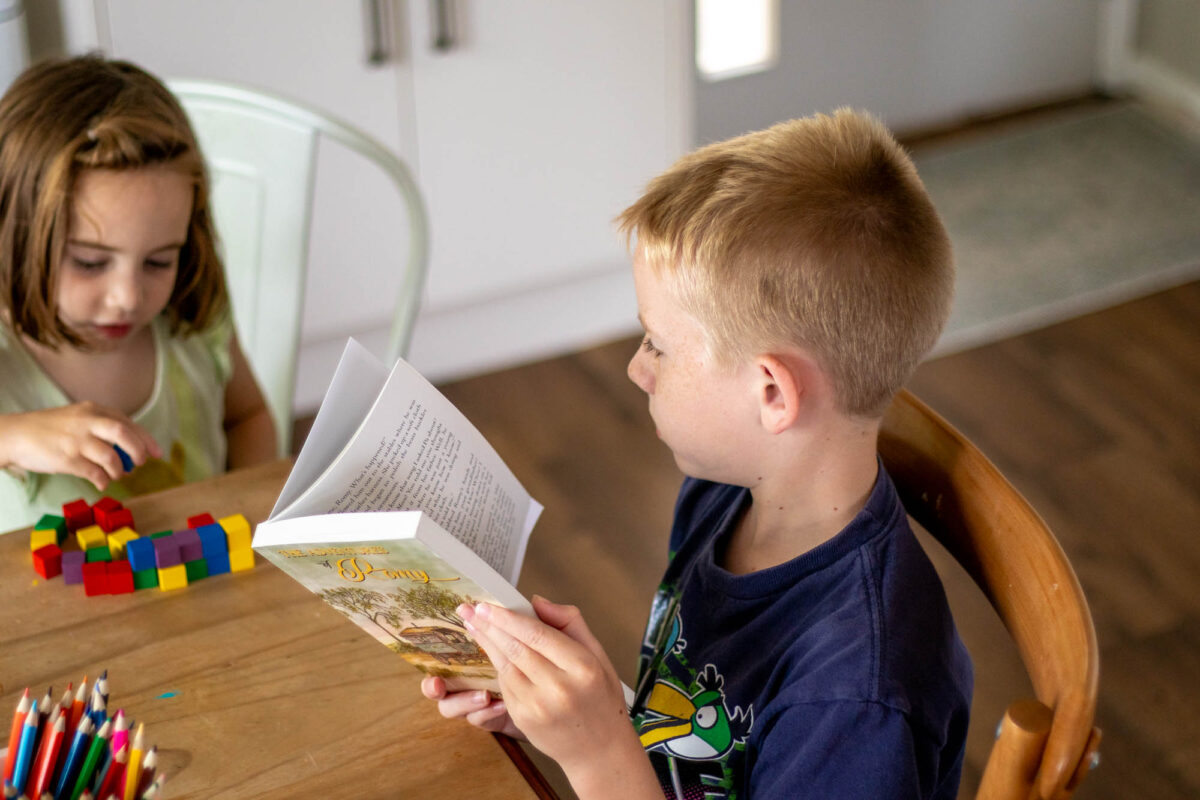
Life has a knack for throwing curveballs, doesn’t it? And when you’re juggling homeschooling multiple kids, a rigid schedule can quickly become your worst enemy.
I’ve learned over our homeschool journey that adaptability isn’t just a nice-to-have; it’s a crucial element of our daily homeschool schedule. It’s not about if surprises will happen, but when. So, how do we deal with the unexpected? How do nursery rhymes and number games coexist with middle school science experiments and language arts for the older sibling?
Well, the key is to include flexibility in our routine.
Start by leaving open slots or buffer times within your schedule. These little pockets of free time are lifesavers when the toddler spills juice all over his language workbook or when the 5th grader suddenly grasps a tricky math concept and wants to dive deeper.
Having this flexibility allows us to shift school work around or extend a particularly great time of discovery without feeling the squeeze. It also means I can allocate a little bit more time to one child without neglecting the needs of the others.
And when everyone’s done for the day, these free slots can become time for physical activity or a spontaneous field trip. The most important thing is, adaptability helps us keep our cool. It lessens the stress because we’re not racing against the clock, and those open slots become a buffer against disruption, ensuring the homeschool day flows more harmoniously.
Multitasking with Multiple Kids
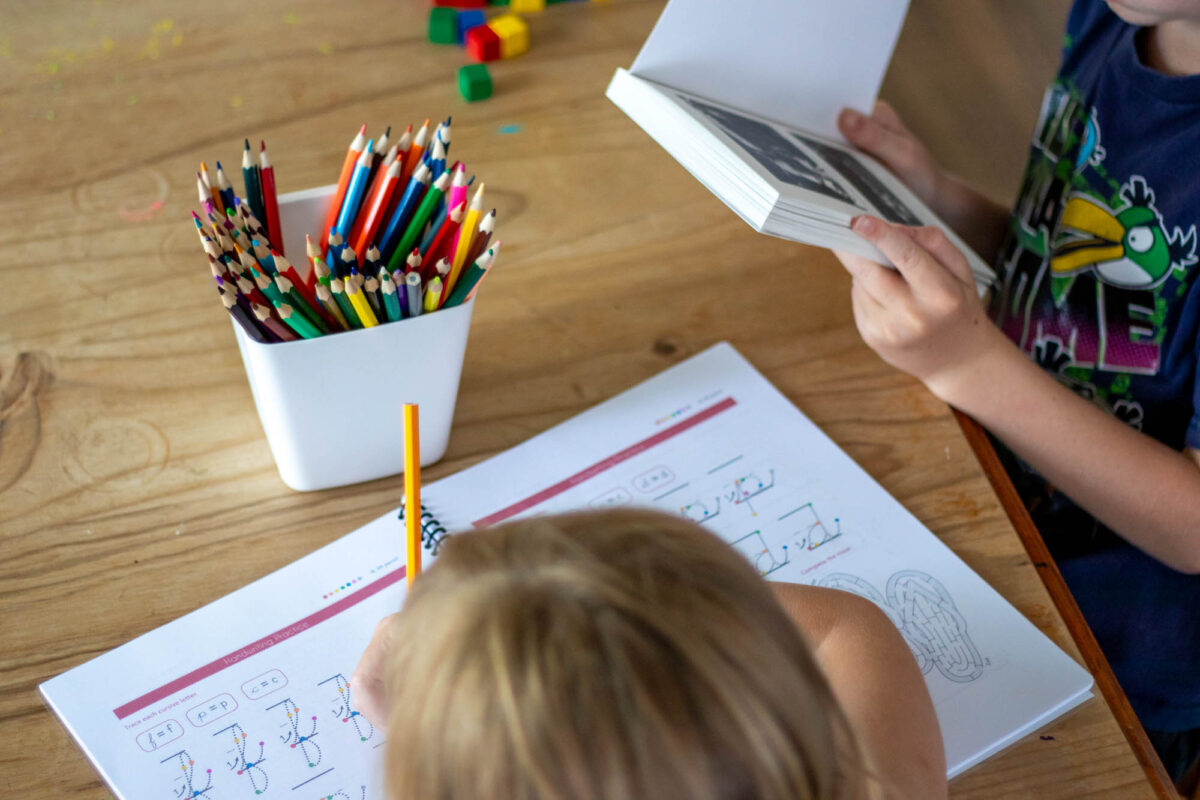
Multitasking while juggling the education of my three kids has become a bit of an art form. Keeping all three kids busy with something is my strategic move to ensure everyone’s on track and focused. For instance, while my eldest dives into independent work, like tackling language arts, I engage with the younger ones on their math lessons.
It’s a delicate balance, working in the morning has always been our golden time.
The house is quieter, minds are fresh, and that’s when we strike hard on the tough subjects. I’ve found that if we get the hard subjects out of the way first, my kids are more receptive, and we zip through the rest of our subjects with ease.
My preschooler might work on letter formation while the older kids are crunching math problems, but it’s this sort of orchestration that makes our homeschool day march to a productive rhythm.
Creating a loop schedule also enhances our multitasking. What works wonders is not assigning tasks to a specific time but rather cycling through them. This way, we are not slave to the clock, but to completion and mastery.
This method encourages my kids to be self-motivated, and they love ticking off tasks from our loop. Plus, when the older children are engaged in quiet time or reading, it’s the perfect slot for younger siblings to slip into some free play or a guided educational game.
And, let’s not overlook chore time. Involving all the kids, each according to their capability, in daily household responsibilities like setting up for lunch fosters teamwork and teaches valuable life skills.
Not every day is perfect. But, that’s the beauty of homeschooling – every day we learn and fine-tune our method a little more.
Curating Your Ultimate Daily Homeschool Schedule
Okay, let’s do a quick recap of what you should take into consideration when planning out your homeschool schedule:
- Identify Core Subjects and Non-negotiables
- Determine Time for Independent Work
- Incorporate Flexibility with a Loop Schedule
- Plan for Quiet Time and Breaks
- Include Extracurricular Activities and Chores
- Balance Intensive with Lighter Subjects
- Use Planning Tools
- Review and Adjust Regularly
Sample Schedules for Inspiration
There are different kinds of homeschool schedules that work well for different families. You may use one in particular or combine several. There’s no right or wrong way to do it. Simply use what works and discard the rest.
- Block Schedule for Elementary Grades: We use a block schedule that breaks the day into larger uninterrupted learning periods. This could mean math and language arts in the morning, followed by a longer block for science or history in the afternoon. It works wonderfully for my 4th grader who dives deeper into subjects without frequent switches.
- Loop Schedule: This is where you have subjects on a loop rather than a day or timeslot. It means that if something comes up and you miss a day or so of school you just pick up where you left off. Many homeschooling families find this schedule to be very practical.
- Year-Round Themed Weeks for Preschool: For many homeschool families they choose to do themed routine. They explore themes such as dinosaurs or space over a full week, regardless of the actual ‘school year’. This ensures the youngest doesn’t feel left out and integrates learning with play. It’s ideal for young children who have shorter attention spans and a great love for exploring their passions.
- Daily Schedule with Chore Time: We slot in specific times for chores to teach responsibility beyond academia. After breakfast, we spend a little time tidying up before diving into school work. This instills a sense of duty in my kids and gives them a break from academic tasks.
- Flexible Routine for Multiple Grade Levels: In some families, with multiple kids in different grade levels, a tailored schedule with designated time for subjects works best.
Our Daily Homeschool Schedule with 3 Kids
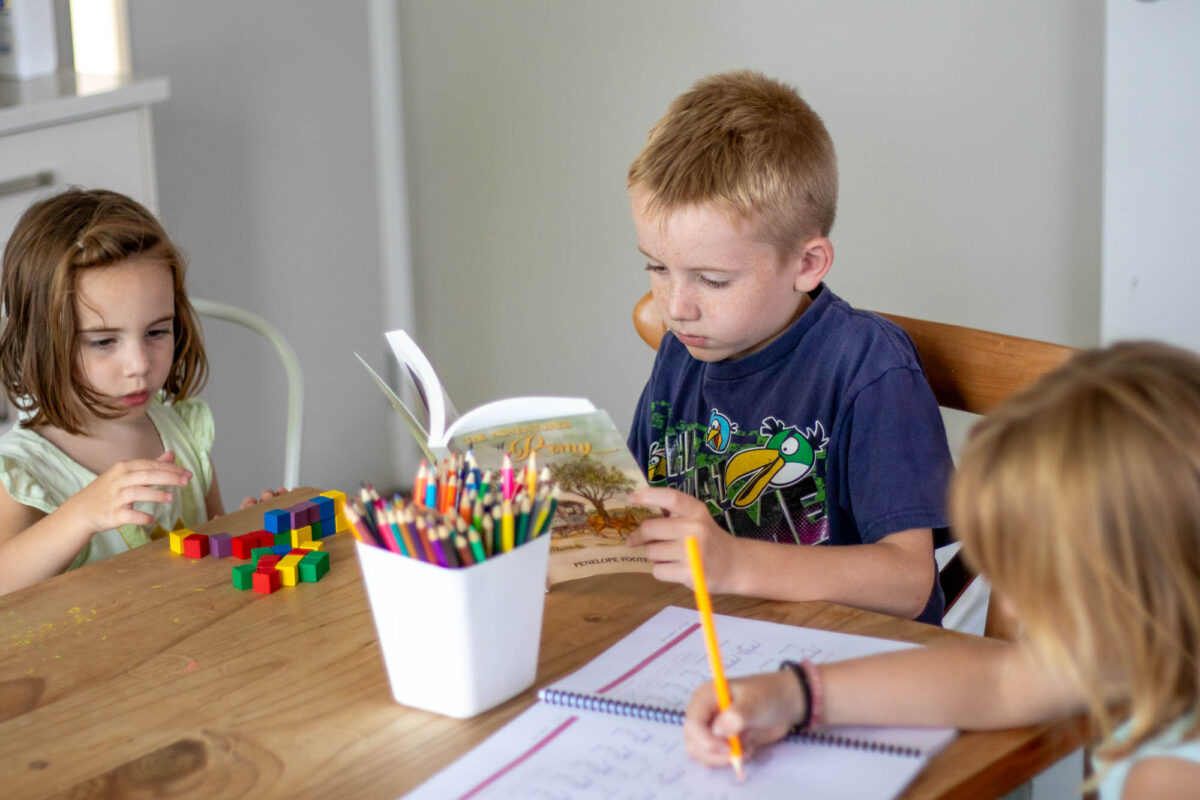
I’m writing this at the start of the second year homeschooling all three children. Things could very well change along the way. However, I do believe that the essence of it will stay the same.
So, this is what a typical day of homeschooling looks like for us:
We sit down at the table to eat breakfast at around 8 am. Before that, the children have gotten dressed and done their chores for the day. I would have been up since 6 am, done an hour of work, farewelled my husband to work, eaten breakfast, done my Scripture time, and then got myself ready for the day.
- 8 am – Morning basket: This is where we do our Scripture memory, Bible, literature, and poetry – all while my children eat breakfast
- 9 am – Independent subjects: After breakfast, the kids help to clean up and then we sit down to do independent subjects. I work with one child while the other does their independent work. I just juggle between the three kids.
- 10/10:30 am – Break: Sometimes this is more like 10:30 am, but it’s when we take a break and have a snack.
- 11 am – Group subjects: I like to finish our day with our family subjects because they tend to be less mentally taxing. You can find out what we use for things like history, Bible, literature, and more by watching this video.
- 12/12:30 pm Lunch: We’re all done! It’s not often that we have to do school past this point. The afternoons are reserved for play or extracurricular activities.
One caveat is that on the days we’re home the children have rest time in their rooms for one hour in the afternoon.
Bringing It All Together
We’ve gone through what it takes to curate a homeschool schedule that caters to a trio of learners, each with their unique needs and rhythms.
From pinpointing those immutable daily must-dos to embracing the ebb and flow of life’s little surprises, we’ve talked through what it takes to make the best routine for your family. It’s about creating a schedule that respects both the collective family heartbeat and the individual pulses of your kids.
Multitasking is something that will come in very handy. You’ll likely find you get better at it the more you practice.
If you ever find yourself struggling, or unsure of what to do, know this: You’re not alone on this journey.
Your homeschooling schedule will evolve with each year, growing richer with the wisdom of experience.
I extend a hand of friendship and a voice of encouragement. Patience and flexibility are your allies as you fine-tune your family’s daily routine.
Have the courage to experiment, and trust that, measure by measure, you’ll craft an ideal homeschool schedule that resonates with the hearts and minds of your dear learners. And believe me, you’re doing great.
Final Thoughts
If you’re like me, juggling homeschool schedules for three kids can feel like a balancing act. But here comes the good part – crafting the perfect daily routine doesn’t have to be a daunting task.
You see, I’ve found that creating a schedule should start with a clear understanding of our non-negotiables. This means identifying those core subjects or activities that each of my children really must get done every day. With that clear in my mind, I can then plan our day around those key aspects, ensuring nothing vital falls through the cracks.
What has worked wonders for us is approaching our schedule with creativity. Remember, traditional school schedules – clock in, clock out – those aren’t set in stone for homeschoolers.
I have experimented with teaching at different times of the day. Finding our family’s natural rhythm has been a game-changer, especially when considering the diverse learning needs of my kids. It could be that your family also thrives better with a little unconventional scheduling.
Flexibility is my middle name…
Well, not really, but it should be! Life loves throwing curveballs, and it’s up to us to be ready to catch them. So within our well-planned schedule, I leave room for the unexpected. It’s all about creating a routine that’s structured enough for productivity but flexible enough for the unpredictability of life.
When it comes to tackling subjects, well, I get strategic. Let’s face it, we all have more energy in the morning. So, that’s when we dive into the most challenging topics. It makes our homeschool day run so much smoother when the afternoon rolls around. We can relax a bit knowing the hardest part is done. Give it a try; your future self might thank you for those few extra moments of peace at the end of the day!
Take these ideas, mix them with a dash of patience, and a spoonful of persistence, and you’re on the right track to creating a homeschool schedule that works just right for your trio of learners. It’s about crafting a day that fits your family. It’s not fitting your family into a prefabricated schedule – and that’s something to truly aim for in your homeschool journey.