8 Homeschool Organization Tips That Actually Work
*This post may contain affiliate links. As an Amazon Associate I earn from qualifying purchases.*
Being organized is not everyone’s strength. You may have read loads of homeschool organization tips but still feel as though you’re drowning.
Homeschooling comes with many rewards, but it also presents a unique challenge—staying organized amid lesson plans, school supplies, and daily household tasks. Without a solid system, things can quickly spiral into chaos, leaving you feeling overwhelmed.
The good news? With intentionality and a little encouragement, you can create an organized homeschool environment that works for your family.
Why Organization Matters in Homeschooling
A well-organized homeschool space and schedule can:
- Reduce stress and frustration.
- Help children focus better on their lessons.
- Make transitions between subjects smoother.
- Keep materials easily accessible and prevent wasted time searching for resources.
- Allow more time for enjoyable learning activities.
And let’s just say it like it is…having some semblance of organization will keep you, as the homeschool mom, sane.
That last point benefits everyone greatly.
How to Stay Organized in Your Homeschool

The key here is to do what works for you. If a system isn’t working then get rid of it and try something else.
Try, try, try until you find what works for your brain and home.
Practically speaking, here are some ways that we keep things in check in our home.
#1 Create a Homeschool Space

Designate a specific area for homeschooling, whether it’s a dedicated schoolroom, a corner of the living room, or even the kitchen table. The key is to keep it functional and clutter-free.
We do not have a dedicated homeschool room. We school around the dining room table and that’s the way I like it.
Aside from that, I use a cart for all of my teacher’s manuals and things we use on the daily. I use a cube shelving system to store our in-use curriculum, and then we also have another bookshelf in that room where we keep our art supplies and extra books.
When curriculum is not in use, I either store it in the bookshelves in our other living room, or I keep it in plastic tubs out in the garage.
The plastic tubs are what I used for years when we lived in a much smaller home.
#2 Develop a Simple Scheduling System

Having a predictable routine can make your homeschool day run more smoothly. Choose a scheduling method that works for you:
- Daily Timetable: Block out time for different subjects and activities.
- Loop Scheduling: Rotate subjects on a flexible schedule to ensure variety.
- Weekly Planning: Plan lessons and goals at the start of each week.
Each family’s schedule is going to look different, but I highly recommend having at least a gentle one that you can go by.
Trust me, it’ll help everyone to know what to expect next.
Related: Homeschool Schedule for Three Kids
#3 Use a Homeschool Planner
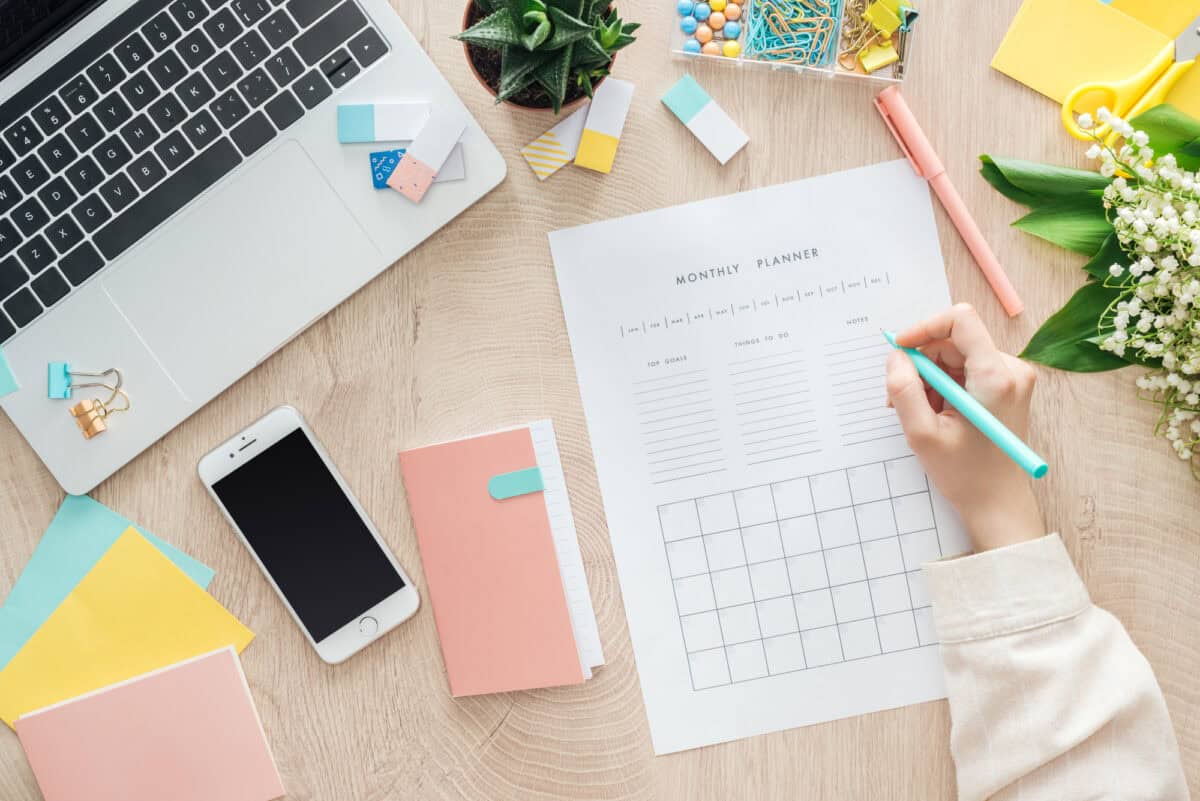
A planner can help you track assignments, lesson plans, and progress. Choose from physical planners, printable templates, or digital tools like Trello or Google Calendar.
What to Include:
- Weekly lesson plans.
- Learning goals for each child.
- Field trips and extracurricular activities.
- A record of completed work.
I developed my own homeschool planner that is the perfect mix of structure and flexibility. You can find it here.
#4 Keep Supplies in Check
Homeschooling often involves a variety of supplies, from books to craft materials. Keep things tidy with these strategies:
- Declutter Regularly: Donate or sell unused curriculum and supplies.
- Label Everything: Label bins and shelves to keep things in their place.
- Use Storage Solutions: Try rolling carts, plastic drawers, and wall-mounted organizers.
I also recommend being mindful of what you see on social media. It’s easy to fall into the trap of feeling as though you need all of the pretty resources available.
What you’ll end up doing is blowing your budget and making your home a lot more challenging to tidy up. Do yourself a favor and keep your inventory at a manageable level.
#5 Plan Meals and Snacks in Advance

Mealtime interruptions can be a major source of distraction. Keep your homeschool day on track by meal planning.
- Prep snacks the night before.
- Use a weekly meal planner to minimize last-minute cooking stress.
- Designate a “snack station” for kids to access without disrupting lessons.
We keep things simple for breakfast and lunch. I meal plan for our dinners and do that on a bi-weekly basis.
#6 Maintain a Simple Record-Keeping System
Whether required by law or for personal tracking, keeping records of your homeschool journey is essential. Store:
- Attendance records.
- Completed assignments and projects.
- Standardized test results (if applicable).
- A portfolio of your child’s best work.
If you can find a homeschool planner that gives you room to record a lot of that, then that’s a great bonus too.
#7 Declutter Regularly

Make organization a habit by setting aside time each month to go through books, supplies, and curriculum materials. Donate or store items that are not currently in use to keep your homeschool space functional.
Extend this to your entire home and not just your homeschool supplies. Trust me, it will make your life so much easier.
#8 Stay Flexible
Homeschool organization isn’t about perfection—it’s about finding what works for your family. Be willing to adjust your system as needed and give yourself grace.
As time goes on and your kids get older systems will need to change. When things aren’t working, don’t be afraid to try something new.
Final Thoughts
Staying organized in your homeschool doesn’t have to be overwhelming.
By creating a dedicated space, using planners, embracing digital tools, and keeping things simple, you can enjoy a more peaceful and productive homeschool experience.
Have fun experimenting with different systems to see what works best for you.