
How to Evaluate Your Homeschool Curriculum and Your Kids’ Progress
*This post may contain affiliate links. As an Amazon Associate I earn from qualifying purchases.*
Most of us are good at starting the year with a plan. Where things get shaky is in the middle, when the plan is running, and nobody stops to ask whether it’s working.
That’s what a check-in is for. You step back, look at how things are going, and decide what to keep, what to change, and what needs extra help. It doesn’t have to be a big production.
This post is sponsored by IXL. I receive a commission when you purchase through my link.

How to Effectively Evaluate Your Homeschool
Here’s the thing…evaluation is necessary. It helps us to stay focused and keep the main thing the main thing. If you’re not already doing regular check-ins, then I highly recommend you start doing them. They don’t have to be complicated or hard, but they are a vital part of successful homeschooling.
Why Checking In Matters
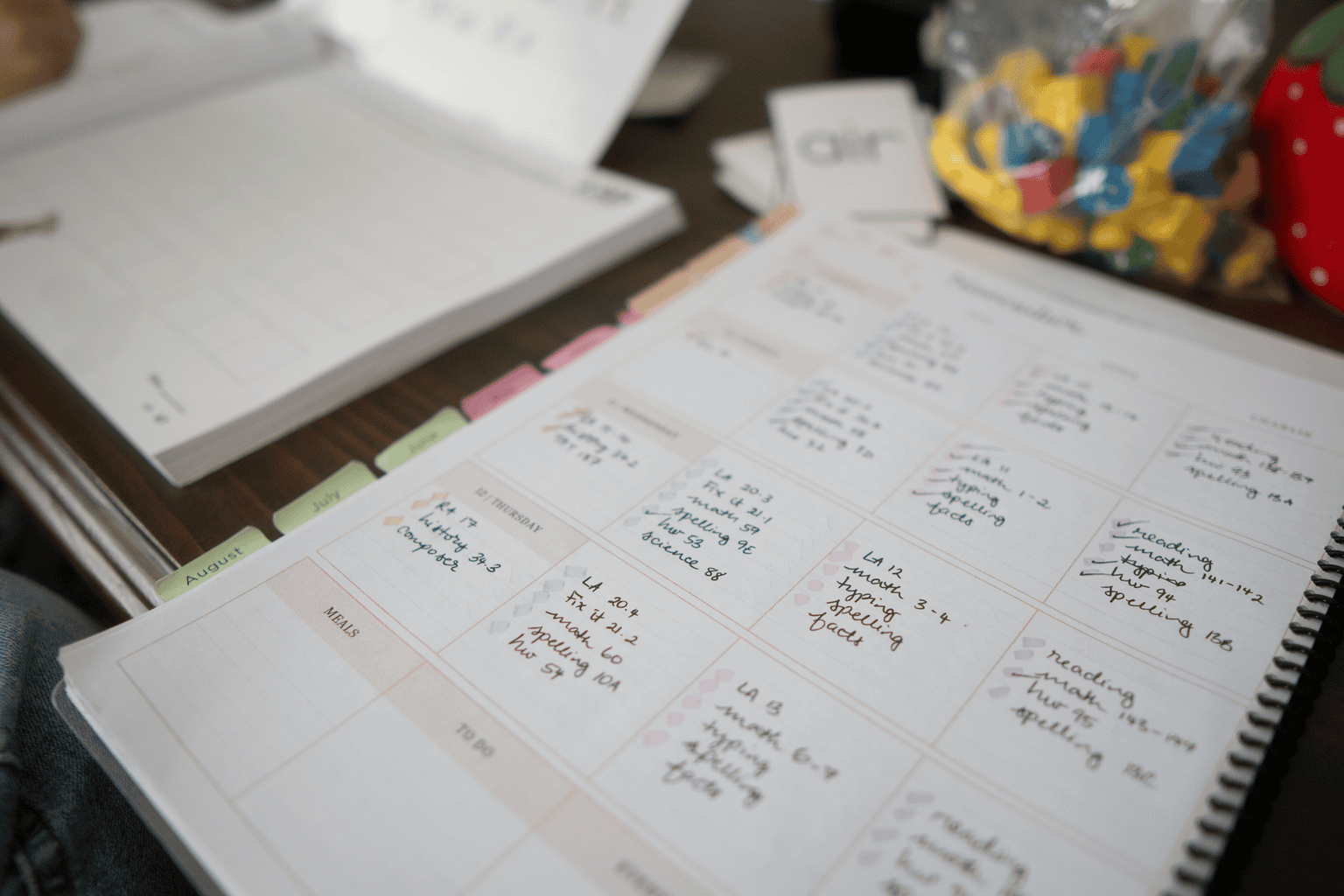
When you’re homeschooling more than one kid, it’s super easy to get bogged down by the constant bouncing around between everyone. At the end of the week, everyone did their work. The boxes are checked. However, a checked box doesn’t tell you whether your child understood what they just did.
With three kids in three different grades, I can’t sit next to each of them all day. So I have to build in a moment where I look up and see what’s really happening. Being intentional about this takes discipline, but it’s not a step that can be skipped.
Timing matters. A gap you catch early is easy to fix. A gap you catch months later takes a lot more work to undo. That’s the whole case for checking in often. You get small problems while they’re still small.
I know we want our kids to work towards independence with their school, but we still need to be there checking up on things.
What to Look at Besides Grades
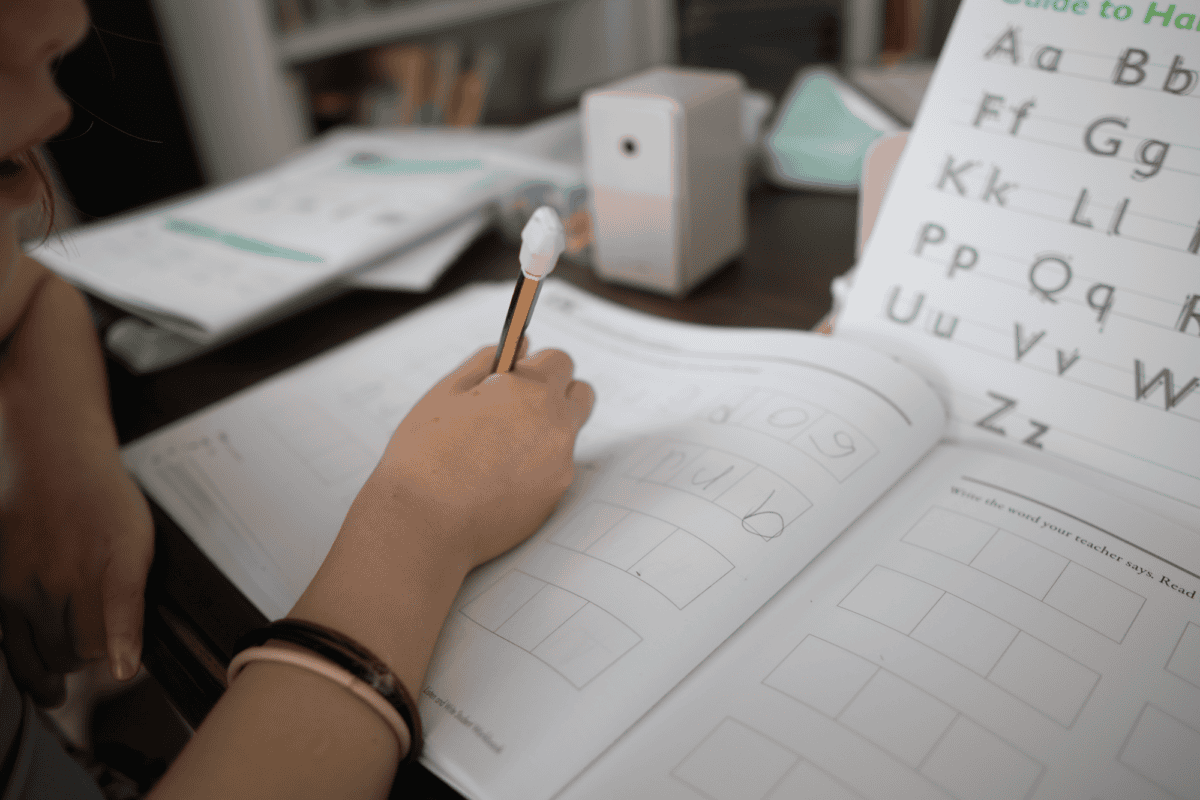
Grades are one piece of the picture, and in a lot of homeschools there aren’t any. Even when there are, they don’t tell you everything. These are the questions I ask instead.
Is my child confident, or just getting through it? A kid who feels capable keeps trying. A kid who doesn’t will start avoiding the work.
Can they start on their own? Independence matters a lot in our house, because I can’t be everywhere at once.
Do they still like learning? If they’re dragging their feet, I want to know why. Sometimes the dislike is just something they’re going to have to live with, but it should be studied nonetheless.
Start With What’s Going Well

Every kid has something that’s clicking. Find it, and say it out loud to them. They need to hear it, and so do you. It’s easy to spend the whole check-in on what’s wrong and forget that a lot is going right.
This is an area that I really have had to work to strengthen. It’s somehow easier to voice critiques, but not so much encouragement.
Find the One Spot That Needs Support
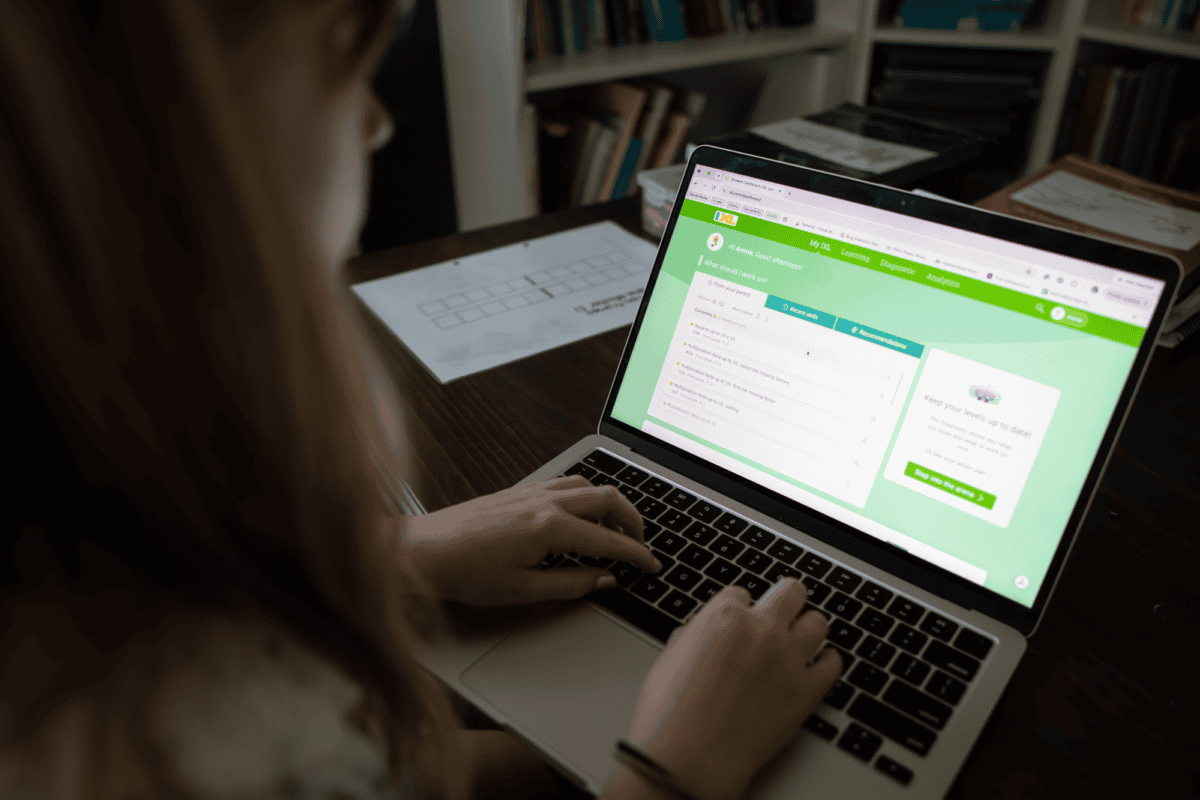
Pick the place where your child keeps getting stuck. Just one. You don’t have to fix everything this week.
Sometimes the answer is a different homeschool curriculum, and sometimes it’s a change in routine. And sometimes the curriculum is fine, and your child needs more practice on a few specific skills. There is no single best homeschool curriculum, so tweaking things as you go is normal.
How IXL Fits Into Our Routine

I’ve used IXL in our homeschool for over a year, and I recommend it. It’s a homeschool learning platform that adjusts as your child works, so the questions get harder when they’re ready and ease up when they’re not. It shows you where the gaps are, and it goes back to foundational skills before moving on.
Kids get immediate feedback when they miss something. There are also video tutorials and lessons, so they can often work through a problem without me. As a mom who is often stretched thin, that matters.

I typically use it to do a general evaluation of where my kids are at. With their diagnostics, I can quickly see where they may have gaps. Once I see that, I set up specific subjects for them to focus on.
Short, focused sessions are enough, which makes it easy to fit into a normal day.
It’s also been great for subjects that my kids have a natural interest in, but I don’t have the time to dedicate to teaching. They can log in and study all they want without me having to do any extra work.
IXL has been around for a long time. It’s a trusted resource that is used in schools and for homeschool as well. I love how it can be used in many different capacities depending on your own family’s needs and schedule.
What’s In the Core Subject Plan

The core subject plan includes math, language arts, science, and social studies, with over 20,000 skills from K to 12. There are more than 4,500 video tutorials and over 600 games, which helps on days when practice feels like a chore. Spanish can be added for an extra cost.
IXL is used by 18 million students, which is 1 in 4 U.S. students, and by 96 of the top 100 U.S. school districts. Over 1 million teachers recommend it. And studies show that students who use IXL consistently score higher on tests.

If you’ve been looking at educational apps for kids, this is one that I personally recommend. It’s a learning platform for students that you can use alongside whatever curriculum you already have. You don’t have to push other things to the side in order to fit it in.
It’s also something that we’ve used over our summer break to keep learning going with little effort.
Getting Started

Right now you can get 20% off an IXL Family Membership. Check out IXL here.
It’s a cost-effective way to get a tool that is great for both teaching and evaluation.
Final Thoughts
The longer I homeschool, the more I hold to the opinion that successful homeschooling doesn’t just happen on its own. It takes a parent who is willing to be disciplined, consistent, and intentional about curating and overseeing their child’s education.
Regular evaluation is just one facet of providing a quality education for our children. It’s a simple step that you can begin implementing today.