How Long Can a Baby Stay in a Bassinet? (Safely)
*This post may contain affiliate links. As an Amazon Associate I earn from qualifying purchases.*
Many new moms will face the decision of whether their baby should be sleeping in a crib or a bassinet. No matter what you choose, there are understood guidelines on how long your child should sleep in both of them.
When it comes to deciding on how long a baby should stay in a bassinet, it really boils down to three factors. How old is the child, how big is the child, and what are their current sleeping patterns? Most children should be out of a bassinet and into a crib by at least six months.
It is hard to say how long a child should be in a bassinet because all children are different. Babies’ sleep patterns develop at different rates, they learn to roll at different times, and their family circumstances are unique.
Being informed is the best way forward so let’s talk about everything you need to know about bassinets.
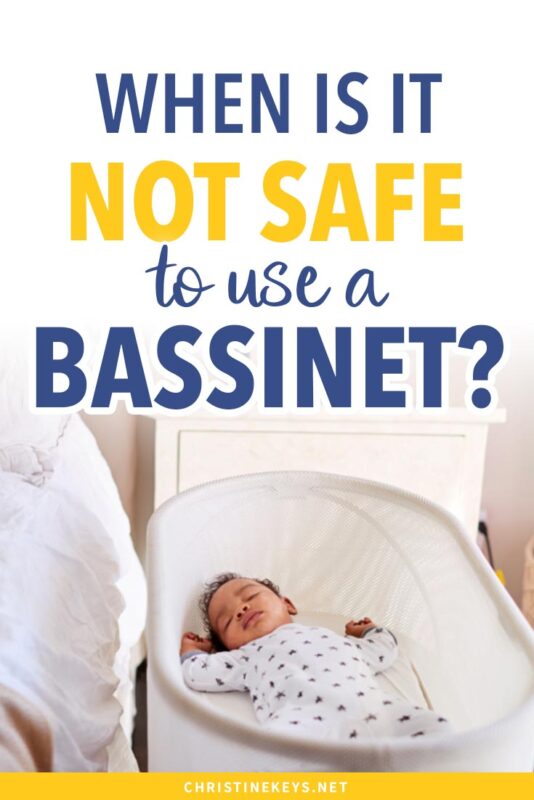
Sleep Safety: How Long Can a Baby Stay in a Bassinet
As we said, most of these timelines for how long a baby should sleep in a bassinet are guidelines. There is going to come a time when your baby simply outgrows the bassinet that they may have become accustomed to, and that means it is time for them to move to their crib.
Based on advice from the American Academy of Pediatrics, children should be sleeping in the same room as their parents for the first period of their life. Bassinets provide a safe place for room sharing and do not take up as much room as a crib would be.
You also need to consider the growth of your child. If they are growing rapidly or becoming more advanced, they will be out of a crib much faster than a baby who may be on the smaller side or not advancing as quickly.
My Experience
This is something we experienced firsthand in my family. My babies have all been on the smaller side. My youngest daughter was born weighing 5lbs 15oz and she happily slept in her bassinet until around 4 months of age.
I lent that same bassinet to my sister whose son was born weighing over 9lbs and he had to be moved to a crib before 2-months of age.
When we moved my daughter, it wasn’t because she had outgrown it, but because she was wriggling around so much.
Related: 5 Simple Space-Saving Ideas for the Nursery
What Are Some Signs My Baby is Too Big for Their Bassinet?

Many new parents may not be able to identify when their child needs to transfer out of the bassinet. Not only are these signs essential to watch your child grow up correctly, but they can also help ensure their safety while sleeping as well.
Here are a few of the signs that you should look out for:
- If your child looks like they are cramped or lying in a weird position, then it may be time to move them to a crib. This is especially important if the head or feet are approaching a side of the crib.
- It is time to head to the crib for children that can roll over or sit up on their own. More advanced children are at a higher safety risk of possibly falling out and injuring themselves.
Essentially, it boils down to their size and ability.
I found that once they had gotten really good at tummy time then they were pretty much ready to transition to a crib.
What Benefits Does a Bassinet Provide?

If you are on the fence about using a bassinet, then you should be aware that there are quite a few benefits to using them that you may not be aware of. During the early few months of a child’s life, these can not only be of great help to the child but also to the parent as well.
- Bassinets are portable and great for moving to different areas of the home. This is especially helpful when you’re still doing nighttime feeds. You can have it right next to your bed.
- Some bassinets feature the ability to rock, which can aid the baby while sleeping.
- Bassinets give a more similar experience of the womb than a traditional crib.
- If you are wanting to keep costs lower, bassinets are also much cheaper than cribs.
While a bassinet offers unique features for a baby, some parents see it as an extra expense. A baby does not need to be in a bassinet, but it can make the transition from hospital to home much easier for everyone.
Related: What to Expect In the First Week With a Newborn
Real-Life Experience with a Bassinet
As a mom of 3, I found using a bassinet a great option and more valuable the more babies I had. It was great to be able to move it around the house as I needed. I could keep an eye on my babies during nap times.
It was also helpful for when we were going to stay the night places, or even for just a day visit.
I would pack up the bassinet and the white noise machine. It meant that I had a safe sleeping environment for my baby.
When my children were newborns I actually spent the first few weeks on our living room couch (don’t worry, it was comfortable!) and had the bassinet right up close to me. Having them in such close proximity helped us both sleep better.
It meant that in the middle of the night I didn’t have to walk all the way across the house and I was close to everything I needed for bottle feeding. Nighttime feedings weren’t such a big deal with this setup.
Related: The Best Bottle Feeding Tips that are Game Changers!
What Should You Think About When Using a Bassinet?

Depending on the bassinet you use, you want to make sure that you are checking any safety warnings on your bassinet. Not only are there typically height and weight recommendations, but it can also ensure that you are using the bassinet correctly as well.
We have already discussed the signs that your baby may be outgrowing the bassinet you have selected, but there are also clear and defined safety measures that you have to follow if you want your baby to be safe.
How Old is Your Child?
Most children outgrow a bassinet by the age of six months. There are certain children who may outgrow their bassinet as young as four months. Other babies may be able to stay in their bassinet a while longer.
Most parents and doctors recommend moving your child to a crib after at least six months.
Their age can also be a determining factor in how mobile the child is. If they are approaching the age of six months, they more than likely have more mobility than a newborn baby would.
As your child increases mobility, you want to move them to a crib for safety reasons.
Which Bassinet Did You Get?
One of the most important aspects of a bassinet is which model you picked up. Some bassinets can hold a child up to twenty pounds, while others are limited to ten pounds or less. Be aware of the maximum weight it specifies. Knowing the weight limit is key.
Some bassinets also have higher sides. This reduces the risk of your child rolling or falling out as they get more mobility.
Make sure that you read the safety information that comes with the bassinet that you purchased.
How Can You Transition Your Baby to a Crib?
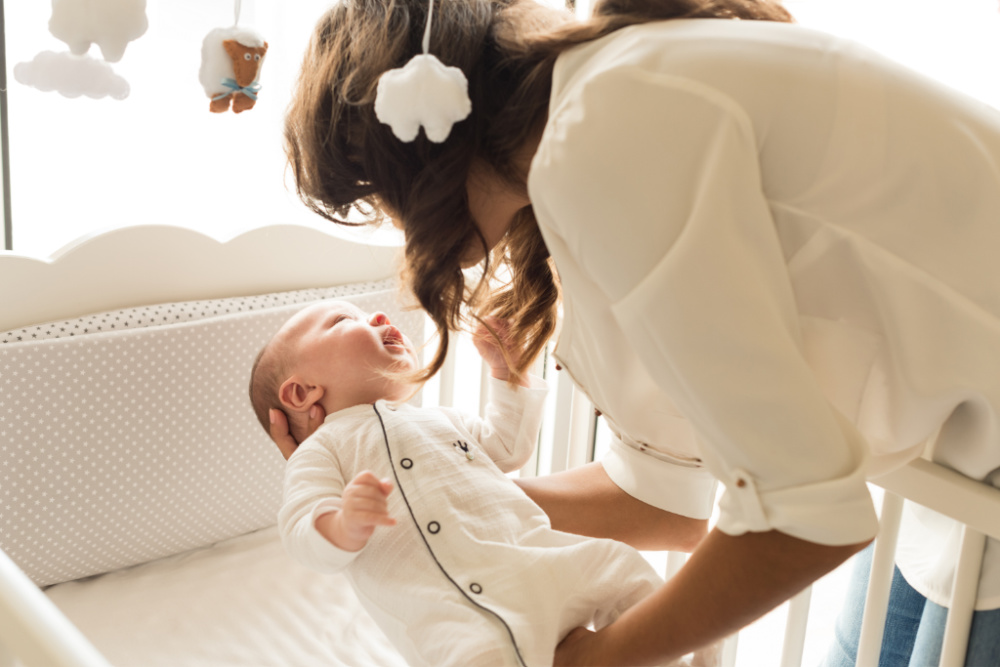
Now that we have covered how long a baby should stay in a bassinet, you may be wondering what the easiest way to transition your baby to a crib is. While it may be a little tricky at first, there are a few great tips that you can use to make the transition easier for you and for your baby.
- The first tip is to make sure that your baby is ready. They ideally should have some type of sleep schedule and bedtime routine. Once it is time for them to sleep, you can move them to the crib slowly to ensure they know it is a safe place for them to sleep.
- If your child has issues with attachment, then you can sit by them in the room while they sleep and slowly get further away and eventually leave the room as they become more adjusted to the crib.
- Allowing your child to sleep in their own room is also a big deal for the parents. Remember that they are learning independence and problem-solving. No matter how hard it is, they are learning essential skills!
You want to make sure that you are not filling their crib full of choking hazards. Not only can it be a danger to your baby, but it can also disrupt their sleep. Once they transition to a crib, make sure they have a firm sleep surface. Keep only the essentials inside of the baby’s crib.
This includes making sure there is no loose bedding, crib bumpers, or soft objects as they can pose a potential suffocation hazard. A fitted sheet is all that is recommended.
The AAP gives a good list of things to avoid in order to reduce the risk of SIDS. So much of it is common sense, but it can give you peace of mind to be informed.
From my own personal experience, transitioning my babies from the bassinet to their own crib might have seemed like a big change. However, the most important thing was just to keep up the baby’s sleep routine.
Baby monitors can be a big help in this area as well. It gave me a lot of reassurance to be able to check on my babies using the one that we had.
Final Thoughts
Bassinets are great for parents who are planning on room-sharing with their children. They are portable, often less expensive, and can help you keep your eye on your child as they grow up.
Most children will be out of a bassinet by the age of six months. A lot of that depends on the development of your child and many babies stay in it for a good chunk of the first year.
Bassinets are a great way to help your child learn a healthy sleeping pattern and encourage longer stretches while keeping them in a safe environment.
Newborn sleep is challening for many of us because it takes time for our little ones to regulate their sleep patterns.
Baby bassinets are wonderful for many babies and very handy as a mom. However, as with any baby sleep product, you need to do you due diligence in order to make sure your baby is in the safest place.