Charlotte Mason vs Maria Montessori Homeschooling
*This post may contain affiliate links. As an Amazon Associate I earn from qualifying purchases.*
Charlotte Mason vs Maria Montessori. These two women are responsible for some of the most popular educational philosophies not just in homeschooling, but in the educational realm at large.
We’re going to discuss both the similarities and differences between the two educational methods. That way you can make an informed decision about which direction (if either) you’d like to take with your own homeschooling methods.
Charlotte Mason vs Maria Montessori: Understanding the Foundations
Diving into the historical background of educational philosophies, we encounter two pioneers who reshaped the learning landscape: Charlotte Mason and Maria Montessori.
Emerging from the late 1800s and early 1900s respectively, both educators carved paths that diverged from the norm, focusing on the child as a whole person rather than just an empty vessel to be filled with information.
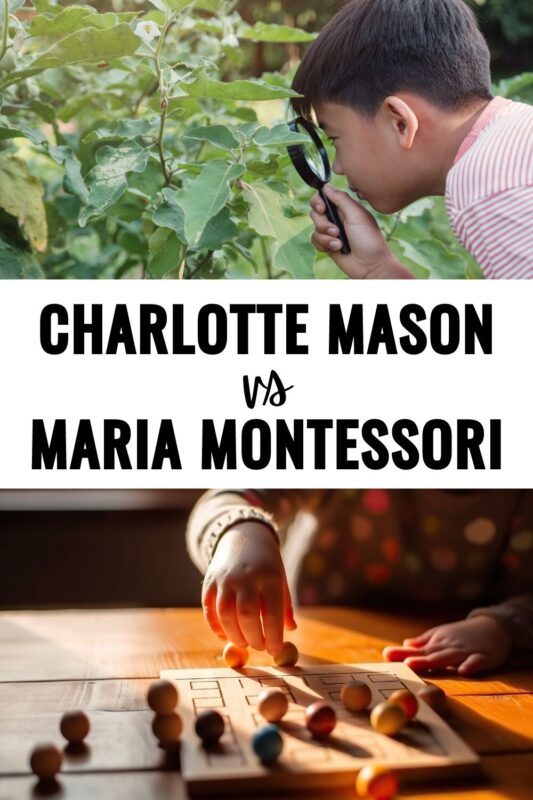
Charlotte Mason’s approach, springing from the lush greenery of England, emphasized short lessons, nature study, and the incorporation of fine arts, advocating for a liberal education that cultivates good habits and a love for learning.
Across the channel, in Italy, Dr. Maria Montessori introduced a method hallmarked by self-directed learning, hands-on activities, and a prepared environment designed to foster independence and real-life skills.
Though their methods differ, with Mason leaning towards a more structured format and Montessori embracing child-led exploration, their aim was unified: to offer education that respects the child’s individuality and innate curiosity, preparing them for real work in the real world.
Key Philosophies of Charlotte Mason
Looking into the heart of the Charlotte Mason method, we find a rich tapestry of philosophies woven with the threads of nature study, literature, and the cultivation of good habits. At its core, this educational philosophy champions the idea that young children are not mere vessels to be filled but spirited beings ready to engage with the world.
Nature study plays a pivotal role in this method. It encourages learners to step outside and connect with the natural world, fostering a sense of wonder and curiosity. Meanwhile, literature is not just a tool for reading proficiency; it’s a gateway to developing empathy, moral understanding, and a love for storytelling.
Perhaps most distinctively, the Charlotte Mason method places a strong emphasis on habit training. She believed that the early years are the prime time to instill habits that form the foundation of a strong character.
This educational approach regards the development of the whole person. It intertwines academic learning with moral and physical growth. Thus, ensuring that young minds are not only well-educated but well-rounded, ready to approach life with diligence and sound judgment.
Montessori’s Core Beliefs

The Montessori method is a unique educational philosophy, brought to life by Dr. Maria Montessori in the early 1900s.
At its core, Montessori education celebrates the notion of self-directed learning. It’s a process that empowers young children to explore and learn at their own pace. Dr. Montessori, the first woman in Italy to receive a medical degree, was revolutionary in her emphasis on creating a prepared environment.
This Montessori classroom is meticulously designed with natural materials and hands-on learning tools, facilitating a child-centered approach to education.
Another cornerstone of Montessori’s Core Beliefs is the value of practical life skills. Here, Montessori children engage in real-life tasks. Anything from preparing food to managing money, which Dr. Montessori believed were critical for developing sound judgment and problem-solving skills.
These elements, combined with a strong emphasis on the natural world and the child’s individuality, distinguish Montessori education as an approach that nurtures the whole person, aiming to instill good habits and a lifelong love for learning.
Nature Study: A Comparative View
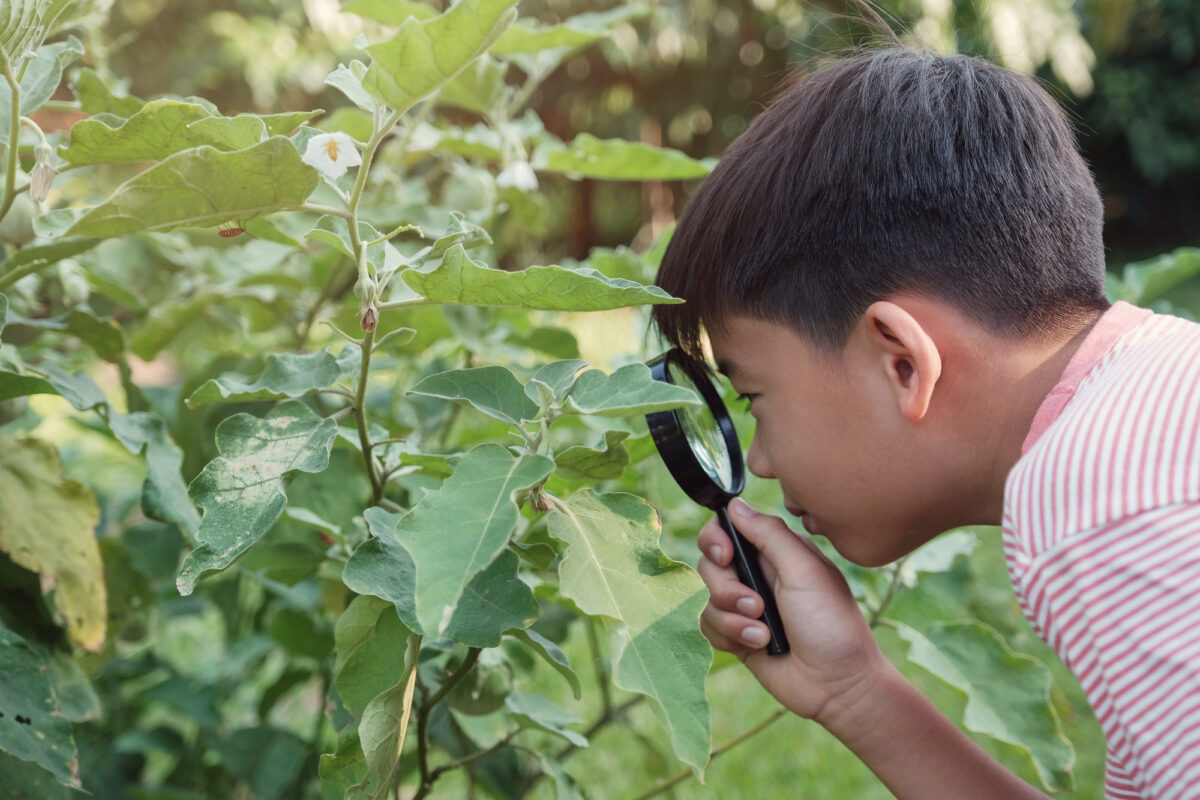
When you look into the Charlotte Mason and Maria Montessori methods, one finds that both deeply value the inclusion of the natural world in a child’s education. However, their approaches to nature study bear significant distinctions, fundamental to understanding their overall educational philosophies.
The Charlotte Mason method advocates for direct engagement with nature. Mason believed that children should be immersed in the outdoors as much as possible. They should be observing and interacting with the environment around them.
This hands-on experience is viewed as vital for the development of observational and analytical skills, fostering a lifelong relationship with the natural world.
On the other side of the spectrum, the Montessori method also places a strong emphasis on nature. However, tends to lean towards the use of natural materials within the prepared environment of the classroom.
Dr. Maria Montessori saw the value in children learning through interaction with objects from nature, such as leaves, rocks, and water, to understand concepts of biology, geography, and science. This use of natural materials is pivotal in nurturing a child’s curiosity and respect for the environment. However, it does so in a more controlled setting compared to Mason’s approach of direct nature immersion.
While both envision the inclusion of the natural world as crucial in the formative years of learning, they diverge on the path to achieving this connection. Charlotte Mason’s philosophy insists on nature itself as the principal teacher through direct experience.
In contrast, Montessori emphasizes the significance of natural materials as educational tools within a thoughtfully prepared environment. Each method, in its essence, offers a unique lens through which young learners can explore and comprehend the vastness of the natural world around them.
Classroom Environment and Materials
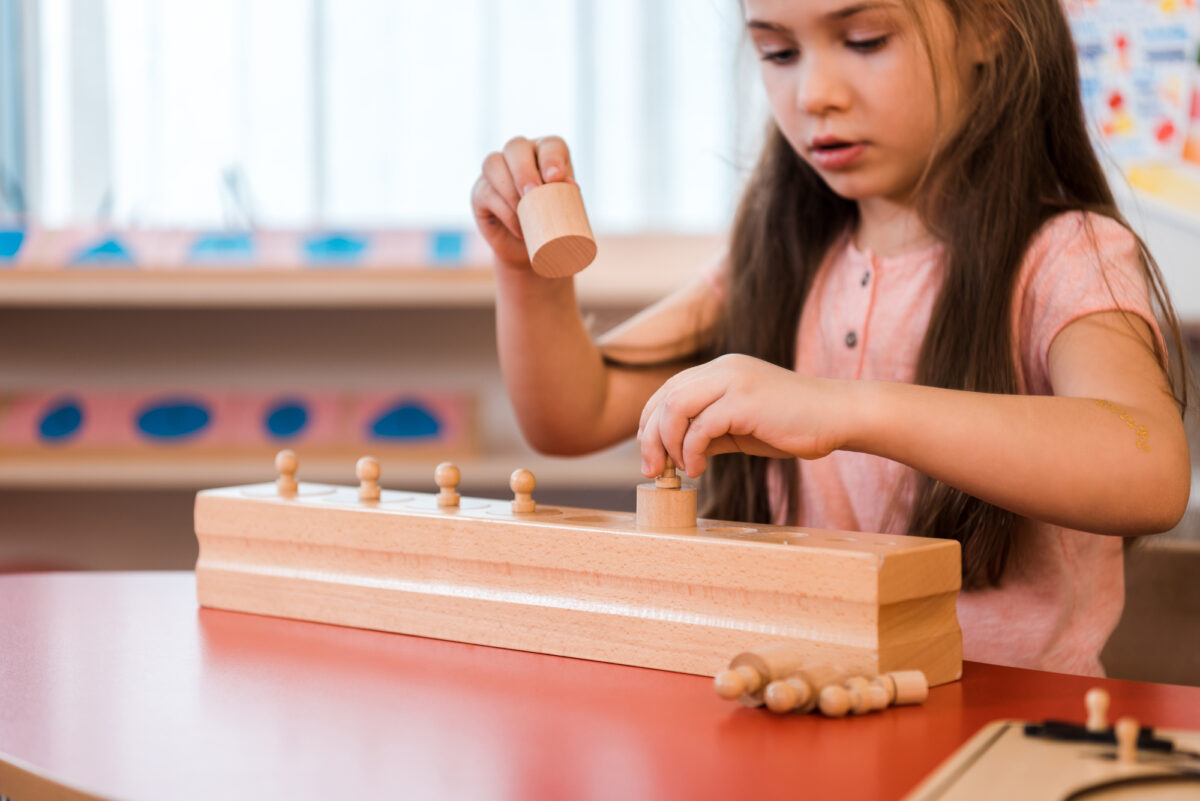
Stepping into a Montessori classroom, you’re immersed in an environment meticulously designed to foster independence and hands-on learning. The prepared environment feels like a microcosm, tailored to the child’s size and interests, brimming with natural materials that invite young learners to explore at their own pace.
This mirrors the very essence of Montessori’s methods. The classroom itself acts as the teacher. It allows children the freedom to select activities that resonate with their innate curiosities.
On the flip side, a Charlotte Mason classroom or homeschool setting radiates a different kind of warmth. Here, the emphasis on the natural world and fine arts is palpable.
You won’t find shelves of Montessori materials. Instead, the environment is rich with great books, nature study paraphernalia, and resources for art and music. This reflects Mason’s philosophy that education is about feeding the soul with the best sources of knowledge and beauty.
Unlike the Montessori focus on practical life skills and physical materials, the Charlotte Mason approach offers a feast of academic and spiritual nutrients, nurturing a child’s mind through a liberal education.
The Role of the Teacher

In the realms of Charlotte Mason and Maria Montessori’s philosophies, the role of the teacher or parent is distinctly nuanced, reflecting the core values of each educational approach. In the Charlotte Mason philosophy, the educator is more of a guide. They gently steer children through a rich educational landscape filled with literature, nature, and the fine arts.
This approach encourages educators to respect the child’s personhood, fostering a supportive environment where learning is a delightful adventure. On the other hand, Montessori teachers, or guides as Dr. Montessori preferred to call them, focus on preparing and maintaining an environment where children can explore and learn at their own pace.
This method emphasizes a child-centered approach. The teacher carefully observes each child and intervenes only when necessary to facilitate self-directed learning.
Both methods underscore the significant influence educators have in nurturing a child’s natural curiosity and fostering a lifelong love for learning. Yet, they differ markedly in the extent and manner of the teacher’s involvement.
Child-led Learning vs. Structured Lessons

As we compare the fascinating world of homeschool methods, the choice between the Montessori approach and Charlotte Mason’s method can be quite perplexing. This is especially true when considering child-led learning versus structured lessons.
Montessori education thrives on the principle of allowing children to explore and learn at their own pace within a prepared environment. This emphasis on self-directed learning fosters a sense of independence and engagement by catering to the individual learning style of each child.
On the flip side, Charlotte Mason education values a more organized approach. She uses short, focused lessons that aim to cultivate good habits and a love for learning.
While still offering much freedom for the child’s personal interests, this method provides a more guided educational journey. It integrates nature study, fine arts, and great books, encouraging a deep connection with the natural world and cultural heritage.
The stark contrast between Maria Montessori’s and Charlotte Mason’s philosophies presents us, as educators, with a significant decision. Do we allow our children the full freedom to lead their educational path, or do we find value in the structured, yet liberating, scope of a Charlotte Mason curriculum?
This choice, ultimately, affects not only how our children engage with the materials but also how they develop autonomy and responsibility in their learning journey.
Practical Life Skills
Considering the methods of Charlotte Mason and Maria Montessori, a fascinating aspect to compare is how they incorporate practical life skills into their curriculum. In their own unique ways, both approaches emphasize the development of independence and responsibility in students, albeit through different venues.
Maria Montessori championed the idea of self-directed learning with a strong foundation in practical life activities. In a Montessori classroom, younger children often start their day polishing, pouring, or washing—a direct engagement with real-life tasks.
These activities are not only designed to refine motor skills but also to instill a sense of discipline and orderliness. They lay the groundwork for a child’s autonomy and a profound understanding of their role within a community.
On the flip side, Charlotte Mason also valued the role of real work in youth education. Her approach is less formalized in terms of specific practical activities. However, it emphasizes the significance of involving children in everyday tasks—be it gardening, cooking, or household chores.
Through such engagement, Mason believed that children develop attention to detail, a strong work ethic, and an appreciation for the beauty in daily responsibilities. While Montessori might have a more structured approach to practical life activities, both methods deeply respect the importance of these skills in cultivating capable and responsible individuals.
Mixed-age Learning
In Montessori education, mixed-age groups stand as a hallmark feature. Dr. Maria Montessori, a pioneer in her field, cherished the belief that children thrive in environments where the ages blend. She saw young children learning effortlessly from older children, and older children reinforcing their understanding by teaching the younger ones.
It’s a real-life embodiment of siblings in a family setting. Offering a rich ground for social and emotional growth alongside academic learning. This approach fosters independence and leadership skills in a uniquely natural way.
Contrast this with the Charlotte Mason method, where learning is more segmented by age. Ms. Mason advocated for an educational philosophy deeply rooted in the arts, literature, and nature study. She believed in short lessons and ample outdoor time to inspire young minds.
While this method brings its own wealth of growth opportunities, the distinct age-specific groupings found in Charlotte Mason settings differ greatly from Montessori’s method.
Each has its strength – Montessori’s mixed-age approach instills a sense of responsibility and mentorship. The Charlotte Mason approach allows for age-specific content to be delivered in a highly tailored and focused manner.
In deciding what’s best for our own children, it’s essential to weigh these elements. The interactive, peer-led learning environment of Montessori could be just what one child needs. While, the structured, nature-focused approach of Charlotte Mason could be the perfect fit for another.
The Place of Art and Music
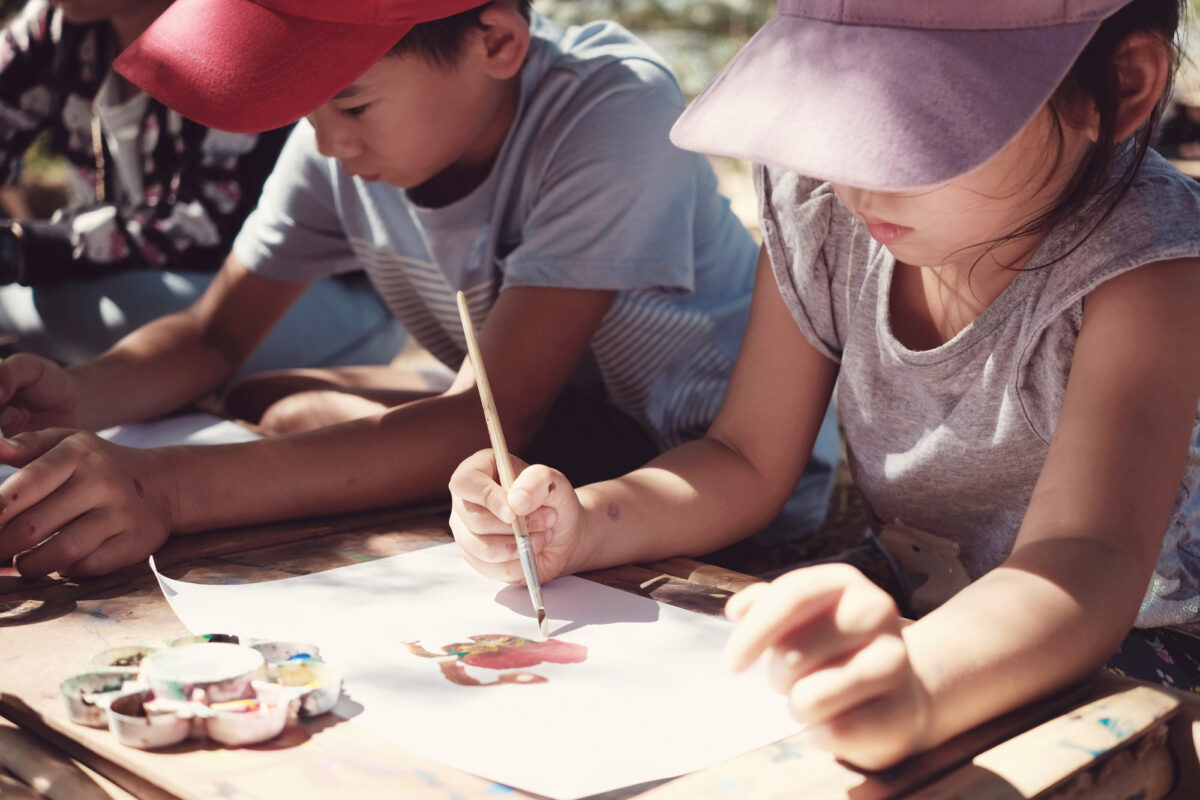
Charlotte Mason and Montessori methods both hold the arts in high esteem, albeit in subtly different ways. For Charlotte Mason, the inclusion of art and music is pivotal. Her approach encourages children to experience beauty through great books, fine arts, and classical music, fostering an appreciation that enriches the soul.
It’s about making these elements an integral part of home education. Allowing young children and older children alike to develop a personal connection with art that shapes their character and worldview.
In contrast, the Montessori method emphasizes the sensory experience of art and music. It’s creating an environment where natural materials and self-expression through hands-on activities are paramount. Dr. Montessori believed that engaging with art and music from the early years onwards helps in refining a child’s senses and fostering a deep, intrinsic understanding of the natural world.
Here, the arts serve as a bridge connecting abstract concepts to real-life experiences. It makes them accessible to even the little children in a prepared environment. Both approaches underscore the belief that art and music are not mere subjects to be taught but essential elements in cultivating a lifelong love of learning and a well-rounded individual.
Assessment and Progress Tracking
Both the Charlotte Mason and Maria Montessori methods step away from the conventional track. You see, in the classical public school system, students are often measured by the stark numbers of grades and the rigidity of standardized tests. However, in both Montessori and Charlotte Mason education, there’s a harmonious shift towards understanding a child’s progress through more holistic measures.
In the realms where Montessori schools shine, the emphasis is on observation. Montessori teachers, or guides as they’re often known, spend much time observing their students in the Montessori classroom.
They note each child’s engagement with the Montessori materials, their interactions with peers, and their ability to navigate challenges and solve problems. These observations form the crux of their assessment.
Meanwhile, followers of the Charlotte Mason method lean towards narrative assessments. These can include detailed records of a child’s projects, nature study journals, or reflections on literature and art.
Instead of reducing a child’s educational journey to mere numbers, this approach celebrates their unique path, offering insights into their development as a whole person.
In both methods, there’s a distinct absence of traditional testing. This isn’t to say that assessment takes a back seat. Rather, it’s reimagined in a way that respects each child’s individuality, sparking a genuine love for learning rather than a race for scores.
Emergence in Public Schools
The growth of Montessori and Charlotte Mason approaches within the public school system is a tale of adaptation, innovation, and sometimes, compromise.
As these methods began inching their way into more traditional educational settings, they brought with them the promise of hands-on learning and child-centered education. Both concepts were appealing and foreign to the standard curriculum.
Dr. Maria Montessori’s and Charlotte Mason’s philosophies shook the foundations of public schools. They have urged a shift toward environments where young children can explore the natural world at their own pace. Plus, older children can dive deep into great books and the fine arts.
However, integrating the Montessori method and Charlotte Mason philosophy into public schools has not been without its challenges. The need for specially trained Montessori teachers and the costs associated with transforming classrooms to reflect a Montessori or Charlotte Mason environment–with its emphasis on natural materials and prepared environments–have been significant hurdles.
Despite these obstacles, the successes shine through. Students engaged in self-directed learning, the development of strong problem-solving skills, and a noticeable nurturing of the whole person.
The journey of bringing Montessori and Mason into the public sphere demonstrates that with enough dedication, the best aspects of these educational methods can enrich our educational systems, fostering a love of learning in more traditional settings.
Homeschool Adaptations
Adapting the Montessori and Charlotte Mason methods for our homes doesn’t require an education degree. Instead, just a deep understanding of our children’s needs and a dash of creativity. For those of us crafting a homeschooling environment, the challenge lies in selecting the right curriculum and setting up a space that encourages learning. Here’s a bit of guidance:
- Curriculum Selection: Whether you’re swaying towards the child-centered approach of Montessori or leaning into Charlotte Mason’s affinity for nature and literature, it’s imperative to choose a curriculum that aligns with your educational goals. Don’t shy away from mixing elements of both to suit your child’s unique learning style.
- Creating a Learning Environment: A Montessori-inspired space should be prepared meticulously, offering hands-on materials and freedom within limits. In contrast, a Charlotte Mason space might focus more on accessibility to nature, quality books, and art supplies, ensuring that these resources are an integral part of your child’s day.
Deciding What’s Best for Your Family
Deciding between the Charlotte Mason method and the Montessori method for your homeschooling journey is akin to choosing between two fine works of art. Both are magnificent, yet distinct in their essence.
It’s crucial to reflect on your family’s educational philosophy and goals.
Ask yourself: Does the idea of your children exploring the natural world through nature study resonate with you, or do you find the emphasis on practical life skills and self-directed learning in a prepared environment more appealing?
Consider the ages of your children. The Montessori method is often favored for younger children. Charlotte Mason can be particularly enriching for older children.
Ultimately, the method that aligns with your family’s values and your children’s needs is the path that will foster not only academic success but a lifelong love of learning.
The Road to Lifelong Learning
As we conclude the comparison between Charlotte Mason and Maria Montessori, it’s pivotal to recognize that both paths aim towards the same horizon – instilling a lifelong love for learning in our children.
Whether through the natural world explorations and literature-rich narrative of Charlotte Mason’s philosophy or the self-directed learning and practical life skills central to Montessori’s method, the purpose remains beautifully aligned.
The importance of choosing the educational approach that resonates most with our family’s values and our children’s unique needs cannot be overstated.
It’s not about deciding which method is superior. Rather, which one aligns best with our aspirations for our children’s growth and development.
While Montessori classrooms thrive on hands-on learning and mixed-age interactions, the Charlotte Mason approach finds its strength in short lessons, nature studies, and the exposure to great books.
Indeed, both methods offer ample freedom yet maintain enough discipline, encouraging students to explore at their own pace and grow into persons of fine character with sound judgment.
As we ponder on the best fit for our family, let’s not lose sight of the fact that both Charlotte Mason’s and Maria Montessori’s educational philosophies serve as conduits to a broader goal: nurturing a lifelong learner who approaches the world with curiosity, respect, and a deep-seated passion for the pursuit of knowledge.