
Babywise Cliff Notes: 7 Babywise Principles You Need to Know
*This post may contain affiliate links. As an Amazon Associate I earn from qualifying purchases.*
If you’re after the Babywise cliff notes then you’ve come to the right place.
New moms are often overwhelmed with all the different parenting tips and advice out there. The subject of baby sleep is no exception.
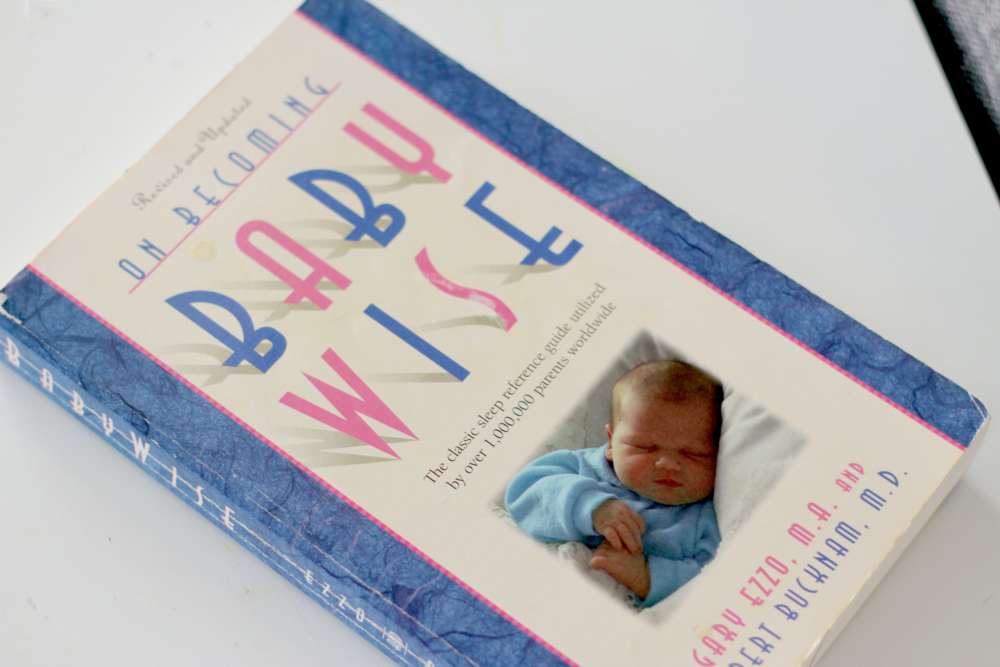
I refer to the On Becoming Babywise book often.
I’ve used this sleep method to some extent or another with all three of my children.
If you’re a tired new or expecting mom then you probably just want an outline that touches on the key Babywise principles you need to know about.
That’s what this blog post is here for. Keep reading to find out everything you need to know.
TIP: If you’ve only ever heard the negative things about Babywise, then I strongly recommend you go check out this post about The Myths of Babywise before you read any further.

Babywise Cliff Notes: The Important Things You Need to Know
I will do my best to give an overview of this baby sleep training method, but what you ultimately need to do is read the book for yourself. Giving a complete summary of the Babywise method would take a lot of words and you’re better off just getting the book.
I personally found it to be a very helpful book, as have many thousands of other parents, but not all methods work for every family.
This sleep training book is quite the polarising topic and you’ll get a range of opinions depending on who you ask.
Trust your gut and ignore the opinions of others no matter what your choice.
You should also know that there’s a whole Babywise series and this is just book one.
With that said, let’s talk about what Babywise is founded on.
#1 It Is A Parent-Led Sleep Training Method

The heading sums it up.
Babywise is a book that outlines a parent-led sleep training method. It begins by introducing the idea that a baby is a part of a family and not the centre of it.
Parent-led is often confused with the idea that the wants and needs of a baby aren’t taken into consideration.
This isn’t true at all and your baby’s needs are definitely supposed to be taken into consideration. Babywise strongly advocates learning the cues and tells of your child. It is vital for a parent to understand what their baby is trying to communicate.
The difference is that the parent makes the final call on what the child needs.
For instance, the baby might be crying. Once the parent has gone through the list of needs that the baby might have (i.e. hunger, wind, comfort, boredom, etc) then it can be concluded that the baby may just be tired and needs to be left alone to be able to sleep.
Every cry is acknowledged, assessed, and responded to in some form or another.
#2 It Focuses On Developing Healthy + Independent Sleep Skills
One of the biggest claims of Babywise is that the method can help your baby sleep through the night as early as 8 weeks.
While my children took a little longer than that, I still believe firmly in the benefits of the method.
Both of my children were sleeping through the night consistently by 3 months of age and have gone on to develop healthy sleep habits, such as being able to get themselves to sleep on their own.
Read –> How to Start Babywise from Day One
The method shows you how to set up a routine so that when it is sleep time, your baby will sleep well.
You’ll also learn how much sleep babies really need based on their age.
#3 It Focuses on Full Feedings

There is a mistaken view out there that scheduled feedings are all about making life easier for mothers.
While this is an added benefit, Babywise actually recommends scheduled feeds so that you can make sure your baby is getting a full feeding.
However, there is lots of room for flexibility and growth spurts. Babywise insists that you always feed a hungry baby. Always.
This is a super important thing to remember because much of the controversy surrounding Babywise can be traced back to misconstrued ideas about what is said about feeding your baby.
The schedule is meant to serve your baby and your family. If the schedule is detrimental then it is going against the principles of Babywise.
This method takes into account a mother’s milk supply and how to make sure to stay on top of that. It is breastfeeding-friendly. There is flexibility and space for things like cluster feeding.
I have breastfed one child and formula-fed the other two and have still been able to use Babywise with great results.
It is reassuring to know that whether you breastfeed or formula feed, you can still use these techniques.
#4 It Uses The EWS (Eat, Wake, Sleep) Routine

The EWS routine is not unique to Babywise. In fact, there are many sources including, The Baby Whisperer, that promote the method.
Essentially, it entails getting your baby into a routine of eating, have a short wake or play time, and then nap time.
The first things you do as soon as baby wakes is, you feed them and then continue with the other activities.
This is a routine that is followed throughout the day in cycles. This ends with the bedtime routine.
Once nighttime approaches, it becomes just eat and sleep, until they reach a point when they can just sleep.
The purpose of this cycle is to prevent babies from falling asleep while eating and also to ensure that they are well-rested and fed during their awake time.
Read more about the eat, wake, sleep routine here –> Eat/Wake/Sleep Cycle
This cycle really is a founding principle to the success of the method.
Not only does it help establish independent sleep but it also gives parents the confidence to know what it is that their baby needs.
Because baby eats, sleeps, and plays at a fairly consistent time of day, cries are more easily interpreted. Better yet, there is less crying because you’re able to preempt their needs!
It also means that your baby is a lot more content right through until their next feeding time.
#5 It Isn’t A CIO (Cry It Out) Method

Cry it out is one of the major methods of sleep training.
Contrary to popular belief, Babywise is NOT a CIO method. In fact, the book barely touches on the subject at all.
There is a brief discussion where the authors talk about how a little bit of fussing will not do long-term harm to your baby, but nowhere does it mention how to implement the CIO method.
Read –> A Simple Explanation of What Sleep Training Actually Is
And while Babywise does not give any tips for using cry-it-out, if you do choose to allow your baby to cry in order to self-soothe then you can rest assured that there are no reputable and current studies that link it to being harmful in any way.
It’s a hot topic, but ultimately, the discussion on whether cry-it-out is healthy or not is based solely on the opinions and feelings of each party.
So, please realise that if you do choose to implement the Babywise method, you can absolutely do so without committing to cry-it-out.
I have friends who have done it both ways and their children have all come through with healthy sleep habits at the end of the day.
Even within Babywise, there is more than one way to achieve the desired result.
#6 Healthy Sleep Habits = Healthy Eating Habits

A full feed goes a long way in getting a baby to sleep well, and a well-rested baby feeds better than an overtired or fatigued one.
Focusing on getting your baby to take full feeds, and to learn to get themselves to sleep independently are two of the main concepts found in the book.
One is not focused on more than the other because they are not mutually exclusive. Both have to be taken into account.
Many weary parents have found this method to change their baby’s behavior drastically because they were simply overtired.
Putting them down for naps at regular intervals isn’t something that all new parents know is important. Knowing how many hours of sleep your baby really needs can be a game changer.
Sleep begets sleep and that ultimately leads to everything else being just that bit easier too.
#7 What Babywise Isn’t
The Bible.
Babywise is not the Bible, and therefore you should not treat it as such. Even the authors stress that feeding a hungry baby always takes precedence over the schedule.
Like anything in life, you should take the things that work for you and discard the rest.
While I love the Babywise method, it is not the only sleep associated method that I’ve used with my children. This is because one size does not fit all, and babies aren’t robots.
Read –> 5 Tips for the First-Time-Mom Using Babywise
I actually found that while Babywise is a wonderful guide, it lacked the detail that I was after. The blog Chronicles of a Babywise Mom really helped me in those early days when I needed to troubleshoot.
If you’re having a hard time with implementing the method then I suggest checking out that blog before you just give up.
Babywise isn’t really rocket science. It is simply several basic ideas that help your baby to sleep more easily and give everyone in the family the gift of nighttime sleep.
Hybrid Babywise
When I had my second child I came across Moms on Call – another baby sleep book.


I love it for its directness, simplicity, and easy-to-follow instructions. You can get a summary of the book here –> What You Need to Know About Moms on Call.
I didn’t use Babywise or Moms on Call exclusively but I used a hybrid of the two and doing that worked so well for my kids.
In both books there are lots of tips for dealing with sleep problems.
Pros & Cons of the Babywise Method

As with all parenting methods and techniques, there are pros and cons.
The things that I list here are a generalization because the reality is that all babies are different and infant sleep is not overly predictable.
Pro: You will have a simplified way of knowing what your baby might need at any given time simply because of a consistent daily routine
Con: You may have a tendency to stress over sticking to a schedule
Pro: Your baby will learn to fall asleep without having to be rocked
Con: Your baby may not fall asleep in your arms, even if you want them to
Pro: Because baby’s day falls into a routine it means you can schedule appointments and outings quite easily
Con: Babies sometimes only want to sleep in their cribs and so on-the-go naps don’t go well
Pro: You’ll have a chance to take predictable breaks throughout the day and be better rested and able to care for your family
Pro: Your baby develops healthy sleep and feeding habits at a young age