7 Ways to Deal With Homeschool Overwhelm
*This post may contain affiliate links. As an Amazon Associate I earn from qualifying purchases.*
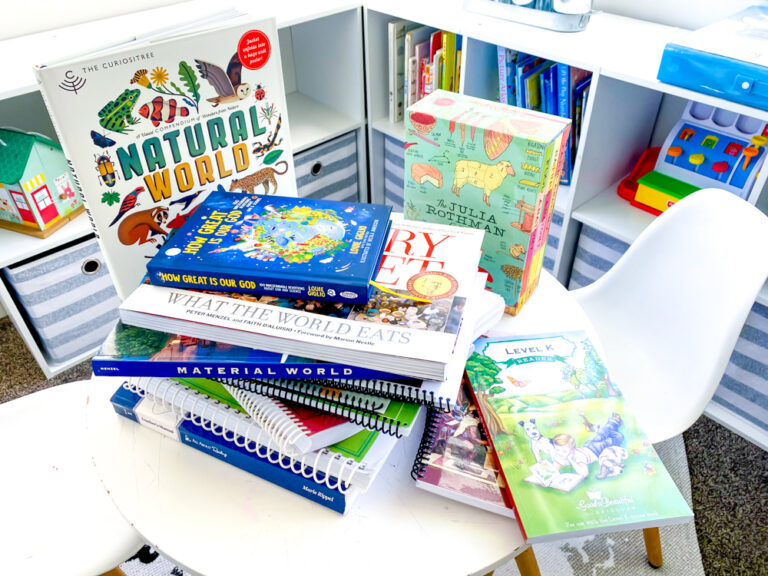
One of the biggest challenges homeschool parents face is homeschool overwhelm from resource overload—feeling overwhelmed by the sheer number of resources available.
With so many options, it’s easy to fall into the trap of overbuying, second-guessing, and constantly switching programs.
But the truth is, more curriculum doesn’t always mean better learning. Here’s how to simplify your approach and avoid curriculum overwhelm in your homeschool.

Signs of Curriculum Overload
If you’re experiencing any of the following, you may be dealing with curriculum overload:
- Feeling stressed about finishing multiple programs.
- Constantly switching curricula because you’re unsure what works best.
- Overloading your homeschool day with too many subjects.
- Watching your child become frustrated or disengaged with lessons.
- Spending too much money on books, programs, or materials that go unused.
How to Simplify and Choose the Right Curriculum

#1 Define Your Homeschool Priorities
Before purchasing curriculum, ask yourself:
- What are the most important subjects for my child at this stage?
- What learning style works best for my child?
- What do I, as the parent, feel comfortable teaching?
Having clear priorities will help you eliminate unnecessary options.
I have a really great resource to help you through this process. Sign up below to get access to the Curriculum Compass as well as the rest of my homeschool resource library.
#2 Stick to the Essentials

Instead of trying to cover everything, focus on core subjects first:
- Math
- Language Arts (Reading, Writing, Grammar)
- Science
- History/Social Studies
Once these are in place, you can add electives and extras based on your child’s interests.
Truly, there is so much to be said for keeping things simple. This is especially true for when you’re just starting out.
It can be a whole change of lifestyle and it takes time to settle into that.
#3 Avoid the “Just in Case” Mentality
Many homeschool parents hold onto multiple programs “just in case” they need them. While it’s great to be prepared, too many options can cause stress. Be realistic about what you’ll actually use and let go of unnecessary materials.
This will also help your budget. By selling materials you’re no longer using you can get back some of the money you spent on it in the first place.
#4 Choose Multi-Subject or Open-and-Go Programs
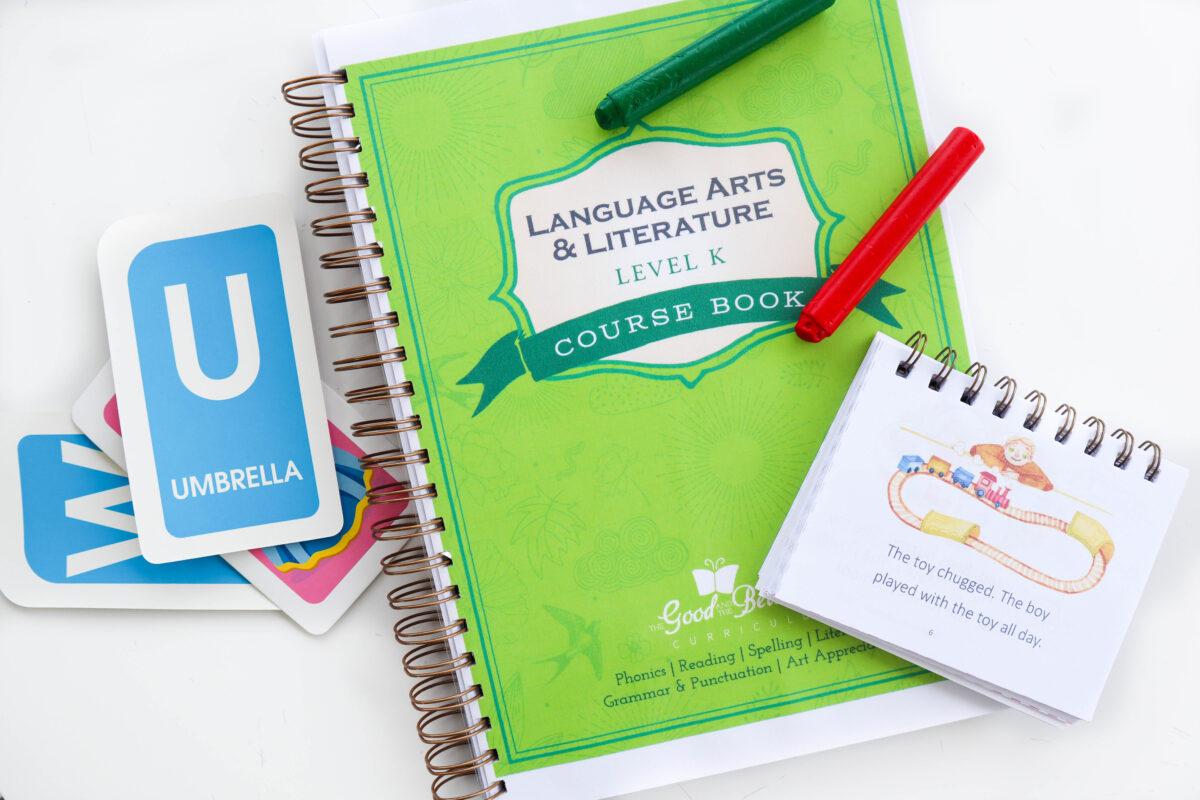
To simplify your homeschool, consider curriculum options that combine multiple subjects, such as:
- Unit studies that integrate history, science, and language arts.
- Charlotte Mason or literature-based programs that combine reading and writing.
- All-in-one curricula that provide a structured approach with minimal prep work.
Eventually, you may switch to using different resources for different subjects, but when you just need something to get you started, these are a great option.
#5 Stop Switching Curricula Too Often

If you’re constantly changing curriculum, your child may struggle with inconsistency. Instead of searching for the “perfect” program, focus on making the most of what you have.
Give it time before deciding whether to switch.
I would also really encourage you not to fall into the trap of comparison. It doesn’t matter if you’re not using the same resources as other families. If it works for your child, then that’s what counts.
#6 Schedule Light and Keep It Flexible
You don’t have to do every subject every day. Try:
- Loop scheduling (rotating subjects rather than covering all of them daily).
- Shorter lessons to prevent burnout.
- Interest-based learning to keep engagement high.
Take regular breaks. If your child is not focusing on the lesson, then stop for a bit. There’s no point in pushing on if they’re not taking in any information.
#7 Trust Yourself and Your Child

Remember, no curriculum is a magic solution. You are your child’s best teacher, and sometimes less is more. Trust your instincts, observe what works, and adjust as needed.
It takes time to establish confidence and even then, things are never going to be perfect.
If you’re trying to fill in all the gaps and create a perfect education, I hate to break it to you, but you will fail.
Instead, focus on teaching your child to become an engaged and motivated learner. That way, even if there are gaps (which there will be), they’ll have the tools to fill those in when they need to.
Final Thoughts
Curriculum overload can make homeschooling feel overwhelming, but simplifying your approach will bring peace and clarity.
Focus on what truly matters, let go of unnecessary extras, and trust the process.