
10 Simple and Engaging Sharing Activities for Toddlers!
*This post may contain affiliate links. As an Amazon Associate I earn from qualifying purchases.*
Is there a need to focus on sharing activities for toddlers? Let’s think about that for a minute.
Sharing is an integral part of society. We share many things with our loved ones, friends, neighbors, and even strangers!
Of course, there are (and should be) boundaries regarding what and when we share certain things, but it is necessary all the same.
Modeling sharing behavior to our toddlers is important and we teach them how to share.
It may seem like a far-off goal right now to have your toddler willingly share things if they’re really struggling with it, but with consistency, it will happen!
I’m going to share some simple ways to teach sharing to toddlers, but we’ll also talk about having healthy boundaries. Not everything can or should be shared.
Keep reading for tips!
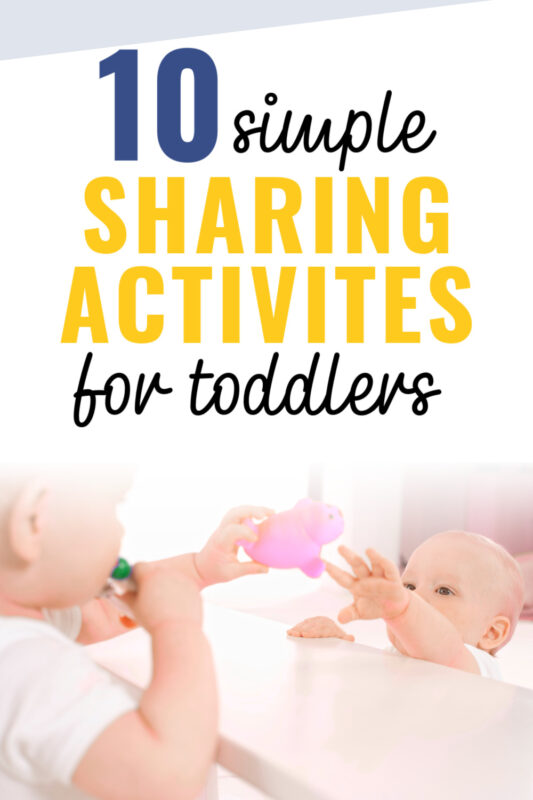
What is the Importance of Teaching Toddlers to Share?
This may seem like a given, but it is important to note why we want to encourage sharing. Young children won’t naturally share their things. Well, let’s just say that most won’t. However, part of working on social skills is learning how to share when appropriate.
Younger children may have a hard time learning this without any direction. A fantastic way to be more intentional about it is to plan out some fun activities that they can learn from.
Sharing can definitely be taught by interaction with family members, especially older siblings. Everyday life gives plenty of ways to teach sharing.
However, sometimes you need a jumping-off point and that’s what this list of activities is intended to be.
Sharing is essential to life and society. It is also important that we teach our children what sharing is appropriate and what is not. For instance, a child may not need to share their favorite toy. However, there are likely communal toys that should be shared.
With young children, you may need to do a lot of role play in order to show how to share appropriately. Their emotional development will also play a big role in how they do with sharing.
10 Fun Sharing Activities for Toddlers

In order to really help simplify things for you, I’ve tried to make most of these activities relate to everyday interactions.
It is rare that we need to set up specific activities to teach our children important values. For the most part, they can just be taught through living.
I hope that this list of sharing activities for toddlers will help shed light on areas that can be teachable moments in lots of different ways.
#1 Baking

Baking with your toddler is often a sensory play experience for them. There are flavors, textures, and smells to explore.
Aside from that, there are also great opportunities for them to practice sharing.
Let them have turns pouring in ingredients. If you don’t let them do it every time, then they’ll get the opportunity to practice sharing and patience.
Related: 20 Fun Activities for 2-Year-Olds
#2 Sharing Toys

This seems like a super simple thing, but it is one of the most common ways for your toddler to learn sharing skills.
Whether it’s with a sibling or a friend, they can practice taking turns with toys.
You can encourage this further by having shared family toys so that it doesn’t technically belong to any one person in the home.
Even a simple game of make believe is a great way to encourage sharing. Kids tend to make their own rules and often they reflect many of the good manners and societal rules we have around us.
#3 The Playground

Going down the slide, swinging on the swing, and climbing up the ladder are all activities that lend themselves to sharing.
Your toddler can take turns with other children using the playground. This is one of those real life situations where sharing is going to need to be practiced.
It’s also a good place to practice sharing because if they’re upset about not being able to do a certain activity, there are other activities with which to distract them.
This won’t always work, but it’s always worth a try!
#4 Play Dates

Encourage social settings for sharing practice by hosting play dates.
Sharing will naturally come up when toddlers are playing together. Having both parents there makes it a good opportunity to teach sharing skills.
You can watch what is going on and then intervene when necessary.
This is also a good idea if you have an only child. Often the first child doesn’t get as many opportunities to share until the second child comes along.
#5 Toddler Games


There are toddler games that you can purchase that will encourage sharing.
Their primary purpose may not be to teach sharing, but it will be a byproduct of playing the game.
One such game is Think, Fun, Roll & Play.
To be honest, even my older children enjoy playing it.
It’s an active game that focuses on many different skills, but it also requires players to take turns. Therefore, your toddler will get lots of practice with sharing.
You may also be able to find a board game that is suitable for toddlers, but the best way is to find a game that is interactive and allows for some movement so you can capture their attention.
#6 Rolling a Ball

When I need to distract my kids or try to make a grouchy toddler happy again, this is a game I often use. It’s a great game that younger siblings can also join in on.
Simply sit on the floor with your toddler and have them move their legs apart so it’s easier for them to catch a rolling ball.
Sit opposite them and roll the ball back and forth between you.
Sharing becomes even more of a thing if there are more than just two of you playing the game. A small group of people can play this even if they’re all of a young age.
#7 Do a Puzzle

When you think of a puzzle, you may think that toddlers wouldn’t be capable of doing them.
However, there are plenty of puzzles that are made specifically with toddlers in mind.
They’re also a really simple way to encourage sharing skills. Simply take turns with your toddler putting pieces together.
It’s a fun activity to do with your toddler that also works on many different skills.
#8 Basic Chores
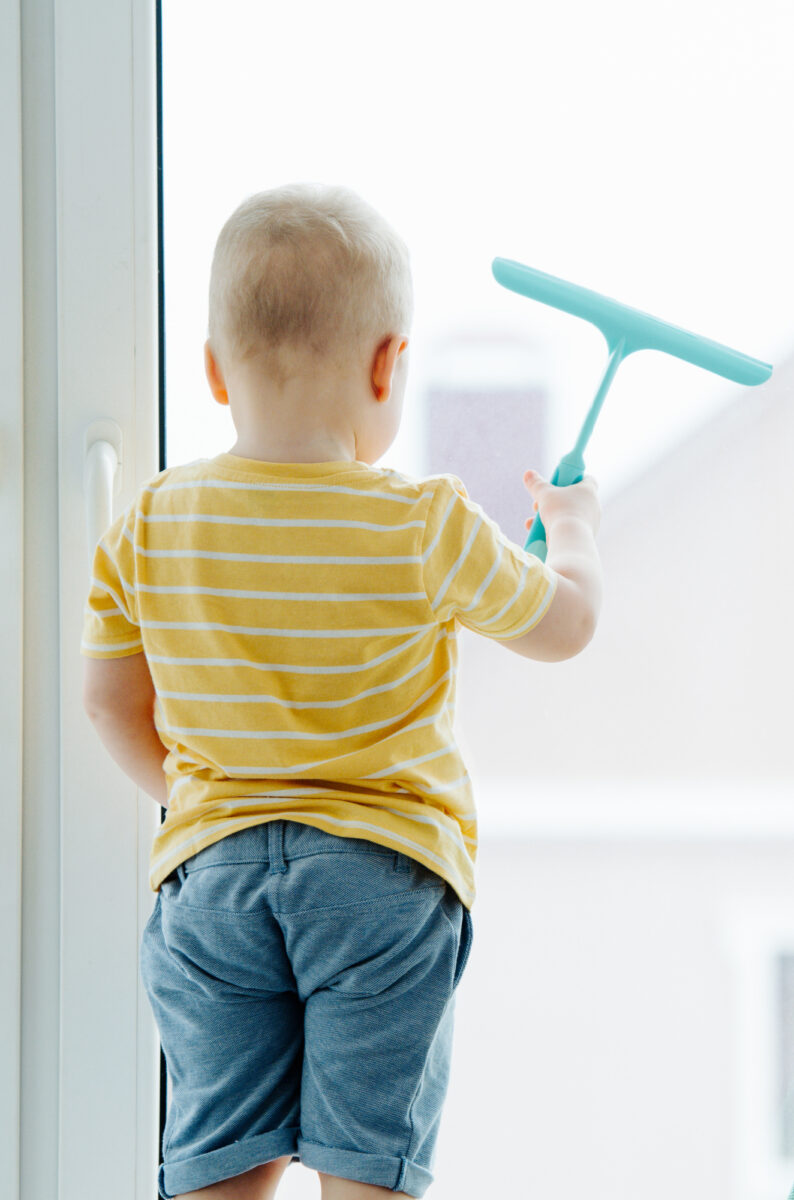
It can be super frustrating trying to get things done around the house when your toddler really wants your attention.
So, why not have them join in on the jobs? Obviously, not everything is going to be appropriate, but there are plenty of chores that they can definitely be a part of.
Give your toddler turns helping you dust, put away dishes, or clean up toys. You can both take turns doing the task.
Not only will your toddler practice their sharing skills, but they’ll also be learning the valuable lesson of contributing to the family home. Simple things like this are often overlooked, but honestly, I think they’re the best starting point for teaching life skills.
Related: Chores That Your Toddler Can Do
#9 Cooking Dinner

Witching hour is a real thing, my friends. I’m three kids in and we’ve been out of the toddler years for a while, but I still remember how wild the late afternoon/evening could be.
Toddlers seem to lose their ever-loving minds around dinner time and it can be really challenging to get things done.
A good way to help combat the grumpiness is to have them help you make dinner.
Where possible, include them in the process and have them take turns adding ingredients, stirring, and pouring.
The great thing is that it’ll keep them distracted, help them feel included, and also allow them to work on sharing.
#10 Sharing Food

Toddlers a food…it’s a fun combination.
Truth be told, when toddlers find food they love, it’s not easy to get them to share it.
However, it’s a really good way to teach sharing skills. Of course, don’t have them share from off their own plate, but if you’ve got friends over, definitely have a bit of a food table where your toddler can see the concept of sharing food.
Allowing friends to have the biggest piece and first choice is both polite and a skill.
Don’t be discouraged if your toddler doesn’t readily do those things. It’s something that you’re going to work with them on for some time.
Tips for Encouraging Sharing in Toddlers
While we can all agree that sharing is a really important skill to have, there are certain boundaries that should be put in place.
For instance, when encouraging our children to share it’s smart to consider what the situation would look like in the adult world.
If you were in a public setting having a picnic, it would not be appropriate for a stranger to come up and request to share your food.
Therefore, we shouldn’t expect our children to do the same.
Another scenario would be having to share very precious items. As adults, we do not usually have to do that.
If your child has a very special toy, it is 100% okay for them to put that away when other children come around and not have to share it.
Just thinking logically through things like this really helps to simplify how we teach our toddlers sharing skills.
The best ways to encourage sharing are modeling the behavior and using positive reinforcement.
When you see your toddler sharing of their own volition, praise them!
Teach them to share in ways that are appropriate. Avoid forcing them to share when it doesn’t make sense in order to avoid them becoming resentful.
Final Thoughts
Sharing tends to go hand-in-hand with regulating and growing emotional skills. Don’t be discouraged if your toddler is quite a master at sharing yet. It takes a good amount of time and intentionality to hone this skill.
It’s a good thing to look for specific ways to allow your child to practice sharing.
Whether it’s with a classic game or simply an everyday activity, your child will be able to practice the skill of sharing many times over.
Consider fun ways of showing a great example of how to share. It could be simply pointing out when someone has shared nicely, or by reading a picture book on the subject.
A simple activity such as taking turns on a regular basis will have a big impact on small children.
The work you do with your child now will absolutely impact them in the future.
Instead of being frustrated at their lack of sharing skills, see the great opportunity it is to be able to work on building up those skills with them.
You won’t be disappointed that you put in the effort.


